Putting out the fire: Fed set to hike rates to tame inflation

 South African rugby player's death due to 'aortic dissection'
 France's Macron lands in Riyadh on surprise 'solidarity' visit

 Around the world, far right blames immigrants for French protests
 South Africa eases fuel pain as growth slows

 Woody Allen shoots new movie in Madrid

 Nvidia's Huang urges Europe to go all in on AI

 Five things to know as French bond yield tops 5%
 'Complete threat' Ngumoha excites Liverpool captain Van Dijk

 'The fishing's terrible': Deforestation devastates C.Africa river

 France's tourism sector worried about impact of riots

 Macron takes aim at Trump for using France riots for election gain
 North Korea says 'new firepower units' in place, loudspeakers to return

 Indonesia leader hits out at market downgrade warning

 Macron slams 'stupid' comments based on AI videos by leaders on France riots

 'Public health crisis': Indonesians seek fire relief from state

 British Museum sells second set of Bayeux exhibition tickets

 Australian lawmaker loses both legs after 'targeted' attack

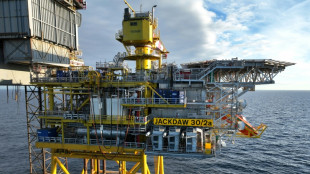 UK approves drilling in controversial Jackdaw gas field

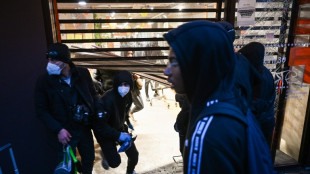 Carrefour shares plunge after profit warning on French protests
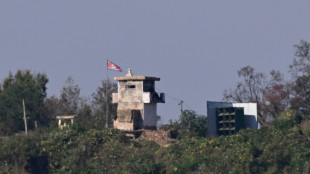 North Korea says 'new firepower units' in place after border threat

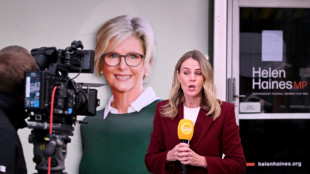 Australia lawmaker loses both legs after 'targeted' attack

 Director Nick Paley channels childhood fears in new thriller 'Phony'

 'Daily struggle': Cubans dig wells in search of water

 Prized wild pepper at risk in Madagascar's shrinking forests
 World falling 'dangerously short' on climate action: UN chief

Surging prices for fuel, food and housing have sent US inflation to the highest in four decades, and the Russian invasion of Ukraine has made the situation worse, so the Federal Reserve is preparing to take action this week.
But the central bank's efforts to put out the inflation fires will be complicated by the prospect the war and wide-ranging sanctions imposed on Russia will disrupt trade flows and undermine the US economic recovery.
The policy-setting Federal Open Market Committee holds its two-day policy meeting this week, with an announcement set for Wednesday when it is poised to begin raising the benchmark lending rate that was cut to zero at the start of the Covid-19 pandemic in March 2020.
That would be the first in a series of rate hikes, but amid the rising uncertainty, some economists think policymakers may move less aggressively than previously expected as they weigh the competing forces on the economy.
"The Fed is being tugged in two different directions by the massive increase in energy prices that's taken place over the last few weeks," David Wilcox, a former senior advisor to three successive Fed chairs, told AFP.
While higher inflation justifies the tightening moves, "the reduction in purchasing power that households are experiencing ... would call for a more accommodative stance of policy, a more cautious approach," said Wilcox, now with the Peterson Institute for International Economics and Bloomberg Economics.
Markets are pricing in about six rate hikes this year, but Grant Thornton Chief Economist Diane Swonk expects seven, while Wells Fargo raised their forecast from five to six -- which would still leave the policy rate below two percent.
- 'Thunderstruck' -
Prior to Russia's invasion of Ukraine, some economists -- and even some Fed officials -- said the first move in the tightening cycle could be a half point increase to send a strong signal to markets that the central bank was committed to keeping inflation from raging out of control.
But Fed Chair Jerome Powell last week declared his intention to call for a quarter-point increase -- a stunningly direct comment from a central bank chief, who typically keeps their plans close to the vest.
Wilcox said he was "thunderstruck" by the statement which tamped down speculation of a more aggressive move.
While Wilcox remains cautiously optimistic that inflation will come down, he stressed that the Fed will have to be "absolutely clear" that it will act as forcefully as necessary should price pressures accelerate.
And in the short term, economists warn that things will get worse before they get better.
"The disruptions we are seeing are adding fuel to a well kindled inflation fire that goes well beyond the energy sector and could touch much more of our daily lives," Swonk said.
"The timing couldn't be worse for the Federal Reserve, which is already chasing inflation for the first time since the 1980s."
Supply chain snarls caused shortages of key products as the global economy was returning to normal from the pandemic, and while the increases initially were driven by cars and housing, energy prices have spiked as well, especially in the past month.
The annual consumer price index in February hit 7.9 percent.
"Just about everything that makes up inflation is going bonkers to the upside," Adam Sarhan of 50 Park Investment told AFP, adding he fears it's the kind of rapid increase that can lead to a recession.
The IMF last week warned that the fallout from the war will slow global growth, but the US economy enters the latest crisis in strong position with low unemployment after expanding by 5.7 percent last year.
Q.Najjar--SF-PST