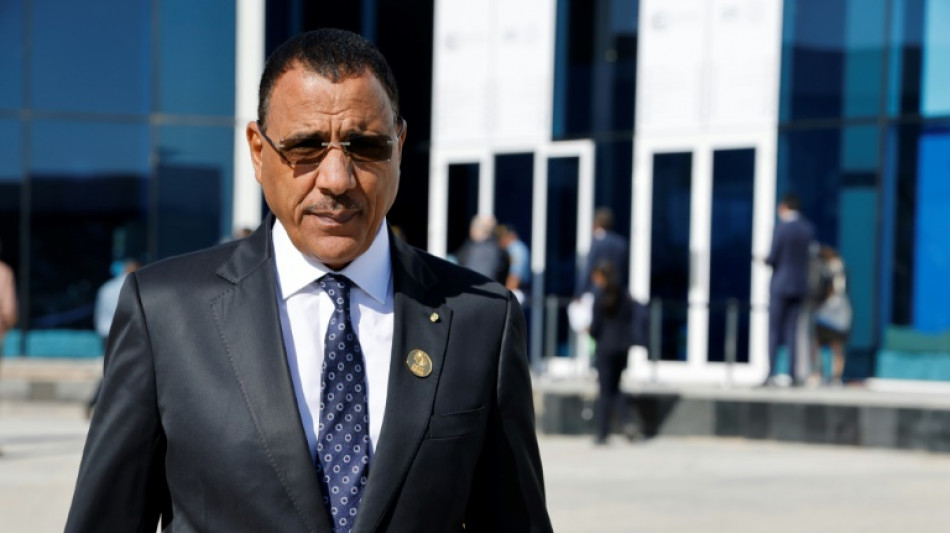
Mohamed Bazoum: Niger president never far from coup threat / Photo: Ludovic MARIN - AFP

 اندلاع حريق في ناقلة نفط بمضيق هرمز بعد استهدافها بمقذوف

 England vs New Zealand Nations Championship 2026: Viewing Guide and Kick-off Time
 تصعيد إسرائيلي في الجنوب اللبناني وسط مباحثات حول ترتيبات ما بعد «اليونيفيل»

 Land Rover Defender EV Confirmed for 2027; Mercedes 'Baby G' Spied Testing
 Sixers Weekend Preview: Maxey and Brown Status Uncertain Ahead of Bucks Game
 San Ġiljan Defeat Paredes 20-12 in Challenger Cup Opener
 Gozo Minister Clint Camilleri Appointed CPMR Vice-President for Maritime Affairs
As Sahel countries such as Mali and Burkina Faso fell to military junta rule in recent years, Niger's Mohamed Bazoum stood as one of the region's few remaining pro-Western, democratically elected leaders.
He came to power in 2021 -- the country's first president to do so in a peaceful transition -- and later called that a "reflection of the maturity of the people and the wisdom of the leaders".
But by Thursday, he appeared to have fallen to a coup himself, as soldiers from the Presidential Guard claimed to have overthrown his government.
Born in 1960 in the southeastern region of Diffa, a member of Niger's Arab minority, Bazoum studied in the southern cities of Goure and Zinder before leaving to study philosophy in Senegal.
He taught there for six years in provincial high schools, honing his oratorical skills.
On his return home, he got involved in union activities and was -- along with fellow future president Mahamadou Issoufou -- a founding member of the Nigerien Party for Democracy and Socialism (PNDS).
During Issoufou's decade as president from 2011, Bazoum was his right-hand man and served in different ministries.
Well-connected at home and abroad, he left office in mid-2020 to devote himself to the presidential election, which he eventually won with more than 55 percent of votes cast.
Entering office, he said he intended to ensure "continuity" with Issoufou's administration.
"His name is not mentioned in the main corruption scandals that have often tarnished the regime," said Ibrahim Yahaya Ibrahim, researcher at the International Crisis Group. "He is recognised for a certain rigour in the management of public affairs."
In its fight against the jihadist attacks that afflict the west and east of the country, Niger has benefited from the support of several Western countries including the United States and former colonial power France, which have military bases there.
A few months after the withdrawal of French troops from Burkina Faso, 1,500 French soldiers are still in Niger.
As the security crisis endures, coup threats have never been far away.
Just days before he was sworn in, the government announced the arrest of several people after an alleged putsch attempt.
Among those held were the suspected ringleader, air force captain Sani Gourouza, and former interior minister Ousmane Cisse.
Five people, including Gourouza, were sentenced to 20 years in prison in February, while Cisse was acquitted.
A second bid to oust Bazoum occurred last March "while the president... was in Turkey", according to a Niger official, who said an arrest was made. The authorities have never commented publicly on the incident.
T.Ibrahim--SF-PST