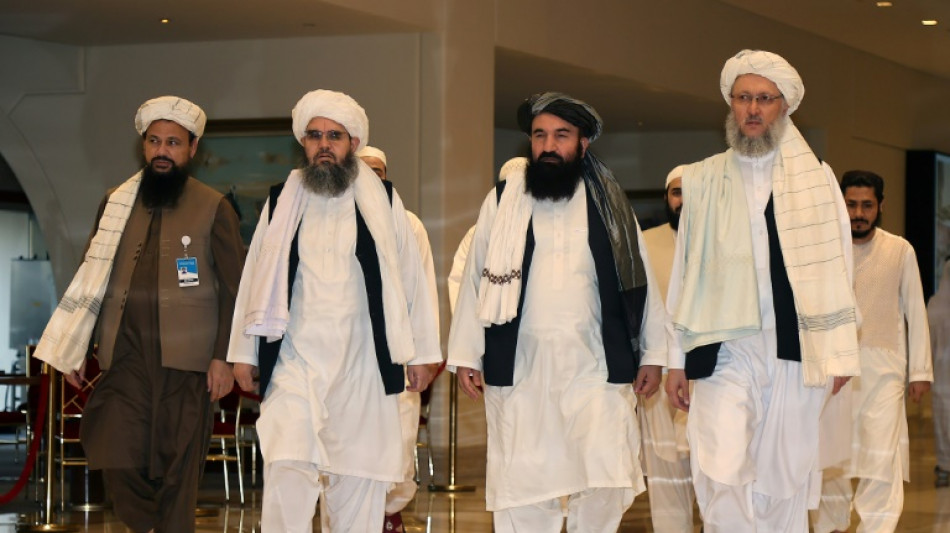
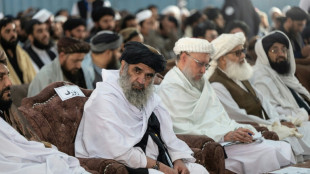
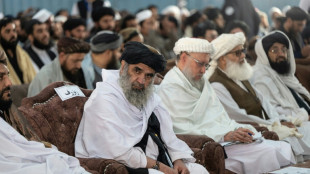
Neckties are a sign of the cross, says Taliban official / Photo: KARIM JAAFAR - AFP/File

 American Nobel laureate in medicine hopes to illuminate the brain
 Trump approves firing squad for convicted US military base shooter

 Grappling with 'homework scams,' US universities shun AI detectors
 Separatists win Quebec election in test for Canada PM

 Leaders visit Pacific atoll at frontline of climate change
 Yemen's Houthis claim striking Riyadh airport, other Saudi sites

 Best-selling British author Jeffrey Archer dies aged 86

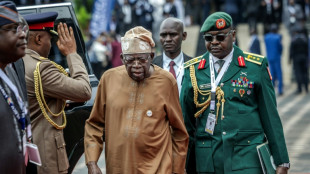 Military plane crash kills 32 in Nigeria

 Olise powers France to win over Belgium in Nations League
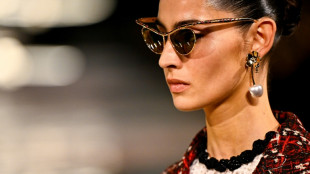 High-flying Blazy turns to birdlife at Chanel
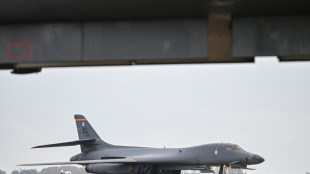
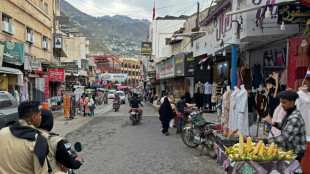 Riyadh's allies pledge troops as Yemen, Saudi Arabia attack Houthis

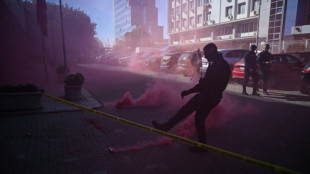 Clashes erupt outside Kosovo parliament over war crimes court
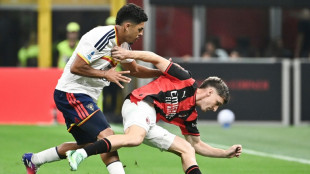 Milan's Saelemaekers suffers ankle setback, faces lengthy spell out
 Rubio arrives in Iceland to push for greater US presence in Arctic
 Putin allows Italy's UniCredit to sell part of Russian business
 Djokovic into China Open final as Medvedev out for hitting fan with ball

 ICC unseals arrest warrants for Taliban education ministers
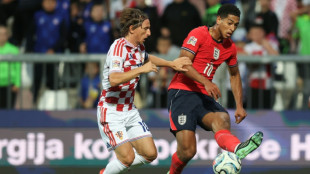 Modric hopes fans back Croatia against Spain after England shame

 Bolsonaro rides right-wing surge into Brazil's election runoff

 Turkey blocks X account of British reporter
 Ukraine says using AI robot guns to shoot down new Russian drones
 At Oct 7 memorial, Netanyahu says will be no Hamas rule in Gaza
 Ukraine blames Russia for deadly sinking of Turkish ship in Black Sea
 UN rights council slams Taliban's 'oppression' of women
 Norway eyes partial ban of smart glasses
Neckties worn by men were a sign of the Christian cross, a senior Afghan Taliban official said Wednesday, adding they should be eliminated.
"Sometimes, when I go to hospitals and other areas, an Afghan Muslim engineer or doctor uses a necktie," said Mohammad Hashim Shaheed Wror, head of the Invitation and Guidance Directorate, a department that seeks to guide people along proper Islamic lines.
He said in a speech broadcast by Tolo TV that the symbolism of the tie "is obvious in Islam".
"What is a tie? It is the cross. It is ordered in Sharia that you should break it and eliminate it," he said.
Taliban authorities have not imposed any dress rules on men since taking over in August 2021, but women must cover up with a hijab when out in public.
Afghan Taliban officials almost all dress the same -- shalwar kameez, a waistcoat, and turban.
Casual Western clothes became less common after the Taliban takeover but some professionals -- as well as newsreaders on TV channels -- still don a collar and tie.
The tie is widely believed to have emerged in the 17th century and was made a fashion staple by the French.
Previous Afghan administrations have also tried to impose dress regulations on the population, or on officials at least.
During the decade-long Soviet occupation starting in 1979, government workers were discouraged from wearing traditional attire and told to wear suits.
Former president Ashraf Ghani -- who fled the country as the Taliban took over in 2021 -- favoured Western suits when abroad and traditional attire at home.
During their two-decade insurgency the Taliban's fighters wore shalwar kameez, but since taking power have introduced modern military uniforms for the armed services.
J.AbuShaban--SF-PST