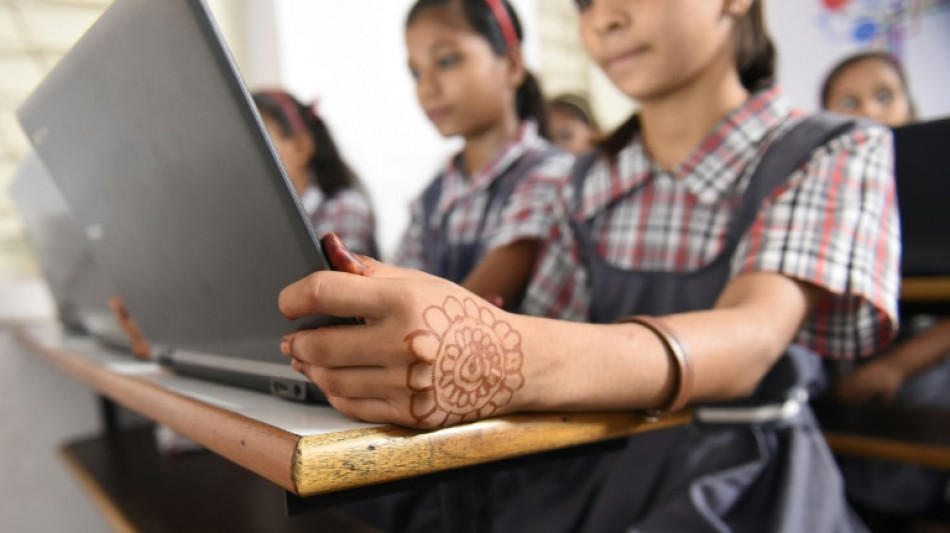
UN warns against 'excessive' tech use in classrooms / Photo: SAM PANTHAKY - AFP

 American Nobel laureate in medicine hopes to illuminate the brain

 Trump approves firing squad for convicted US military base shooter

 Grappling with 'homework scams,' US universities shun AI detectors

 Separatists win Quebec election in test for Canada PM

 Leaders visit Pacific atoll at frontline of climate change

 Yemen's Houthis claim striking Riyadh airport, other Saudi sites

 Best-selling British author Jeffrey Archer dies aged 86

 Military plane crash kills 32 in Nigeria

 Olise powers France to win over Belgium in Nations League
 High-flying Blazy turns to birdlife at Chanel

 Riyadh's allies pledge troops as Yemen, Saudi Arabia attack Houthis

 Clashes erupt outside Kosovo parliament over war crimes court
 Milan's Saelemaekers suffers ankle setback, faces lengthy spell out

 Rubio arrives in Iceland to push for greater US presence in Arctic
 Putin allows Italy's UniCredit to sell part of Russian business

 Djokovic into China Open final as Medvedev out for hitting fan with ball

 ICC unseals arrest warrants for Taliban education ministers

 Modric hopes fans back Croatia against Spain after England shame

 Bolsonaro rides right-wing surge into Brazil's election runoff

 Turkey blocks X account of British reporter

 Ukraine says using AI robot guns to shoot down new Russian drones
 At Oct 7 memorial, Netanyahu says will be no Hamas rule in Gaza
 Ukraine blames Russia for deadly sinking of Turkish ship in Black Sea

 UN rights council slams Taliban's 'oppression' of women

 Norway eyes partial ban of smart glasses
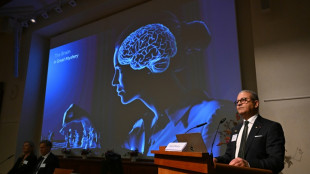
Heavy reliance on technology in education may be unproductive, or even detrimental, if it interferes with the acquisition of basic skills such as reading, the UN warned on Wednesday.
The body's education, culture and science agency UNESCO said in a report that while students should learn about technology in the world, teachers should beware of overusing "fancy technological" means in the classroom.
"There is little robust evidence on digital technology's added value in education," the report said.
Technology in the classroom "can have detrimental impact if inappropriate or excessive", it said. "It should focus on learning outcomes, not on digital inputs."
Manos Antoninis, who directed the UNESCO report, said 20 years after laptops began to be rolled out in schools, it was clear that such policies only worked if they were combined with a solid pedagogical framework.
But only a "few countries have had the patience and energy to move into that direction", he said.
"It's not enough to just distribute devices," he said.
UNESCO had observed a rising trend of banning smartphones in classrooms, with "one in four countries" passing laws and regulations to that effect.
"The presence of a phone in a classroom can be very distracting," Antoninis said.
He said smartphone bans in schools, including by liberal countries like The Netherlands, were "an interesting and surprising finding" for the UNESCO researchers.
"People are thinking a little bit more through what the consequences and the distractions in schools are," he said.
The report warned strongly against substituting technology for the acquisition of traditional key skills which could actually help children avoid some of the pitfalls of the digital world.
Students with strong reading skills, for example, were much less likely to be deceived by phishing mail, Antoninis said.
"If you are taught to read well, read for meaning, that makes you also better prepared to navigate the digital world and that's a reality that we often forget," Antoninis said.
F.Qawasmeh--SF-PST