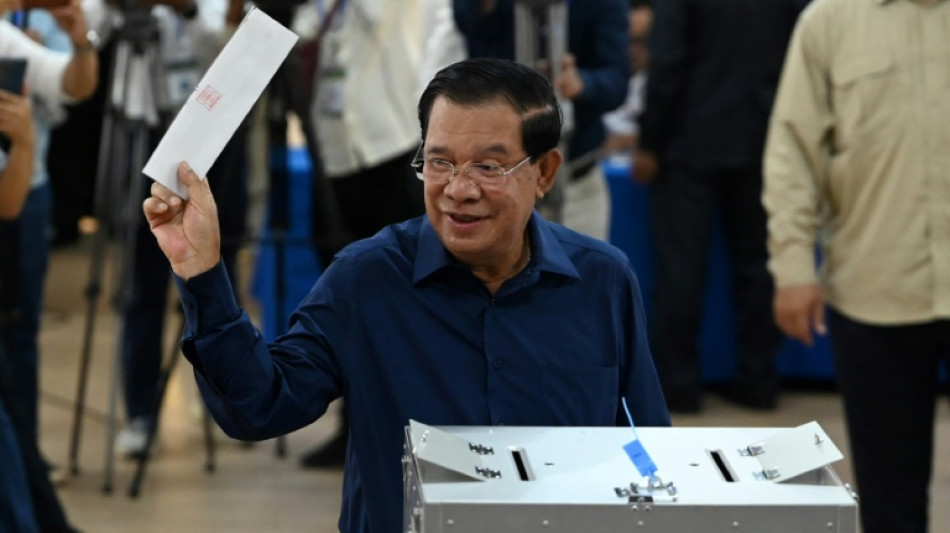
Hun Sen: long-serving architect of Cambodia's repressive state / Photo: TANG CHHIN SOTHY - AFP

 American Nobel laureate in medicine hopes to illuminate the brain
 Trump approves firing squad for convicted US military base shooter

 Grappling with 'homework scams,' US universities shun AI detectors
 Separatists win Quebec election in test for Canada PM

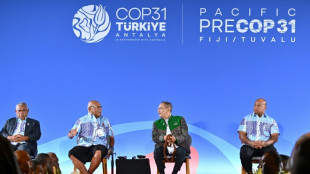
 Leaders visit Pacific atoll at frontline of climate change

 Yemen's Houthis claim striking Riyadh airport, other Saudi sites

 Best-selling British author Jeffrey Archer dies aged 86

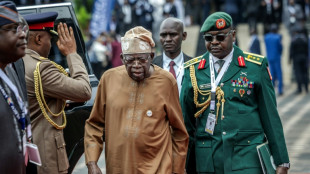
 Military plane crash kills 32 in Nigeria

 Olise powers France to win over Belgium in Nations League
 High-flying Blazy turns to birdlife at Chanel
 Riyadh's allies pledge troops as Yemen, Saudi Arabia attack Houthis

 Clashes erupt outside Kosovo parliament over war crimes court
 Milan's Saelemaekers suffers ankle setback, faces lengthy spell out
 Rubio arrives in Iceland to push for greater US presence in Arctic
 Putin allows Italy's UniCredit to sell part of Russian business
 Djokovic into China Open final as Medvedev out for hitting fan with ball

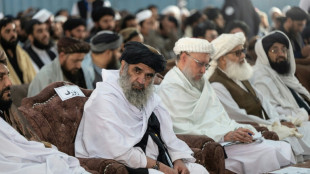
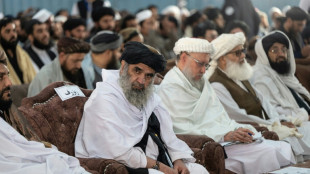 ICC unseals arrest warrants for Taliban education ministers
 Modric hopes fans back Croatia against Spain after England shame

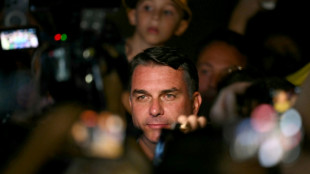 Bolsonaro rides right-wing surge into Brazil's election runoff

 Turkey blocks X account of British reporter

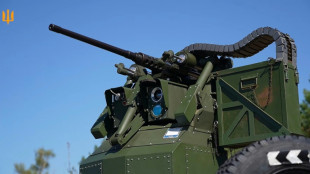 Ukraine says using AI robot guns to shoot down new Russian drones
 At Oct 7 memorial, Netanyahu says will be no Hamas rule in Gaza
 Ukraine blames Russia for deadly sinking of Turkish ship in Black Sea
 UN rights council slams Taliban's 'oppression' of women
 Norway eyes partial ban of smart glasses

Asia's longest-serving leader Hun Sen outlasted the murderous Khmer Rouge, sidelined the monarchy and extinguished any glimmer of multiparty democracy during his nearly 40-year reign over Cambodia.
The 70-year-old announced on Wednesday that he was stepping down and handing power to his eldest son, Hun Manet, in dynastic succession reminiscent of North Korea.
Through state-sponsored violence, repression, attacks on free speech and politicising the courts, Hun Sen managed to eliminate virtually all opposition during his stint as prime minister.
His ever-widening patronage system meanwhile forged a class of loyal elites in the country of 16 million, which he likes to claim responsibility for lifting out of post-genocidal poverty.
Hun Sen's unstinting grip on Cambodia put him among a small coterie of world leaders in power for more than three decades: a club that also includes Equatorial Guinea's Teodoro Obiang Nguema Mbasogo, Cameroon's Paul Biya and Iran's Ali Khamenei.
Ever the wily operator, he played off tensions between the United States and China to rake in huge sums in Chinese investment that allowed him to ease reliance on the critical West.
Before he was Cambodia's long-serving prime minister, Hun Sen was a cadre in the Khmer Rouge, an ultra-Maoist organisation that overthrew the US-backed government of Lon Nol and killed an estimated quarter of the population from 1975 to 1979.
But to escape ever-deeper purges he defected to Vietnam, returning as their army toppled the Khmer Rouge and taking credit as Cambodia's saviour.
The ambitious former fighter was installed as prime minister in 1985, aged just 32.
- Crushing the opposition -
Hun Sen lost the first election he contested in 1993, with the UN-sponsored vote meant to usher in a new era of democracy after the mass atrocities and civil war.
But he seized control in a bloody 1997 coup, a year before the death of Khmer Rouge leader Pol Pot.
His party won every election from 1998 onwards, including most recently Sunday's -- a vote that was widely dubbed a sham by international observers and described by the United States as "neither free nor fair".
The most serious political challenge Hun Sen faced was mounted by the Cambodian National Rescue Party (CNRP).
Formed in 2012, the CNRP capitalised on the diaspora's hunger for change and the young domestic population's frustrations with corruption.
The generation born after the Khmer Rouge had no memory of the horrors Hun Sen would typically evoke in long speeches riddled with warnings that without him Cambodia would crumble.
The CNRP won more than 44 percent of the vote in 2013 and almost the same in local elections in 2017.
But their emerging threat was quickly snuffed, out with the courts dissolving the party and convicting its figureheads.
Opposition leader Kem Sokha remains under house arrest, serving 27 years for treason, while self-exiled Sam Rainsy has been in France since 2015 to avoid jail on a number of convictions he says are politically motivated.
Since then, Hun Sen has presided over what has effectively become a one-party state, with all 125 seats in the National Assembly currently occupied by his Cambodian People's Party (CPP).
The latest democratic challenger was crushed in May, when the Candlelight Party was disqualified from running, though a small CPP-friendly royalist party is on track to win five seats.
Z.Ramadan--SF-PST