
UN talks seek to fix 'broken' global food system / Photo: STRINGER - AFP/File

 American Nobel laureate in medicine hopes to illuminate the brain

 Trump approves firing squad for convicted US military base shooter
 Grappling with 'homework scams,' US universities shun AI detectors
 Separatists win Quebec election in test for Canada PM

 Leaders visit Pacific atoll at frontline of climate change

 Yemen's Houthis claim striking Riyadh airport, other Saudi sites

 Best-selling British author Jeffrey Archer dies aged 86

 Military plane crash kills 32 in Nigeria

 Olise powers France to win over Belgium in Nations League

 High-flying Blazy turns to birdlife at Chanel

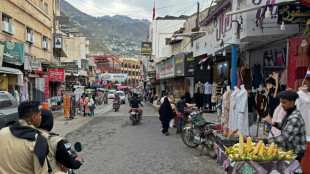 Riyadh's allies pledge troops as Yemen, Saudi Arabia attack Houthis

 Clashes erupt outside Kosovo parliament over war crimes court

 Milan's Saelemaekers suffers ankle setback, faces lengthy spell out

 Rubio arrives in Iceland to push for greater US presence in Arctic

 Putin allows Italy's UniCredit to sell part of Russian business

 Djokovic into China Open final as Medvedev out for hitting fan with ball

 ICC unseals arrest warrants for Taliban education ministers

 Modric hopes fans back Croatia against Spain after England shame

 Bolsonaro rides right-wing surge into Brazil's election runoff

 Turkey blocks X account of British reporter

 Ukraine says using AI robot guns to shoot down new Russian drones
 At Oct 7 memorial, Netanyahu says will be no Hamas rule in Gaza

 Ukraine blames Russia for deadly sinking of Turkish ship in Black Sea

 UN rights council slams Taliban's 'oppression' of women
 Norway eyes partial ban of smart glasses

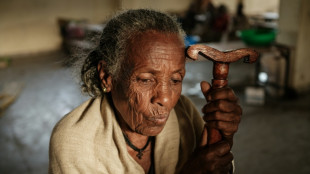
A three-day United Nations summit opened in Rome on Monday aimed at tackling a "broken" global food system where millions are starving, two billion are overweight or obese and the planet is suffering.
The food systems summit comes amid growing food insecurity around the world, with UN agencies warning of an increasing number of people suffering from chronic hunger.
"In a world of plenty, it is outrageous that people continue to suffer and die from hunger," UN Secretary-General Antonio Guterres said at the opening of the meeting.
"Global food systems are broken -- and billions of people are paying the price."
More than 780 million people go hungry around the globe, even as nearly one-third of the world's food is wasted or lost, he said.
And while 462 million people are underweight, two billion are overweight or obese, he added.
The summit brings together representatives from the UN's three food agencies headquartered in Rome -- the Food and Agriculture Organization (FAO), the International Fund for Agricultural Development (IFAD) and the World Food Programme (WFP) -- alongside heads of states, government representatives and delegates.
- Radical transformation -
Food systems include all activities related to producing, processing, transporting and consuming food, and making them more sustainable, efficient and equitable is a complex task.
Involving multiple sectors and actors, food systems are affected by varied trends such as urbanisation, climate change, technology and government policy.
Weather shocks, the Covid pandemic and conflicts including the war in Ukraine have helped push the number of people facing hunger up by 122 million since 2019, according to the WFP.
Between 691-783 million people faced hunger last year, with a mid-range of 735 million, WFP estimated in a report earlier this month.
Guterres reiterated his concern over Russia quitting the landmark grain deal that allowed cargo ships carrying Ukrainian grain to depart Black Sea ports.
"The most vulnerable will pay the highest price," of that move, he said, calling the previous agreement a "lifeline" for global food security.
The FAO has said that no less than a "radical transformation in how food is produced, processed, traded and consumed" is required to feed the world's growing population.
Guterres called for at least $500 billion per year to help needy countries scale up long-term financing to invest in higher performing food systems.
Doing nothing amounts to $12 trillion annually in social and economic costs, according to IFAD.
It compared the needed funds with the "$10 trillion in revenue generated by the global food industry or the $700 billion paid in agricultural subsidies by wealthy countries".
- 'Death sentence' -
Unsustainable practices in food production, packaging and consumption are also fueling climate change, Guterres said, "generating one-third of all greenhouse gas emissions, using 70 percent of the world's freshwater, and driving biodiversity loss on an epic scale".
The conference comes two years after the UN's first-ever summit on food systems in 2021 and ahead of a summit on sustainable development goals in New York in September.
Over the three days, countries will review progress in meeting past commitments, while identifying bottlenecks to progress, IFAD said.
But more money is key, summit director Nadine Gbossa said.
"Without financing this transition, it's a death sentence for the planet," she told journalists last week, adding that the private sector also plays a major role.
"The public health cost of malnutrition is one of the highest in the world."
V.Said--SF-PST