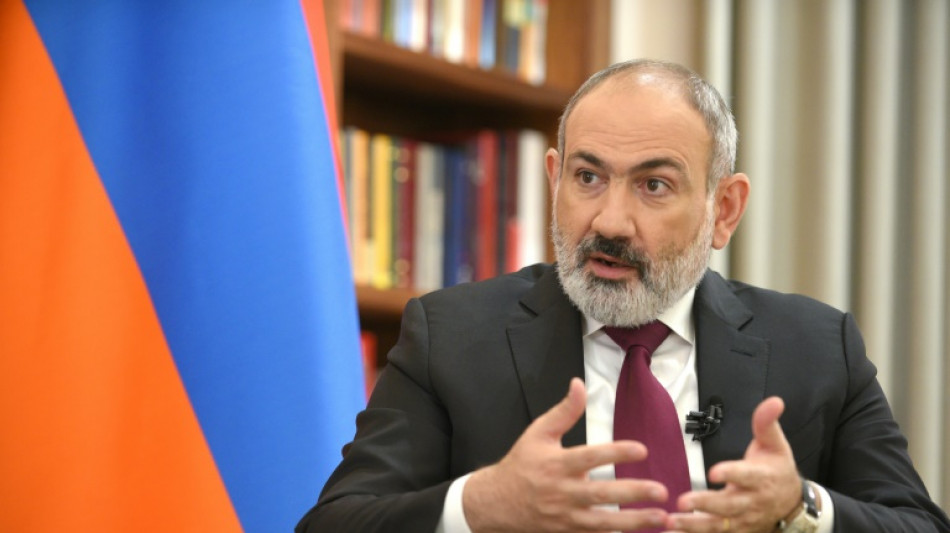
New war with Azerbaijan 'very likely': Armenia PM to AFP / Photo: Karen MINASYAN - AFP

 Ready, set, snooze: Sleep-deprived Japanese compete for best-rested

 Falcons thump Saints 45-24 as New Orleans marks Katrina anniversary

 Tuvalu govt adviser says Australia overstepped in pre-COP visit
 Asian stocks mixed despite tech-led Wall St record

 Tens of thousands expected in Paris for high school protests

 AI borrowing binge rattles US markets

 Young Canadians sue government over alleged climate failures

 White Sox down Guardians to take 2-0 series lead
 NHL record-breaker Ovechkin says current season will be his last
 France roar back in Nations League as Italy beat Turkey
 Messi readies for final farewell in Argentina send-off
 Esposito seals Italy win over Turkey in Nations League

 Russia downplays plague reports as Trump offers US help

 Trump says US moved bombers from UK base after 'threats'
 Brazilian stocks surge to record after Bolsonaro election lead
 Leaders to visit Pacific atoll at frontline of climate change

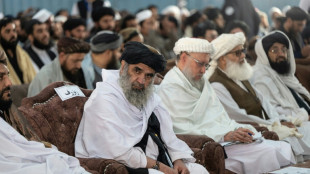
 ICC gives more details about arrest warrants for Taliban ministers
 Nigeria's Tinubu confirms 32 dead after military plane crash

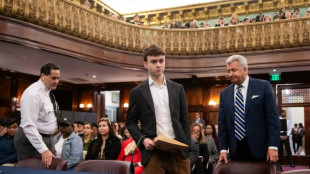 'Reckless' AI firms can't control models, says whistleblower

 Switching on brain cells: the Nobel-winning science of optogenetics
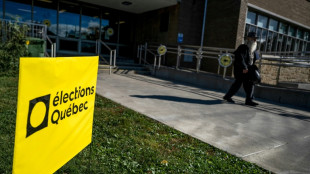 Quebec votes as separatist surge poses test for Canada PM

 Euro slides as concerns about French debt mount
 Former Trump press secretary Leavitt joins Fox News

 Djokovic advances to China Open final as Medvedev out for hitting fan with ball
 Disgraced former US House speaker dies at 84
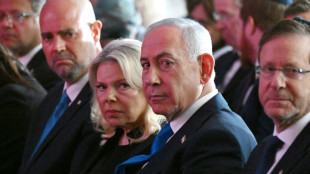
Armenian Prime Minister Nikol Pashinyan warned Friday of the risk of a new war with Azerbaijan, accusing Baku of "genocide" in the breakaway Armenian-populated region of Nagorno-Karabakh.
Baku and Yerevan have fought two wars over the mountainous enclave and the signature of a peace treaty remains a distant prospect.
Talks under the mediation of the European Union, United States, and separately Russia have brought about little progress.
"So long as a peace treaty has not been signed and such a treaty has not been ratified by the parliaments of the two countries, of course, a (new) war (with Azerbaijan) is very likely," Pashinyan told AFP.
Tensions escalated earlier in July when Azerbaijan temporarily shut the Lachin corridor, the sole road linking Nagorno-Karabakh with Armenia.
The closure sparked concerns over a humanitarian crisis in the region, which experiences shortages of food, medicines, and power supplies.
"We're talking not about a preparation of genocide, but an ongoing process of genocide," Pashinyan said, referring to the Karabakh crisis.
Azerbaijan's forces "have created a ghetto" in Karabakh, he said.
Last week, AFP spoke to locals in the rebel region's main city, Stepanakert, who reported food shortages and critical problems with access to medical services.
The growing diplomatic engagement of the European Union and United States in the Caucasus has irked traditional regional power broker Russia.
- 'Red lines' -
Armenia has relied on Russia for military and economic support since the collapse of the Soviet Union.
Yerevan has accused Moscow, bogged down in its war against Ukraine, of failing to fulfil its peacekeeping role in Karabakh under a 2020 Moscow-brokered ceasefire.
As the latest round of peace talks on July 15 in Brussels failed to bring about a breakthrough, Pashinyan said that both the West and Russia needed to increase pressure on Baku to lift its blockade of Nagorno-Karabakh.
"If, according to the logic of some circles in the West, Russia is not meeting all of our expectations because it is not fulfilling its obligations, similarly Russia also tells us (the same) about the West," he said.
Pashinyan said the progress at talks was being impeded by "Azerbaijan's continued aggressive rhetoric, hate speech towards the Armenians", also accusing Baku of pursuing a "policy of ethnic cleansing".
Deadly border clashes continued between the ex-Soviet republics after a Russian-brokered ceasefire ended six weeks of fighting in autumn 2020 and Azerbaijan has since captured pockets of land inside Armenia.
Pashinyan said "Armenia's territorial integrity, sovereignty, and the rights and security of the Armenians of Nagorno-Karabakh" are Yerevan’s "red lines" at talks with Baku.
- International witness -
Nagorno-Karabakh has been at the centre of a decades-long conflict between the two countries which have fought two wars for control of the region -- in the 1990s and in 2020 -- that have claimed thousands of lives from both sides.
The Russian-mediated ceasefire agreement saw Armenia cede swathes of territories it had controlled for some three decades.
Moscow deployed peacekeepers to the Lachin corridor to ensure free passage between Armenia and Karabakh.
"Armenia's case is difficult because Armenia's interest in this process is perceived and interpreted by Azerbaijan as a so-called encroachment upon Azerbaijan's territorial integrity," Pashinyan said.
During Western-mediated talks in May, Yerevan agreed to recognise Nagorno-Karabakh as part of Azerbaijan, but demanded international mechanisms for protecting the rights and security of the region's ethnic-Armenian population.
Baku insists such guarantees must be provided at the national level, rejecting any international format.
The dialogue between Karabakh and Azerbaijan "should take place in the context of international mechanisms where we've got the witness, the international community will be the witness," Pashinyan said.
R.Halabi--SF-PST