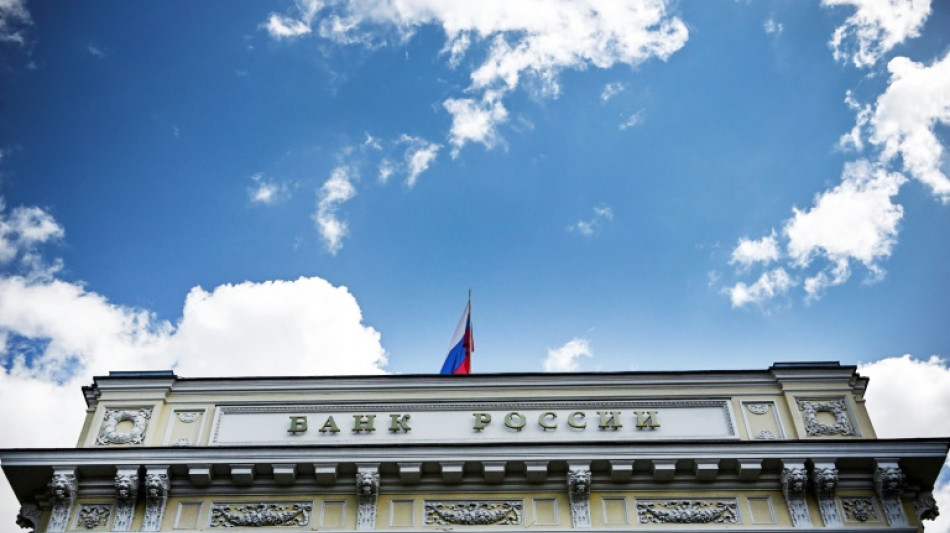
Russia hikes key rate for first time since 2022 / Photo: Alexander NEMENOV - AFP

 اندلاع حريق في ناقلة نفط بمضيق هرمز بعد استهدافها بمقذوف

 England vs New Zealand Nations Championship 2026: Viewing Guide and Kick-off Time

 تصعيد إسرائيلي في الجنوب اللبناني وسط مباحثات حول ترتيبات ما بعد «اليونيفيل»

 Land Rover Defender EV Confirmed for 2027; Mercedes 'Baby G' Spied Testing

 Sixers Weekend Preview: Maxey and Brown Status Uncertain Ahead of Bucks Game

 San Ġiljan Defeat Paredes 20-12 in Challenger Cup Opener
The Russian Central Bank on Friday hiked its key interest rate for the first time in more than a year amid fears that a weakening ruble will drive up inflation in the country.
The bank raised its benchmark rate from 7.5 percent to 8.5 percent -- higher than expected by analysts.
"Inflation expectations have risen. Domestic demand trends and the depreciation of the ruble since the beginning of 2023 significantly amplify pro-inflationary risks," the central bank said in a statement.
Days after Moscow launched its Ukraine offensive in February 2022, the bank radically hiked the rate to 20 percent as Russia's economy was hit by sweeping Western sanctions.
Reassured by the resilience of the Russian economy, policymakers gradually cut the rate to 7.5 percent, leaving it at that level since September 2022.
UK research group Capital Economics said the hike was "much larger than expected."
It "underscores policymakers' concerns about inflation risks," the research group said.
The ruble's recent fall pushed the bank to act to avoid soaring inflation like in spring last year when it reached a high of 17.8 percent.
Inflation in Russia stood at 3.25 percent in June, according to the country's statistics agency Rosstat.
Experts say relatively low oil prices despite recent production cuts by major producers may have contributed to a weakening ruble.
In a sign the sanctions were weighing on the country's economy, Russia's gross domestic product shrank by 1.9 percent in the first quarter of 2023, according to Rosstat.
But Russian President Vladimir Putin's spokesman said the Kremlin "does not see a threat to the country's financial stability" from a weak ruble.
"On the contrary... the situation is better than could have been predicted," Dmitry Peskov told reporters earlier this month.
D.AbuRida--SF-PST