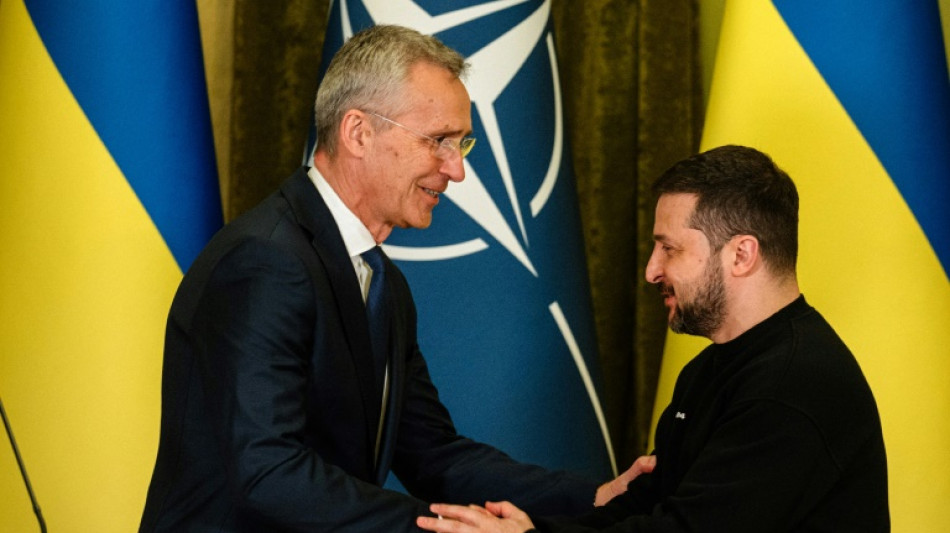
Ukraine, Sweden and spending: what's coming up at NATO summit / Photo: Dimitar DILKOFF - AFP

 Kenya reports first-ever Ebola death
 Tennis world No.1 Sinner's season over due to knee injury
 Yemen's Houthis claim attack on Riyadh airport, deny losing territory

 7-Eleven exits India amid mounting competition
 The alleged murder by US marine on Okinawa: five things to know

 End of an era as Messi prepares to hang up Argentina boots

 Superstar duo headline strong New Zealand squad for Rugby League World Cup
 South Korea warns of possible AI use in banking hacks
 EU vows AI rules will protect Europeans. Will they?

 Myanmar leader to visit Malaysia after migrant returns begin

 Germany's AfD poised to preside over state assembly for first time
 Australia's opposition vows 'largest cut to immigration' in country's history
 Ready, set, snooze: Sleep-deprived Japanese compete for best-rested

 Falcons thump Saints 45-24 as New Orleans marks Katrina anniversary
 Tuvalu govt adviser says Australia overstepped in pre-COP visit
 Asian stocks mixed despite tech-led Wall St record
 Tens of thousands expected in Paris for high school protests
 AI borrowing binge rattles US markets

 Young Canadians sue government over alleged climate failures
 White Sox down Guardians to take 2-0 series lead
 NHL record-breaker Ovechkin says current season will be his last
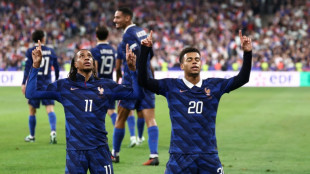 France roar back in Nations League as Italy beat Turkey
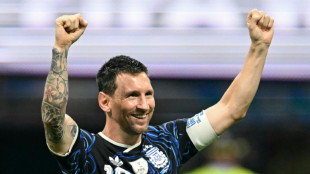 Messi readies for final farewell in Argentina send-off
 Esposito seals Italy win over Turkey in Nations League

 Russia downplays plague reports as Trump offers US help

NATO leaders meet in Lithuania on Tuesday for a summit set to be dominated by the alliance's response to Russia's war on Ukraine and Kyiv's push for membership.
Here are some key things to look out for at the two-day meeting of the Western military bloc:
- Ukraine's membership -
Ukrainian President Volodymyr Zelensky is set to come to Vilnius to make the case to NATO's 31 leaders that Kyiv deserves to join the alliance once Russia's war ends.
Kyiv and NATO members in eastern Europe have pushed for a clear roadmap as they believe only bringing Ukraine under the alliance's collective defence umbrella will deter Moscow in future.
But key powers the United States and Germany have been wary of going much beyond a vow in 2008 that said Ukraine will join one day, without setting a timeframe.
Diplomats are still wrangling over the exact wording of a final communique as they seek to convince Ukraine it is moving forward.
NATO looks set to offer Kyiv a smoother path into the alliance for when it eventually becomes ready to join, by dropping a Membership Action Plan laying out reform benchmarks.
It will also boost political ties by launching a NATO-Ukraine Council in Vilnius and offer a multi-year programme to help Kyiv get to Western military standards.
But there will be no invitation to join for now and, most likely, no dates set.
Whether this is enough to satisfy the Ukrainians fighting and dying on the ground remains to be seen.
"Zelensky's team will be working until the last day to get as much as they can," said Orysia Lutsevych of the Chatham House think tank.
- Security guarantees? -
In a bid to reassure Kyiv before it joins NATO, heavyweights the United States, Britain, Germany and France have been negotiating possible long-term commitments on weapons supplies.
Diplomats say these would fall outside NATO's framework and not commit the powers to sending troops to aid Ukraine if it's attacked again.
The weapons supplies would build on the tens of billions of dollars-worth of arms Kyiv's backers have delivered since Russia invaded.
Drawing up something similar to the US arrangement with Israel -- which sees Washington sending $3.8 billion (3.5 billion euros) of weapons each year for a decade -- is one possibility mooted.
Intelligence sharing, training and rebuilding Ukraine's own arms industry could also figure in a deal.
Diplomats say there would likely be an overall declaration of support and then individual countries would commit to bilateral assistance under that umbrella.
But Eastern European countries insist any agreements should not be a substitute for Ukraine's eventual NATO membership.
"The only security guarantee that works and is much cheaper than anything else is NATO membership," Estonian premier Kaja Kallas tweeted.
- Sweden finally joining? -
Turkey's unpredictable president Recep Tayyip Erdogan will be in the spotlight as allies press him to drop objections and finally let Sweden into NATO.
Ankara is still holding up Stockholm's membership despite letting Nordic neighbour Finland join in April.
Sweden insists it has met all the conditions Turkey has set, but a recent Koran-burning protest in Stockholm drew Erdogan's ire.
The Turkish president will meet with his US counterpart Joe Biden on the sidelines of the summit, with topics of discussion to include Sweden's NATO membership.
Hungary is also still holding out, but few believe Budapest would delay if Ankara shifted.
NATO chief Jens Stoltenberg has called a meeting of Erdogan and Sweden's Prime Minister Ulf Kristersson for the eve of the summit on Monday in Vilnius.
Stoltenberg will be hoping for a re-run of last year's Madrid summit where he got Erdogan to back the initial invite for Sweden after hours of negotiations.
The best case scenario would be for Erdogan to commit to ratifying Sweden's entry soon.
"It is absolutely possible to have a positive decision at the summit," Stoltenberg insisted last week.
- Military spending -
After Russia seized Crimea from Ukraine in 2014, NATO countries pledged to try to move towards spending two percent of gross domestic product on defence by 2024.
As that deadline approaches, only 11 NATO countries are projected to hit the target this year despite public haranguing during the tenure of former US president Donald Trump.
The allies have now been negotiating a new pledge and -- given the invasion -- have become more ambitious.
Spending two percent will become a minimum commitment despite opposition from laggards such as Luxembourg and Canada.
But there are questions over how soon NATO will agree to hit that figure and if it will seek to go further.
- Defence Plans -
Russia's war has propelled the biggest overhaul of NATO's eastern defences in a generation.
Leaders should sign off on new regional plans in Vilnius detailing how allies would stop any Russian attack at NATO's borders.
Diplomats say Turkey has thrown a spanner into the works with last-ditch objections, but they expect Erdogan to give the greenlight.
The move is part of a package that is seeing allies boost the number of high-readiness troops NATO can call on to 300,000.
E.AbuRizq--SF-PST