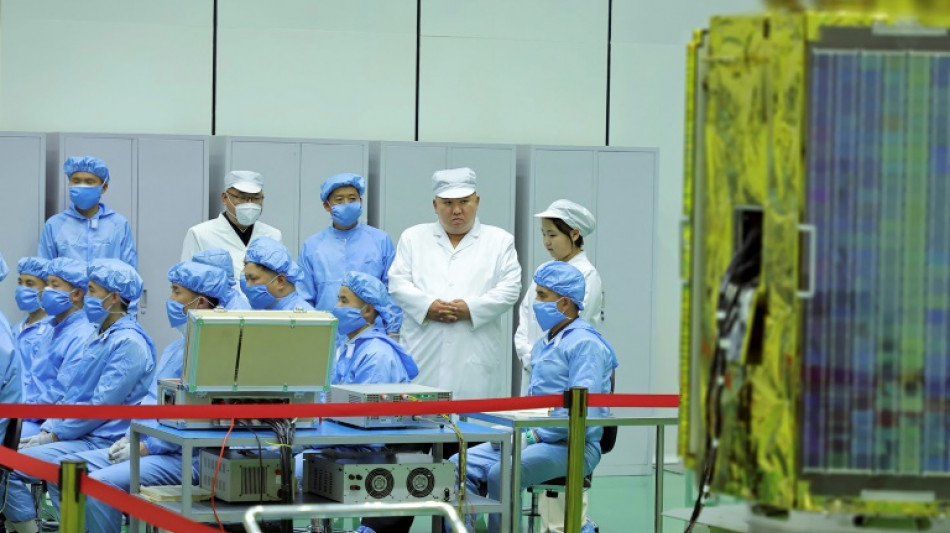
Crashed N. Korean spy satellite had 'no military utility': Seoul / Photo: STR - KCNA VIA KNS/AFP/File

 Lotto Results for Saturday, November 21, 2026

 Meta Offices Vandalized in India Amid Protests Over Account Removals

 اندلاع حريق في ناقلة نفط بمضيق هرمز بعد استهدافها بمقذوف

 England vs New Zealand Nations Championship 2026: Viewing Guide and Kick-off Time

 تصعيد إسرائيلي في الجنوب اللبناني وسط مباحثات حول ترتيبات ما بعد «اليونيفيل»

 Land Rover Defender EV Confirmed for 2027; Mercedes 'Baby G' Spied Testing
North Korea's first spy satellite had "no military utility" at all, South Korea said Wednesday after analysing its wreckage.
In May, North Korea attempted to put what it described as its first military reconnaissance satellite in orbit but the rocket carrying it plunged into the sea minutes after launch.
The crash sparked a complex, 36-day South Korean salvage operation involving a fleet of naval rescue ships, minesweepers and deep-sea divers.
The retrieved parts of the rocket and the satellite were analysed by experts in South Korea and the United States, the defence ministry in Seoul said Wednesday after the end of the operation.
They "evaluated it had no military utility as a reconnaissance satellite at all", the ministry said.
North Korea said it had developed the spy satellite as a necessary counterbalance to the growing US military presence in the region.
North Korean leader Kim Jong Un has made the development of a military spy satellite a top priority.
Pyongyang has vowed to launch another one soon.
North Korea's ruling party "bitterly" criticised the officials responsible for the crash last month, according to state media.
The United States, South Korea, and Japan condemned North Korea's satellite launch on May 31 as a violation of United Nations resolutions prohibiting the nuclear-armed state from using ballistic missile technology.
Analysts have said there is significant technological overlap between the development of intercontinental ballistic missiles and space launch capabilities.
Relations between the two Koreas are at their lowest points in years, and diplomacy is stalled after failed attempts in recent years to discuss Pyongyang's denuclearisation.
Kim has declared North Korea an "irreversible" nuclear power and has called for ramped-up arms production, including tactical nuclear weapons.
C.Hamad--SF-PST