How Russian 'safe corridors' worked in bitter Syria war

 Judge orders Meta to pay $25 bn to New Mexico in Cambridge Analytica case
 Champagne puts cork in project to expand production area

 Canadian publisher says novelist Orelien used AI to write novel

 Trump faces fresh questions over ties to 'humanitarian' Putin

 Hansen back in Ireland squad for Nations Championship
 Kremlin sees little 'substance' in Ukraine peace ideas

 Top Arab-Israeli election candidate tells AFP Netanyahu win would be 'catastrophe'

 South African rugby player's death due to 'aortic dissection'

 France's Macron lands in Riyadh on surprise 'solidarity' visit

 Around the world, far right blames immigrants for French protests
 South Africa eases fuel pain as growth slows

 Woody Allen shoots new movie in Madrid

 Nvidia's Huang urges Europe to go all in on AI

 Five things to know as French bond yield tops 5%
 'Complete threat' Ngumoha excites Liverpool captain Van Dijk

 'The fishing's terrible': Deforestation devastates C.Africa river
 France's tourism sector worried about impact of riots

 Macron takes aim at Trump for using France riots for election gain
 North Korea says 'new firepower units' in place, loudspeakers to return

 Indonesia leader hits out at market downgrade warning

 Macron slams 'stupid' comments based on AI videos by leaders on France riots

 'Public health crisis': Indonesians seek fire relief from state

 British Museum sells second set of Bayeux exhibition tickets
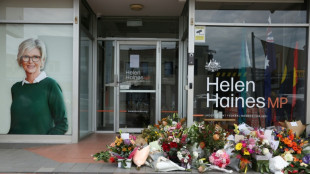 Australian lawmaker loses both legs after 'targeted' attack

 UK approves drilling in controversial Jackdaw gas field

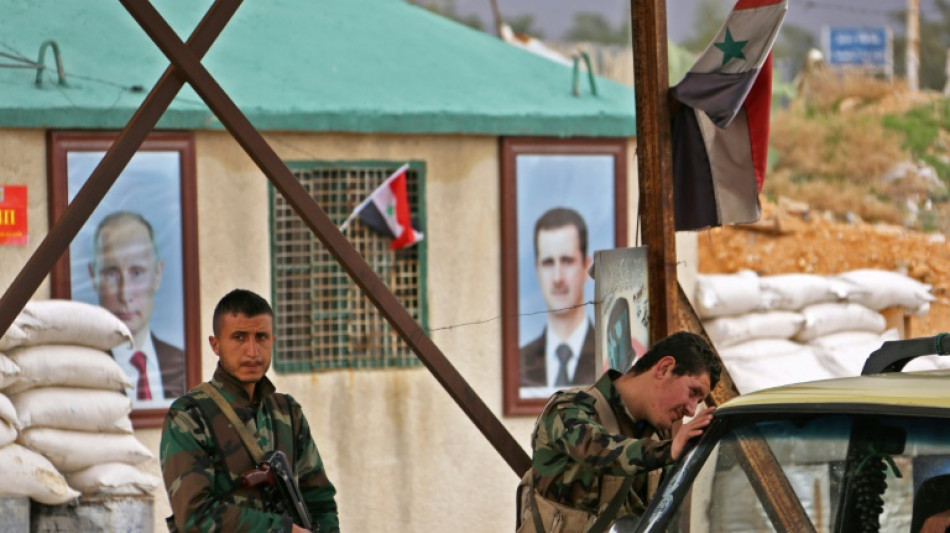
Russia's offer of "humanitarian corridors" for civilians to flee the Ukrainian cities it has besieged is a well-tried approach Moscow adopted during Syria's devastating civil war.
In those evacuations, Russia backed Syria's regime in pummelling rebel-held enclaves, before it brokered "safe corridors" and exit deals for civilians and fighters to leave, paving the way for a return to full regime control.
The Russian-led evacuations were regularly hampered by violence, often deeply distrusted, and were carried out with minimal international oversight.
"In Ukraine, we are seeing some of the same risks we saw in Syria," said Emma Beals, a non-resident scholar at the Middle East Institute.
"In some cases, routes are attacked during evacuations and civilians are injured or killed," she told AFP.
Russia entered Syria's war in 2015 on the side of President Bashar al-Assad's regime.
It negotiated and then oversaw controversial evacuations of more than 200,000 people from around Damascus, as well as the city of Aleppo and Daraa province.
In Ukraine, Kyiv has branded the corridors a publicity stunt, as many of the exit routes lead into Russia or its ally Belarus. Both sides accuse each other of ceasefire violations.
Here is a look at the key Syrian evacuations Russia carried out.
- Aleppo -
The regime had been battling rebels in Aleppo since 2012, but in September 2016 it launched a final campaign backed by Russian air power.
Russian warplanes bludgeoned rebel-held parts of the northern city, which came under a blitz of barrel bombs, shells and rockets.
According to the UN, about 40,000 civilians as well as more than 1,500 fighters were cut off in the city's eastern districts.
Russia had repeatedly announced several "humanitarian corridors" it said would allow safe passage out -- but few took advantage, with opposition officials labelling them "death corridors".
UN demands it should take charge of the corridors were largely ignored.
In December 2016, Russia and Iran clinched an agreement with rebel-backer Turkey to evacuate rebel fighters and their relatives.
Between December 15 and December 22, at least 34,000 people left to neighbouring opposition-held areas as part of the agreement, according to the International Committee of the Red Cross.
Many left on buses, some in private cars, with ambulances ferrying the sick and wounded -- which came under fire on at least one occasion.
Residents said they were harassed and subjected to lengthy inspections at checkpoints before they could leave.
A day after the corridor ended, Moscow deployed military police to back the regime forces sweeping in to control the city.
- Ghouta -
In February 2018, Moscow announced a daily five-hour "humanitarian pause" and the opening of protected corridors to allow people to leave Eastern Ghouta on the outskirts of Damascus after heavy fighting.
Eastern Ghouta, home to more than 400,000 people, had been besieged by regime forces since 2013.
Residents were intially deeply sceptical of Russia's offer, especially as the corridor led to government-held areas, and was carried out without international oversight. Seven people were killed in violence during the first "pause".
But as regime troops advanced, more than 100,000 people crossed into regime areas, according to the Syrian Observatory for Human Rights war monitor.
Several agreements were struck between Moscow and rebels, allowing safe passage to fighters and their families to opposition-held regions elsewhere.
Evacuations started on March 22, with more than 67,000 bussed out by the time the last rebel leader quits the area on April 11, according to the Observatory.
Russian troops accompanied the rebels to Syria's opposition-held north.
Russian military police were deployed at the checkpoints to leave, and Russian soldiers registered passengers and looked on as Syrian troops inspected bags and rebels' weapons.
- Daraa -
Russia was also key to the July 2018 surrender of opposition-held cities and towns in the southern province of Daraa, the cradle of the uprising against Assad.
Rebels were forced into talks after a devastating offensive launched with Russian firepower.
Residents and fighters who did not want to live under government control were granted safe passage out, while rebels who chose to remain were granted amnesty on condition they hand over heavy weapons.
Hundreds of fighters along with their families left Daraa to the rebel-held north, according to the Observatory. Russian forces searched the vehicles before they set off.
Last year, Russia brokered a second wave of departures, with dozens of fighters leaving, after Daraa was gripped by a fresh wave of heavy fighting.
"The Syrian experience shows that these humanitarian corridors were anything but," said Sara Kayyali, Syria researcher for Human Rights Watch.
"Both the Syrian-Russian military alliance and opposition groups attacked the corridors. In some cases, individuals who used them found that instead of safety, they were arrested or disappeared," she told AFP.
L.AbuAli--SF-PST