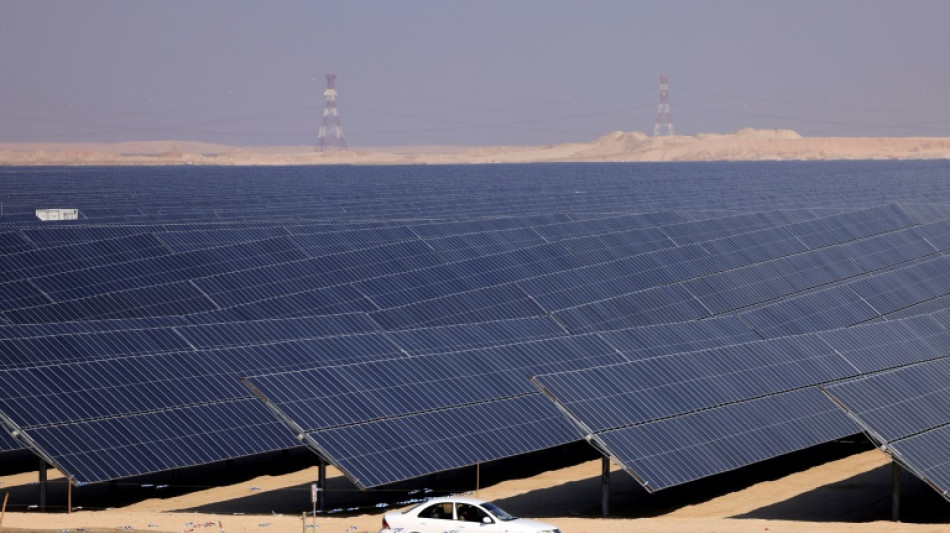
COP28 host UAE pledges to triple renewables / Photo: Karim SAHIB - AFP/File

 Lotto Results for Saturday, November 21, 2026

 Meta Offices Vandalized in India Amid Protests Over Account Removals

 اندلاع حريق في ناقلة نفط بمضيق هرمز بعد استهدافها بمقذوف

 England vs New Zealand Nations Championship 2026: Viewing Guide and Kick-off Time

 تصعيد إسرائيلي في الجنوب اللبناني وسط مباحثات حول ترتيبات ما بعد «اليونيفيل»

 Land Rover Defender EV Confirmed for 2027; Mercedes 'Baby G' Spied Testing
The oil-rich United Arab Emirates said it would triple renewable energy production as part of a raft of environmental initiatives announced on Monday, months before it hosts UN climate talks.
The UAE, one of the world's biggest exporters of emissions-producing crude oil, also unveiled national strategies on hydrogen and electric cars.
Few details were revealed about the new policies, announced five months before the COP28 talks in Dubai where nearly 200 nations will wrestle with how to tackle global warming and its impacts.
Ministers approved an "updated national energy strategy" that aims to "triple the contribution of renewable energy over the next seven years", Prime Minister Sheikh Mohammed bin Rashid Al Maktoum, Dubai's ruler, said after a cabinet meeting.
Up to 200 billion dirhams ($54 billion) will be invested over the same period to meet growing electricity demand, he said in a statement.
Another initiative "aims to consolidate the country's position as a producer and exporter of low-emission hydrogen over the next eight years" by developing supply chains and infrastructure, and setting up a research and development centre, Sheikh Mohammed said.
The UAE, a desert nation of about 10 million people, most of them expatriates, will also build a national network of charging stations as part of a "national policy for electric vehicles".
Chinese-based WeRide will receive the country's first national licence for self-driving cars, the statement added.
The UAE's hosting of the November-December COP negotiations has been criticised by climate activists who question whether one of the world's biggest oil producers should have such a key role in the fight against global warming.
The Gulf monarchy argues that oil remains indispensable to the global economy and is pushing the merits of carbon capture -- the process of removing carbon dioxide, the main greenhouse gas, as fuel is burned, or from the air.
In 2021, ahead of COP26 in Glasgow, the UAE said it was targeting net zero domestic carbon emissions by 2050 -- a calculation that does not include pollution from exported oil.
J.Saleh--SF-PST