In fractured Bosnia, Croats call for change

 Judge orders Meta to pay $25 bn to New Mexico in Cambridge Analytica case
 Champagne puts cork in project to expand production area

 Canadian publisher says novelist Orelien used AI to write novel
 Trump faces fresh questions over ties to 'humanitarian' Putin
 Hansen back in Ireland squad for Nations Championship
 Kremlin sees little 'substance' in Ukraine peace ideas

 Top Arab-Israeli election candidate tells AFP Netanyahu win would be 'catastrophe'
 South African rugby player's death due to 'aortic dissection'
 France's Macron lands in Riyadh on surprise 'solidarity' visit
 Around the world, far right blames immigrants for French protests
 South Africa eases fuel pain as growth slows
 Woody Allen shoots new movie in Madrid
 Nvidia's Huang urges Europe to go all in on AI
 Five things to know as French bond yield tops 5%
 'Complete threat' Ngumoha excites Liverpool captain Van Dijk

 'The fishing's terrible': Deforestation devastates C.Africa river
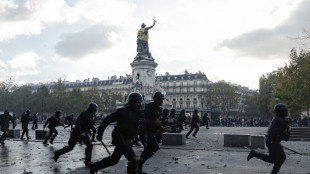 France's tourism sector worried about impact of riots
 Macron takes aim at Trump for using France riots for election gain
 North Korea says 'new firepower units' in place, loudspeakers to return

 Indonesia leader hits out at market downgrade warning
 Macron slams 'stupid' comments based on AI videos by leaders on France riots

 'Public health crisis': Indonesians seek fire relief from state
 British Museum sells second set of Bayeux exhibition tickets
 Australian lawmaker loses both legs after 'targeted' attack
 UK approves drilling in controversial Jackdaw gas field
In deeply divided Bosnia, the country's Croats have unleashed new calls for sweeping electoral reforms along with threats of a potential boycott of upcoming polls, sparking fears that a new period of instability awaits the impoverished Balkan nation.
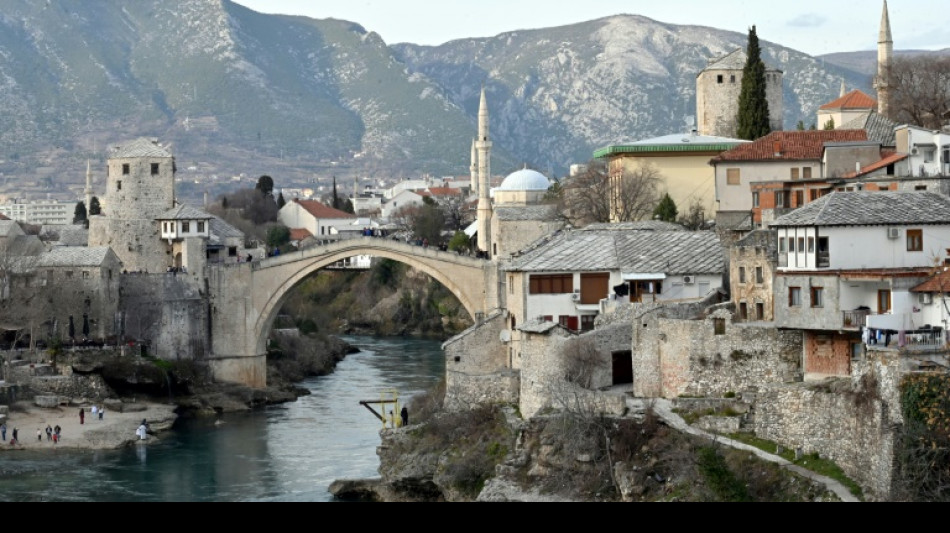
In southern Bosnia's Mostar -- considered the Croat heartland by the community -- the echo of church bells accompanies the Islamic call to prayer along the partitioned city's picturesque stone bridge connecting Croat neighbourhoods with a Muslim quarter.
But the sounds of harmony on the surface belie growing grievances among Bosnia's Catholic Croats over what they say are flaws in the electoral system that have undercut their right to choose its leader.
Mostar was devastated during the Bosnia war in the early 1990s, which fractured the country along ethnic lines.
Decades later, the upheaval among Bosnia's Croats comes as secessionist threats from the country's Serb leader are stoking concerns that Bosnia is on the verge of conflict again.
"Either we solve the problem by separating peacefully, or we make the house -- the state -- comfortable for everyone," Petar Vidic, a 48-year-old former Croat soldier, told AFP in Mostar.
- Bosnia's tripartite presidency -
Bosnia's brutal war ended with peace accords in 1995 that saw the country divided in two -- one half ruled by ethnic Serbs, the other by a Muslim-Croat federation.
The Balkan state's tripartite presidency rotates between a member from each community: Muslims, Serbs and Croats.
But the federation's Muslim population -- known as Bosniaks -- make up about 70 percent of its 2.2 million inhabitants. That gives them vast numerical superiority at the polls and de-facto control over who can be elected to lead the Croats at the presidential level.
"There are two Muslim members and one Serb member in the presidency," goes a common saying in Bosnia Croat political circles.
But for many Croats in Bosnia, the issue is no trivial matter.
After years of discontent, many of Bosnia's Croats are suggesting a boycott of the upcoming general election in October.
- 'Not logical' -
During a conference in Mostar in February, Bosnia's Croat parties gathered to plan their next steps, calling for urgent reforms. But they stopped short of announcing an all-out boycott.
"The formal conditions have not been met to organise the election until the electoral law is changed to ensure that all three ethnic groups are legitimately represented," said Dragan Covic, the head of Bosnia's largest Croat party.
Ilija Cvitanovic, another Bosnian Croat politician, took an even harder line.
"If someone thinks he can... deprive the Croatian people of legitimacy, suppress them, then he will have to answer for that," Cvitanovic told reporters.
Croat parties want a mechanism to allow the community to appoint their own representatives to the presidency and upper house -- a move fiercely opposed by the federation's ruling Bosniak party.
Bosnia's current Croat President Zeljko Komsic, who is effectively backed by Bosniak voters, has also lambasted the idea, calling it "an electoral law based on apartheid".
For many of Bosnia's Croats however, reforms are necessary to stave off further divisions or possible secession in the already deeply fractured country.
"Yes, we should all have the same rights," said Sima Pehar, a 78-year-old Croat pensioner.
"Why should someone who is not elected by Croats represent Croats? It is not logical."
- 'Everyone is leaving' -
But critics of the recent push for reforms say it would only serve the interests of the political elite in what they say is a dysfunctional country that continued to stagnate even after the war ended.
Even in peace, they say, Mostar has long been ruled by hardliners from both sides.
"Nothing will change for the citizens of Bosnia and Herzegovina with the possible reforms to the electoral rules," analyst Ivana Maric told regional broadcaster N1.
"This is just another story to keep people's minds occupied and prevent them from thinking about concrete things."
Mostar still boasts the cinematic beauty of its famous bridge, built by the Ottomans in the 16th century, destroyed by Croat militia forces in 1993 and rebuilt in 2004.
But people are still fleeing the city en masse, part of a nationwide phenomenon.
"Everyone is leaving Bosnia -- Croats, Bosniaks and Serbs," said the pensioner Pehar.
"The economy is a disaster. Those who govern us brandish the threat of war and people flee."
Meanwhile, Western-backed negotiations on possible reforms have stalled, stirring fears of a boycott, renewed unrest and a possible push to dissolve Bosnia's Muslim-Croat federation.
"I am convinced that the crisis will continue if the electoral law is not changed," said analyst Zoran Kresic.
"It is bad for the whole of Bosnia and its Euro-Atlantic future, and will unfortunately reflect on the people."
A.AbuSaada--SF-PST