Iraq's prized modern art plagued by forgery, trafficking / Photo: AHMAD AL-RUBAYE - AFP

 Ronaldo opens door for Portugal return, apologises for walkout
 'Nobody seems to care': Russian city shrugs off plague reports
 Hundreds arrested in French school protests as Macron summons ministers
 WADA seeks tough anti-doping stance from Kenya

 German ex-spy chief arrested for suspected espionage, treason
 Furyk vows US will 'do more' to end Ryder Cup losing streak

 Iyer hits ton as India hammer West Indies in T20 opener
 Mandhana named India women's team captain after Kaur quits
 'The sound keeps coming back': children maimed in Ethiopia's Tigray clashes

 Paris Women's Fashion Week: the key trends
 i-payout Introduces a New Approach to Payments, Closing the Beneficiary Information Gap
 New Generation of Crypto Miners Released by ASICID
 New investor forecasts LIV Golf teams could be worth $100 mn each
 Shakira, Pique return to court over children visit arrangements
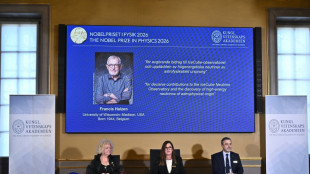 Nobel physics prize hails 'ghostly messengers' from space
 France's Mistral unveils latest model in sovereign AI push
 Stocks climb as oil prices retreat
 Vstock Transfer Names Securities Industry Veteran Erica Goodstein General Counsel and Chief Compliance Officer

 Four Indonesian seamen return home after Somali pirate ordeal
 Crisis-striken Haiti postpones elections
 Germany arrests ex-spy chief on suspicion of giving secrets to foreign powers
 Djokovic wins China Open after de Minaur retires
 IMF warns cost-of-living shocks cause 'lasting deterioration' in affordability
 Alcaraz wins Japan Open for first title since injury return
 'We're working to keep football clean', Turkish minister says

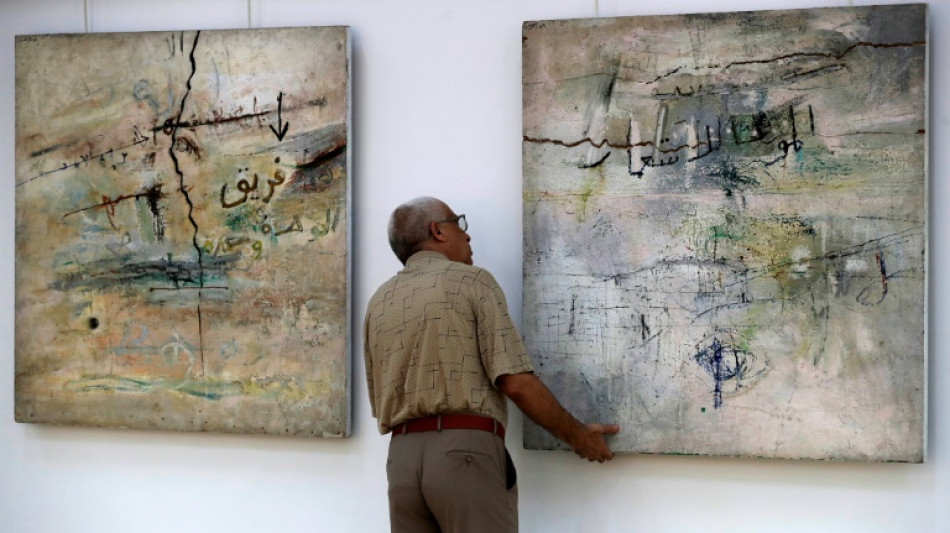
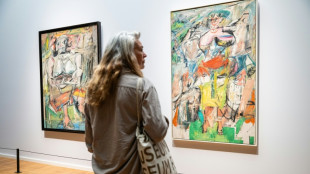
Many masterpieces of Iraqi painting were looted or destroyed during the years of war, but now the country's artistic heritage faces another threat: rampant counterfeiting and illicit trafficking.
Adorning a wall of Baghdad's modern art museum, the painting "Death to Colonialism", with its sombre blues and greys, by pioneering Iraqi artist Shakir Hassan al-Said is one of the rare pieces from its era still on public display.
Painted in the 1970s, toward the end of the heyday of Iraq's modern art movement, it survived the chaos that followed the 2003 US-led invasion when the museum's 8,000-strong collection was decimated by looters.
"The works of Shakir Hassan al-Said are extremely valuable as far as Iraqi modern art goes as well as art from the Middle East," said Tamara Chalabi, co-founder and head of the Ruya Foundation for Contemporary Art.
Paintings by Said, who established the influential Baghdad Modern Art Group alongside painter and sculptor Jewad Salim, can fetch up to $100,000 at auction.
The late artist's family says it has successfully prevented the sale of numerous counterfeits of his works, and is in regular contact with international auction houses and galleries about his oeuvre.
"Recently, we spotted a fake in Baghdad," said the artist's 50-year-old son, Mohammed Shakir Hassan al-Said.
He contacted the gallery through social media to demand the painting be taken down -– but said the management refused, claiming it was authentic.
Said's family, in an effort to safeguard his legacy after his death in 2004, has meticulously documented his comprehensive works, comprising around 3,000 pieces.
Today, they are working on the publication of a catalogue to provide "immunity" against the fakes that have proliferated after 2003, his son told AFP.
- 'Better and better forgeries' -
The primary targets of forgers and traffickers within and outside Iraq are the works of its modern pioneers from the 1940s, 1950s and 1960s.
Many of them were among the thousands of pieces looted from the country's museums and homes during the security vacuum after dictator Saddam Hussein fell.
"Iraqi art is today one of the most important sources of artistic production in the Arab world," said Sultan Sooud al-Qassemi, the founder of the Barjeel Art Foundation, a museum in Sharjah in the United Arab Emirates.
Kadhim Hayder and Dia Azzawi are among some of the most sought-after artists.
"Nowadays some Iraqi artworks are sold for hundreds of thousands of dollars," the Emirati art collector told AFP. "Forgers are noticing the auction results... It's enticing them to create better and better forgeries."
The authentication problem arises across the region -- notably in Egypt, Lebanon and Syria -- but "with Iraq it is especially acute because of the multiple layers of challenges: the exile of artists, the successive wars," said Qassemi.
For Chalabi, "forgery is part of the overall problem of corruption in Iraq which has become embedded in the system and is accepted by people".
- Damaged reputation -
One of the largest collections lost was at the National Museum of Modern Art in Baghdad, which housed some of the country's most treasured artworks from the 21st century.
"Before 2003, we had 8,000 works," said Ali al-Doulaimi, the museum's former director. "Today, there are around 2,000."
In the years after the invasion, "we acquired new works, and lost pieces were returned", said Doulaimi.
The museum and Ministry of Culture are fighting to return some of Iraq's stolen art. They have provided Interpol with information about 100 missing pieces, said Doulaimi, who recently retired.
However, it is difficult to determine the true extent of what is missing -- with the unreliable inventory hand-written by the previous administration.
In 2017, British auction house Christie's announced it was withdrawing a painting by Iraqi artist Faeq Hassan after a "disagreement over ownership".
An Iraqi official explained at the time that the painting was likely smuggled out of the country after being on display at an officer's club affiliated with the Ministry of Defence.
The painting was never returned to Iraq.
At the Akkad gallery in Baghdad, owner Hayder Hachem Naji said the increase in counterfeits "damages the reputation of Iraqi art".
"Sometimes forgers will use an old painting to repaint on -- the frame and the canvas will be old", said the 54-year-old gallery owner.
Recently, he was asked to exhibit a painting attributed to well-known Cubist-influenced painter Hafidh al-Droubi.
Its owner hoped to sell it for $40,000 -- but Naji politely declined.
"Honestly, it was a very high-quality counterfeit," he said.
P.Tamimi--SF-PST