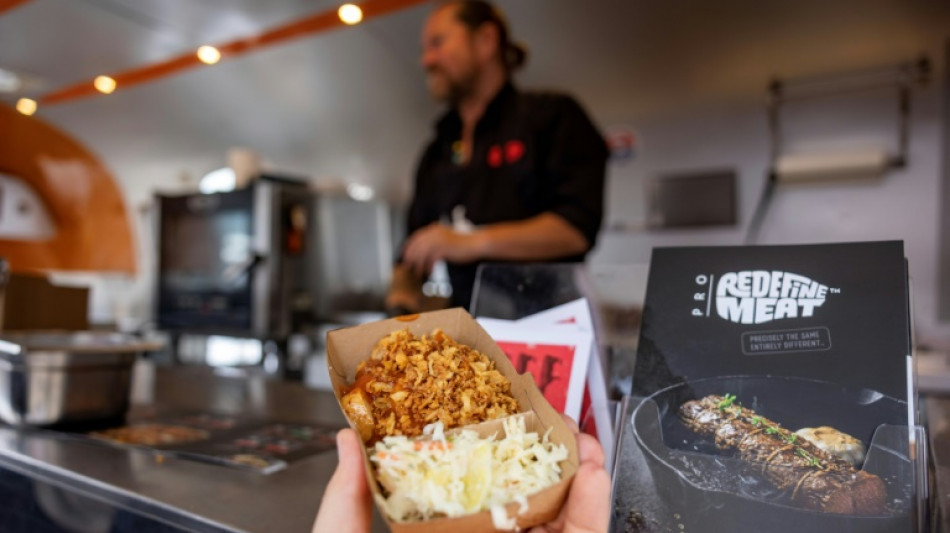
Debate sizzles as meat eating hits new low in Germany / Photo: Odd ANDERSEN - AFP

 Ronaldo opens door for Portugal return, apologises for walkout

 'Nobody seems to care': Russian city shrugs off plague reports

 Hundreds arrested in French school protests as Macron summons ministers
 WADA seeks tough anti-doping stance from Kenya
 German ex-spy chief arrested for suspected espionage, treason
 Furyk vows US will 'do more' to end Ryder Cup losing streak

 Iyer hits ton as India hammer West Indies in T20 opener

 Mandhana named India women's team captain after Kaur quits

 'The sound keeps coming back': children maimed in Ethiopia's Tigray clashes

 Paris Women's Fashion Week: the key trends

 i-payout Introduces a New Approach to Payments, Closing the Beneficiary Information Gap

 New Generation of Crypto Miners Released by ASICID

 New investor forecasts LIV Golf teams could be worth $100 mn each

 Shakira, Pique return to court over children visit arrangements

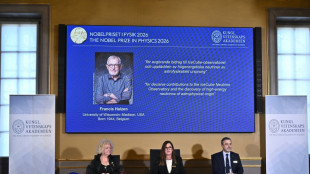 Nobel physics prize hails 'ghostly messengers' from space
 France's Mistral unveils latest model in sovereign AI push

 Stocks climb as oil prices retreat

 Vstock Transfer Names Securities Industry Veteran Erica Goodstein General Counsel and Chief Compliance Officer

 Four Indonesian seamen return home after Somali pirate ordeal

 Crisis-striken Haiti postpones elections

 Germany arrests ex-spy chief on suspicion of giving secrets to foreign powers

 Djokovic wins China Open after de Minaur retires

 IMF warns cost-of-living shocks cause 'lasting deterioration' in affordability

 Alcaraz wins Japan Open for first title since injury return

 'We're working to keep football clean', Turkish minister says

Florian Busmann used to enjoy sausages and steak on the barbecue in summer, but these days he prefers meat substitutes and grilled vegetables like aubergines and peppers.
"Eating less meat is definitely a contribution to both the environment and animals. And it is also healthy," the 28-year-old local government worker told AFP at the Vegan Summer Festival in Berlin.
Despite being known for their love of sausages and schnitzel, Germans have been steadily eating less meat over the past few years.
Figures from the German Agriculture Ministry show that meat consumption dropped to 52 kilogrammes (115 pounds) per person in 2022, the lowest since the calculations began in 1989.
In comparison, the figure stood at around 61 kilogrammes per person just five years ago.
Worries over animal welfare, climate change and higher prices appear to have driven consumers to look for alternatives to meat to fill their plates.
Around 10 percent of Germans are vegetarian, according to the Agriculture Ministry, compared with six percent in 2018.
Since 2021, Germany has even had a vegetarian agriculture minister, the Green party's Cem Ozdemir -- much to the dismay of many in the meat industry.
- 'Long-term trend' -
Despite having made the choice to go veggie as a teenager due to concerns over animal welfare, Ozdemir still sees a role for the meat industry.
For him, the key is to reform meat production as part of measures to tackle climate change.
Animal husbandry is "one of the biggest drivers" of carbon emissions in agriculture, he told AFP, so measures must be taken to make the practice more climate-friendly.
"For example, we will support farmers in keeping fewer animals, but better," he said.
Ozdemir believes Germans eating less meat is a "long-term trend" that has nothing to do with him personally.
"People are concerned about the climate, want better animal welfare and are also paying more attention to their health, which I think is good," he said.
The growing market for meat substitutes has also played a role, according to Sebastian Joy, head of the NGO ProVeg International, which organises the Berlin festival.
"You can still have your burger, your schnitzel, your sausages, but you don't have to kill animals for it," he said.
Ozdemir's ministry is working on a nutrition strategy to help Germans eat more healthily and is planning to present it by the end of 2023.
The plan is to encourage people to follow a "healthy, more plant-based and sustainable diet", according to the ministry.
- 10 grammes a day -
But not all Germans feel so positive about a future with less meat.
Local media recently reported that the German Nutrition Society (DGE), which advises the government on measures to promote healthy eating, was planning to recommend just 10 grammes of meat per day.
The reports caused an uproar, with memes circulating on social media showing the paltry portion of meat being weighed out on scales.
The DGE later said the whole thing had been a misunderstanding, but the debate has shown no signs of cooling down.
A recent survey by the popular Bild daily showed that 57 percent of Germans are firmly against the state taking measures to reduce meat consumption.
"The state should stay away from people's plates," a spokeswoman for the German Meat Industry Association (VDF) told AFP.
"Ninety percent of Germans like to eat meat. Nobody wants to tell a vegetarian to eat meat to get a better supply of vitamins and nutrients. The same must apply in reverse," the spokeswoman said.
The VDF believes declining meat consumption in Germany since 2018 is mainly down to rising prices and pressure on consumers from inflation.
For Gabrielle Hubner, 61, another visitor to the Berlin vegan festival, the "rising cost" is the main reason she has been eating less meat in recent years.
"I don't have to eat meat every day, there are other foods like pasta, cheese or potatoes," the administrative worker said.
Ozdemir said he has no intention of dictating to Germans what they should put in their shopping baskets.
"Everyone can decide for themselves what they eat and how much of it," he said.
"My job is to make offers for a balanced and healthy diet. I want the healthy choice to become the easy choice."
B.Mahmoud--SF-PST