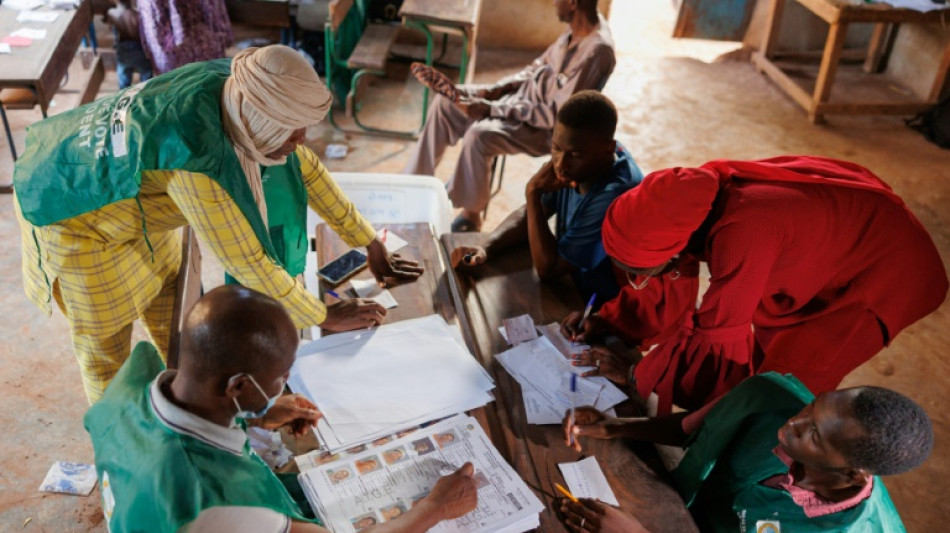
Malians approved constitutional changes, says election body / Photo: OUSMANE MAKAVELI - AFP

 Grammy Winner Silvana Estrada Named Creative Chair for Latin Music at LA Phil

 Lotto Results for Saturday, November 21, 2026

 Meta Offices Vandalized in India Amid Protests Over Account Removals

 اندلاع حريق في ناقلة نفط بمضيق هرمز بعد استهدافها بمقذوف

 England vs New Zealand Nations Championship 2026: Viewing Guide and Kick-off Time

 تصعيد إسرائيلي في الجنوب اللبناني وسط مباحثات حول ترتيبات ما بعد «اليونيفيل»
Malian voters overwhelmingly approved changes to the constitution in a referendum, marking a key step in the ruling junta's declared plans to restore civilian rule, provisional results showed Friday.
The military has made the draft constitution a cornerstone for the rebuilding of Mali, which is facing the spread of jihadism and a deep, multi-faceted crisis.
Ninety-seven percent of the referendum votes were cast in favour of the changes, the electoral authority said.
Voter turnout was put at 39.4 percent in the landlocked Sahel country, which is struggling with an 11-year-old jihadist insurgency.
Opponents of the plan believe the vote was designed to keep the colonels in power beyond the presidential election scheduled for February 2024, despite their initial commitment to hand over to civilians after the elections.
The new constitution will strengthen the role of the president, a change that has spurred expectations that junta leader Colonel Assimi Goita intends to vie for the job.
The changes will also give pride of place to the armed forces and emphasise "sovereignty", the ruling junta's mantra since it came to power in 2020.
Voting was hampered in many towns in the centre and north of the country, either by fear of jihadist attacks or by political disagreements.
- Stronger president -
Mali has been under military rule since August 2020 when army officers angered over failures to roll back the jihadists forced out the country's elected president, Ibrahim Boubacar Keita.
The country's strongman, Goita, is a special forces colonel.
He initially appointed a civilian as interim president but kicked him out in a second coup in 2021 and stepped into the top job himself.
Under pressure from the West African regional bloc ECOWAS, Goita has vowed to restore a civilian government in March 2024 after implementing what the junta says are crucially needed institutional reforms.
Under the constitutional changes, the president will "determine the policies of the Nation," a role alloted to the government under the country's current constitution, which dates to 1992.
The head of state will have the right to hire and fire the prime minister and cabinet members, and the government will be answerable to him and not to parliament as is the case presently.
Other clauses provide amnesty to those behind prior coups, reform oversight of public finances and force MPs and senators to declare their wealth in a bid to clamp down on corruption.
The 1992 constitution has often been criticised for creating a weak central state unable to combat security crises, develop infrastructure and meet other needs.
But its proposed replacement has been attacked by critics as a tool for consolidating the junta's grip.
The ruling authorities have defended the reforms as an essential for the overhaul of the Malian state, which they intend to carry out.
- Russian paramilitaries -
In the country's restive north, armed groups that had previously battled the government in Bamako but signed a fragile peace agreement with it in 2015, hampered Sunday's referendum.
In places in their region where the vote did take place, ballot stuffing was widespread, they said.
Influential religious figures, including prominent imam Mahmoud Dicko, also complained that the new constitution retained a clause defining Mali as a secular state.
The referendum coincided with a confrontation between Mali and the United Nations over the future of the UN's decade-long peacekeeping mission in Mali.
Two days before Sunday's vote, the junta called on the UN Security Council to pull out the 15,000-man MINUSMA force immediately, saying the mission had failed in its task of providing security. MINUSMA's mandate expires on June 30.
The ruling military has also fallen out with France, Mali's traditional ally, which withdrew its troops after the country wove close ties with the Kremlin and brought in Russian paramilitaries.
V.Said--SF-PST