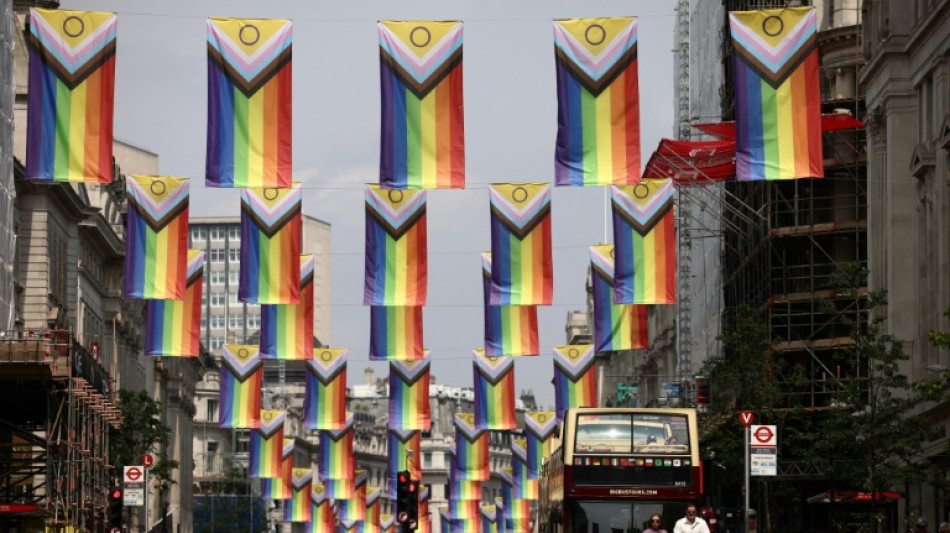
Nearly 40 countries at UN back LGBTQ families / Photo: HENRY NICHOLLS - AFP

 US Ambassador Waltz Warns Russia Faces Unsustainable Losses in Ukraine
 إيران تحذر من استمرار التصعيد في الخليج بعد إصابة ناقلتي نفط وإسقاط طائرة مسيرة أمريكية

 2026 Nissan Sentra Review: Styling Updates and Tech Overhaul for Canada's Last Sedan

 Land Reform Requires Agricultural Education to Succeed, Experts Warn
 دراسة برازيلية: البعوض الحامل لـ"وولباكيا" يقلل إصابات حمى الضنك بنسبة 69%

 Garmin Patent Reveals Inter-Pixel Solar Tech for AMOLED Watches

 Former Water Board Boss Remanded Over R4.4 Billion Giyani Graft Claims
Nearly 40 countries at the United Nations backed LGBTQ families on Tuesday, at a time when some Muslim and African nations are contesting sexual orientation and gender identity language in UN forums.
"Families play a fundamental role in society. Supporting families is an important element in promoting and protecting human rights," 37 countries said in a statement at the UN Human Rights Council.
"This support must be inclusive of all family compositions, including multigenerational and extended families, single parent households, LGBTIQ+ families and Indigenous kinship groups," Australia's representative said on behalf of several countries. They were mainly from Europe and the Americas, plus Israel, New Zealand and East Timor.
They called on countries and UN bodies "to continue to apply an inclusive lens to families, and to ensure that equality, non-discrimination, and the universality of human rights remain at the centre of engagement in supporting families".
Argentina, Brazil, Britain, Canada, Germany, Mexico, Spain and the United States were among the signatories.
The statement comes as several other countries, notably from the Middle East, are mounting a defence of the traditional family in UN forums.
Sexual orientation and gender identity issues will be at the heart of the 53rd Human Rights Council session, which started on Monday and runs until mid-July.
Such issues have become a contentious in several branches of the UN.
Countries in the Organisation of Islamic Cooperation and many African nations, plus Russia and China, are trying to roll back concepts and language which have been embedded in UN documents for at least a decade.
Earlier this month, OIC and African countries were blocking the adoption of the UN labour agency's budget, before agreeing to a last-minute compromise over references to discrimination based on gender identity and sexual orientation.
"Promoting a framework around discrimination that does not have international consensus and reflects priorities of the few risks undermining the spirit of cooperation," said Pakistan's Khalil Hashmi, on behalf of the OIC group, before the vote was finally passed.
The World Health Organization has since last year seen attempts to remove such references from its strategy on infection prevention, while the Human Rights Council faces growing opposition to long-standing efforts to monitor for discrimination based on sexual orientation and gender identity.
D.Qudsi--SF-PST