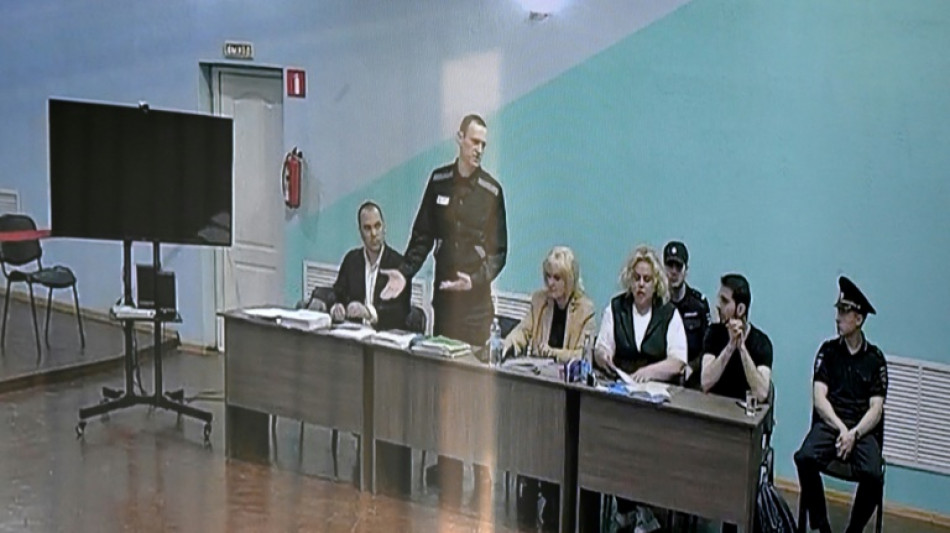
Navalny's 'extremism' trial won't be public: Russia / Photo: Natalia KOLESNIKOVA - AFP

 US Ambassador Waltz Warns Russia Faces Unsustainable Losses in Ukraine
 إيران تحذر من استمرار التصعيد في الخليج بعد إصابة ناقلتي نفط وإسقاط طائرة مسيرة أمريكية

 2026 Nissan Sentra Review: Styling Updates and Tech Overhaul for Canada's Last Sedan

 Land Reform Requires Agricultural Education to Succeed, Experts Warn
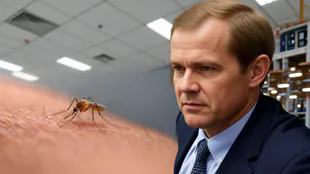 دراسة برازيلية: البعوض الحامل لـ"وولباكيا" يقلل إصابات حمى الضنك بنسبة 69%
 Garmin Patent Reveals Inter-Pixel Solar Tech for AMOLED Watches

 Former Water Board Boss Remanded Over R4.4 Billion Giyani Graft Claims
A Russian court ordered Monday that the trial for Kremlin critic Alexei Navalny be held behind closed doors as he faces extremism charges that could see his time in prison extended for decades.
The case comes more than a year into Russia's full-scale offensive in Ukraine, which unleashed an unprecedented crackdown on the Kremlin's critics, with many now in exile or in jail.
President Vladimir Putin's most prominent critic is being tried at the maximum security prison where he is jailed: IK-6 penal colony, some 250 kilometres (155 miles) east of Moscow.
"The court has decided to make the Navalny trial closed," Moscow City Court spokesman Vadim Pozhelayev told reporters several hours after proceedings began.
He called for the press to leave the building.
"Shameless -- no conscience or honour," Navalny's father Anatoly told AFP as he was told to leave his son's trial, referring to the court's decision.
Navalny, 47, once mobilised massive anti-Kremlin protests but is now serving a nine-year prison sentence on embezzlement charges that his supporters see as punishment for his political work.
He was arrested in 2021 on his arrival in Moscow from Germany, where he had been recovering from a poisoning attack that he blamed on the Kremlin.
- New 'stubborn' campaign -
Navalny, who has complained of health problems since being jailed and experienced major weight loss, could see 30 years tacked on to his jail term.
He said that prosecutors had provided him with 3,828 pages describing all the crimes he is alleged to have committed while in prison.
"Although it's clear from the size of the tomes that I am a sophisticated and persistent criminal, it's impossible to find out what exactly I am accused of," Navalny quipped.
He has been charged with financing extremist activity, publicly inciting extremist activities and "rehabilitating the Nazi ideology," among other offences.
Navanlny has denounced Putin's intervention in Ukraine, describing it as a "tragedy" and saying Moscow's defeat was "inevitable".
And on Monday, his team announced the launch of a campaign to deter Russians from supporting the conflict.
In a post online, Navalny's team said it was planning a "long, stubborn and exhaustive but fundamentally important campaign where we will turn people against the war."
"Against the dead-end that Putin crazily and dumbly put us in on February 24, 2022," it said, referring to the day Putin deployed troops to Ukraine.
It said it planned to "fundamentally" change Russian public opinion within months.
- Punishment for 'political work' -
Russia has introduced strict laws banning criticism of its army's actions in Ukraine.
Organisations and lawyers that have campaigned for Russians critical of the offensive have faced increasing pressure.
On Monday, Russian state media reported that a leading human rights group that provides legal help in political cases -- called Agora -- was labelled as "undesirable".
While Navalny has been the target of multiple legal cases, this is the first formally political case against him, his team said.
"He is being tried for his political work," Navalny's spokeswoman Kira Yarmysh told AFP ahead of the trial.
In April, Navalny said he was told he would be judged by a military tribunal over "terrorism" charges. He could face life in prison, he said.
Navalny's team says he has been harassed in prison, where he was kept in a "punishment cell" for perceived transgressions.
The opposition leader -- a lawyer by training -- has taken prison officials to court to retain access to what he sees as basic prisoner rights.
Navalny built a huge social media following by producing videos providing evidence of systemic corruption among Russian elites.
He still communicates on social media through his team.
Navalny had set up a network of campaign offices across the country and aimed to run for president in 2018, but election authorities did not allow him to challenge Putin.
Navalny's offices were designated "extremist" organisations in 2021.
In mid-June, a Russian court sentenced the head of Navalny's headquarters in the central city of Ufa, Lilia Chanysheva, to seven-and-a-half years in prison.
N.Awad--SF-PST