Chinese premier in Germany as Western mistrust mounts / Photo: GREG BAKER - AFP

 Hotel Blacklist Launches New Accommodation Industry Risk Assessment Tool
 Bangladesh nuclear plant draws hope -- and worry

 US beat Canada 1-0 to wrap up four-win international break

 Turkey, Australia's joint COP31 leadership raises doubts

 For Turkish NGOs, COP31 offers rare space for action

 Sleep, appetite, gene-editing experts contend for Nobel chemistry prize
 Nobel Peace Prize haunted by the 'spectre' of Trump

 Africa launches own credit agency in bid for cheaper borrowing

 US, China, EU: three paths to regulating AI
 Australia's High Court rules against coal mine in landmark climate case
 Australia touts new funds for Pacific infrastructure at Fiji 'pre-COP'

 Eva Marie Saint, Oscar winner of Hollywood classics, dies at 102

 Australia probes app used in cheap smart glasses over privacy fears
 England needed to 'move on' from World Cup pain, says Tuchel

 O'Neill to stay at Celtic after period of "reflection"

 Kane marks 125th England cap with Wembley Nations League double

 Quebec's incoming separatist leader wants to block Crown from swearing-in
 Emmys gala will now stream its premier television awards
 Paramount completes Warner Bros takeover, creating Skydance

 Trump blames France unrest on Islam, migration

 Apple's Cook praises EU over efforts to protect children online
 Nobel winner Halzen says years of October 'misery' finally over
 Quebec separatist win rattles Carney's unity push

 'Itching' for change: Shiffrin cuts back slaloms this season

 'Gen Z has risen up': Tens of thousands mass for tense France school protests
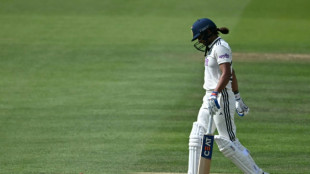
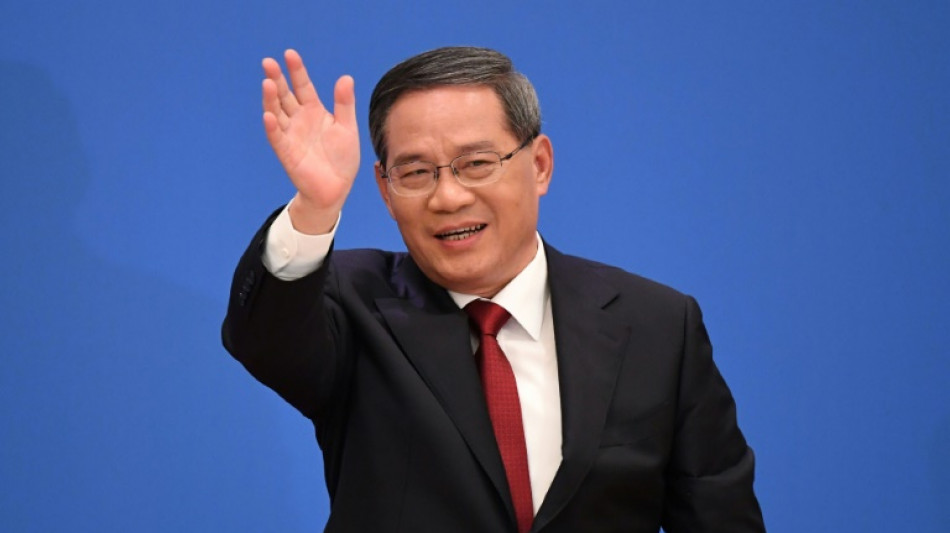
China's Premier Li Qiang will meet German leaders during a trip to Berlin on Monday, at a time when Beijing's policies on Russia, trade and human rights are receiving an increasingly hostile reception in the West.
Li -- who is making his first trip abroad since being appointed premier in March -- will begin his two-nation tour with so-called "government consultations" involving talks with Chancellor Olaf Scholz and his cabinet, before heading on to France for a financing summit hosted by President Emmanuel Macron.
China cited the "importance" placed on ties with Germany and outlined its "hopes to deepen and expand its relations" with the EU heavyweight.
But Germany's first national security strategy, published days ago, could set the tone at the talks.
The blueprint stridently accused China of acting against German interests, putting international security "under increasing pressure" and disregarding human rights.
At the same time, it underlined the necessity of getting Beijing's cooperation on global issues like fighting climate change.
Berlin is expecting "a good and productive exchange with a partner", said government spokesman Wolfgang Buechner.
But "how the partner should be classified is something that you have heard during the presentation of the national security strategy", he added.
Scholz himself had said the message sent by the document is that "China's integration into world trade and world economic relations should not be impaired.
"But at the same time the security issues that arise for us must be taken into account."
Beijing has bristled at being described as a "partner, competitor and systemic rival" in the text.
"Viewing others as competitors, rivals or even adversaries and turning normal cooperation into security or political issues will only push our world towards a vortex of division and confrontation," said foreign ministry spokesman Wang Wenbin.
- Push to diversify -
Export giant Germany, by virtue of its economic might, has always enjoyed special ties with China.
Under former chancellor Angela Merkel, Berlin took a pragmatic approach of talking up economic opportunities while keeping less flattering opinions on rights and freedom behind closed doors.
That made China a key market for Germany's exporters while also allowing Berlin to take in prominent human rights activists like Liu Xia, apparently without suffering any retaliatory consequences.
But the coronavirus pandemic raised doubts about the wisdom of relying on a far-flung partner with its own huge domestic needs for essentials from medication to surgical gowns to masks.
And Russia's war on Ukraine turned the approach of economic rapprochement on its head.
With China refusing to distance itself from Russian President Vladimir Putin, concerns are growing in the West over its motives and reliability.
The European Commission last week warned that Chinese telecoms giants Huawei and ZTE posed a risk to the EU's security and said it would stop using services that relied on the companies.
Diversifying has now become a buzzword for Germany's elites, with Berlin intensively wooing more partners beyond the world's biggest powers.
- 'Economy in trouble' -
But inconveniently for China, the shift is happening when the Asian giant is experiencing an economic slowdown.
Sluggish exports and domestic demand are weighing on China's post-Covid economy, while headwinds from major powers like the United States are growing.
It was no surprise, then, that Li had picked Germany as his first stop abroad, analysts said.
Thorsten Benner, director of the Global Public Policy Institute, told AFP that "as relations with the US deteriorate, Beijing has an interest in demonstrating it has constructive relations with the biggest player in Europe".
Beijing could also use the chance to "advance policies that drive a wedge" between Europe and the United States, he added.
Li is "in charge of fixing the economy, which is in trouble", Ian Johnson, China expert at the US think tank Council on Foreign Relations, told AFP.
"So it makes sense to go to China's biggest trading partner in Europe," he said, adding that Beijing needs "further investment and better business ties with companies, such as BASF, VW and Siemens".
Benner said it was "open whether Germany continues to play the game of pretending there is broad agreement with Beijing", in a meeting he called a "stress test".
Alternatively, it could choose "a new path of straight talk and limiting the final statement to areas where there is a genuine path forward for cooperation".
O.Farraj--SF-PST