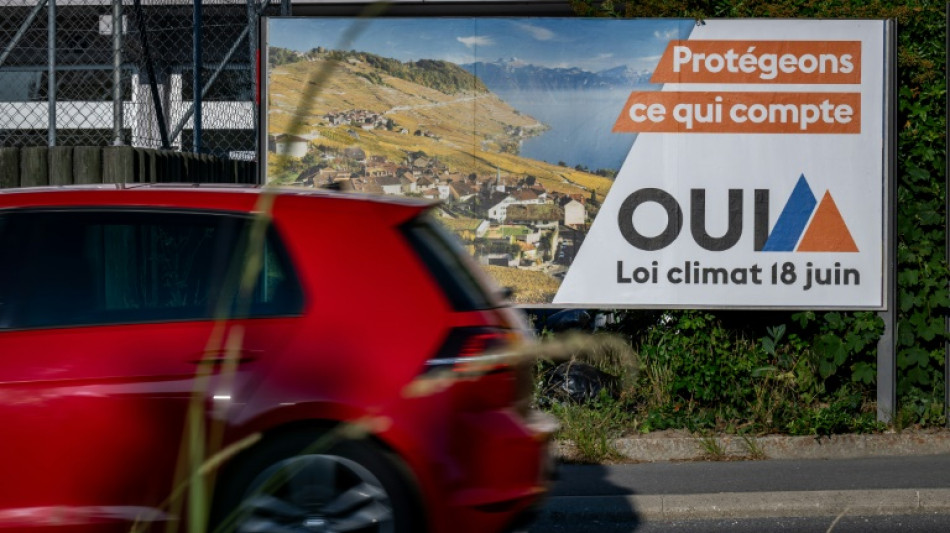
Swiss look set to back net-zero climate law / Photo: Fabrice COFFRINI - AFP

 Myanmar leader lands in Malaysia for migrant return talks

 Indian central bank hikes rates for first time since 2023
 US military on Okinawa face curfew, alcohol ban after murder case

 Fierce lobbying in EU over 'forever chemicals'

 Dodgers beat Braves and Padres avoid sweep in MLB playoffs
 Mourning, war and elections as Israel marks October 7

 Messi says Argentina retirement is 'saddest day of my career'
 Oil rises and stocks fall as Hormuz worries flare

 Pacific presses world for help 'surviving' climate change at pre-COP summit

 Verstappen revival to be put to the test in steamy Singapore
 US woman who survived botched execution is conscious, speaking: lawyers

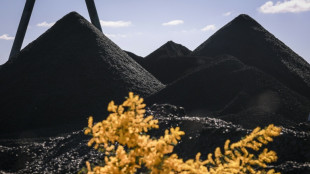 Climate champion Australia digging more coal
 Emotion, tears as Messi retires from Argentina national team
 Dodgers push Braves to the brink of MLB playoff exit

 Crisis-stricken Haiti postpones elections
 N. Korea's Kim pledges 'invariable support' in Putin birthday letter
 OGRD Alliance Advances PLPC Multi-Asset Platform Following APHELAR Milestone, Expanding Licensing and Strategic Capital Frameworks

 Emotion, tears as Messi prepares for Argentina farewell

 Kane eyes Ronaldo record after matching England cap mark

 Spain fight back to beat Croatia, Kane adds to record for England

 Merino double helps Spain beat Croatia, reach Nations League quarters

 US stocks hit fresh records as oil stabilizes on rising supplies

 As Messi bows out, Argentines say 'thank you'

 Ronaldo opens door for Portugal return, apologises for walkout
 'Nobody seems to care': Russian city shrugs off plague reports

The Swiss, feeling the impact of global warming on their rapidly melting glaciers, on Sunday backed a new climate bill aimed at steering the country towards carbon neutrality by 2050, according to early estimates.
The initial projections from the gfs.bern institute showed that 58 percent of Swiss voters had said "yes" in the referendum on the new law, which would require Switzerland to slash its dependence on imported oil and gas, scaling up the development and use of greener and more homegrown alternatives.
Voters also appeared to have overwhelmingly backed adopting a global minimum tax rate of 15 percent for multinational corporations, with 79 percent voting in favour, according to the projections published shortly after polls closed at noon (1000 GMT).
Recent opinion polls had indicated strong but slipping support for the climate bill, amid an anxiety-infused campaign around electricity shortages and economic ruin driven by the populist right-wing Swiss People's Party (SVP).
Supporters had argued the "Federal Act on Climate Protection Targets, Innovation and Strengthening Energy Security" is needed to ensure energy security.
They say it will also help address the ravages of climate change, highlighted by the dramatic melting of glaciers in the Swiss Alps, which lost a third of their ice volume between 2001 and 2022.
- Climate-friendly alternatives -
Switzerland imports around three quarters of its energy, with all the oil and natural gas consumed coming from abroad.
Climate activists had initially wanted to push for a total ban on all oil and gas consumption in Switzerland by 2050.
But the government balked at the so-called Glacier Initiative, drawing up a counter-proposal that scrapped the idea of a ban but included other elements.
The text promises financial support of two billion Swiss francs ($2.2 billion) over a decade to promote the replacement of gas or oil heating systems with climate-friendly alternatives, as well as aid to push businesses towards green innovation.
Nearly all of Switzerland's major parties support the bill, except the SVP -- the country's largest party -- which triggered the referendum against what it dismisses as the "electricity-wasting law".
The SVP says the bill's goal of achieving climate neutrality in just over a quarter-century would effectively mean a fossil fuel ban, which it claims would threaten energy access and send household electricity bills soaring.
In 2021, the SVP successfully lobbied against a law that would have curbed greenhouse gas emissions, and there had been fears it might push through a similar upset.
But the "yes" camp was likely strengthened by swelling concerns around Switzerland's reliance on foreign energy sources since Russia's invasion of Ukraine threw into doubt Swiss access to much of the foreign energy it uses.
- Corporate tax hike -
There had meanwhile been little doubt that voters would back a separate referendum on hiking the tax rate for large businesses, with opinion polls consistently showing strong support.
The vote will allow an amendment to the constitution so Switzerland can join an international agreement, led by the Organisation for Economic Cooperation and Development (OECD), to introduce a global minimum tax rate of 15 percent for multinational corporations.
The plan is to impose the new rate on all Swiss-based companies with a turnover above 750 million euros.
Until now, many of Switzerland's 26 cantons have imposed some of the lowest corporate tax rates in the world, in what they often said was needed to attract businesses in the face of high wages and location costs.
The Swiss government estimates that revenues from the supplementary tax would amount to between 1.0 and 2.5 billion Swiss francs in the first year alone.
M.AbuKhalil--SF-PST