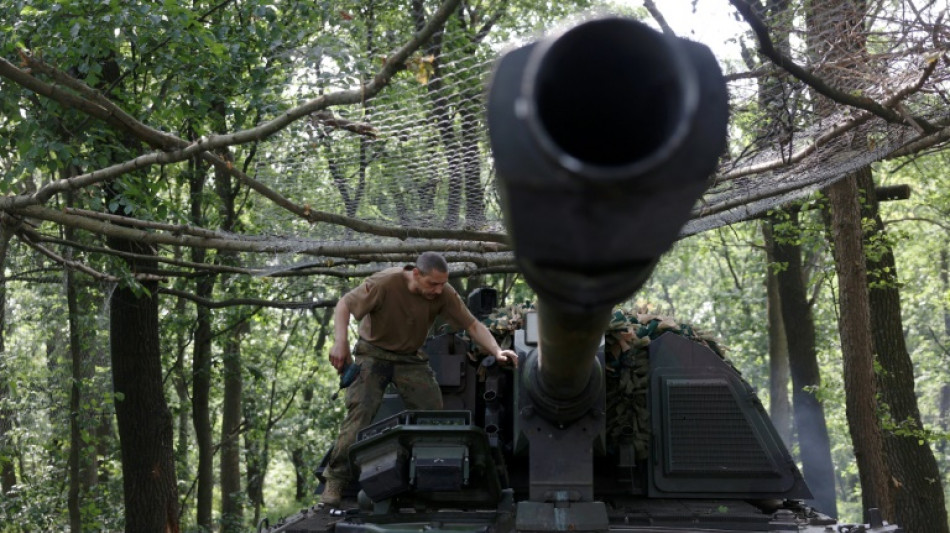
Ukraine's long battle for Bakhmut takes toll on German gun / Photo: Anatolii Stepanov - AFP

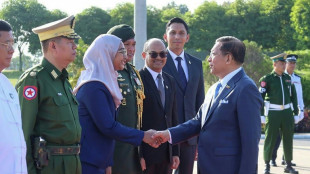 Myanmar leader lands in Malaysia for migrant return talks

 Indian central bank hikes rates for first time since 2023

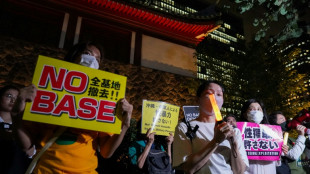 US military on Okinawa face curfew, alcohol ban after murder case

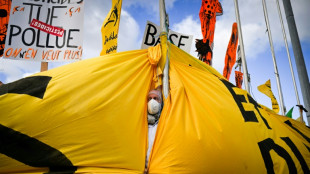 Fierce lobbying in EU over 'forever chemicals'
 Dodgers beat Braves and Padres avoid sweep in MLB playoffs

 Mourning, war and elections as Israel marks October 7

 Messi says Argentina retirement is 'saddest day of my career'
 Oil rises and stocks fall as Hormuz worries flare

 Pacific presses world for help 'surviving' climate change at pre-COP summit

 Verstappen revival to be put to the test in steamy Singapore
 US woman who survived botched execution is conscious, speaking: lawyers

 Climate champion Australia digging more coal

 Emotion, tears as Messi retires from Argentina national team

 Dodgers push Braves to the brink of MLB playoff exit
 Crisis-stricken Haiti postpones elections

 N. Korea's Kim pledges 'invariable support' in Putin birthday letter

 OGRD Alliance Advances PLPC Multi-Asset Platform Following APHELAR Milestone, Expanding Licensing and Strategic Capital Frameworks

 Emotion, tears as Messi prepares for Argentina farewell

 Kane eyes Ronaldo record after matching England cap mark

 Spain fight back to beat Croatia, Kane adds to record for England

 Merino double helps Spain beat Croatia, reach Nations League quarters

 US stocks hit fresh records as oil stabilizes on rising supplies

 As Messi bows out, Argentines say 'thank you'

 Ronaldo opens door for Portugal return, apologises for walkout

 'Nobody seems to care': Russian city shrugs off plague reports

The fighting around the eastern Ukrainian city of Bakhmut has been going on so long that even recently delivered Western weapons like the German Pzh2000 howitzer are showing wear and tear.
The city fell to Russian forces in May after an eight-month struggle that saw heavy casualties on both sides, especially among Moscow's Wagner mercenary force leading the assault.
But the fight did not end there.
With Bakhmut itself in Russian hands, Ukrainian units quickly changed tack, pressing forward on the northern and southern approaches to the town.
While elsewhere in Ukraine newly trained brigades equipped with NATO-supplied tanks prepared a broader counteroffensive, outside Bakhmut older, tired but battle-hardened units fought on.
Assault infantry brigades are now making slow but steady progress in the woods and fields around the city, backed by heavy artillery targeting Russian trenches and positions.
The 43rd Artillery Brigade is armed with the German-built Panzerhaubitze 2000, a self-propelled howitzer that looks like an outsized tank with a huge 155 mm gun.
Donated to Ukraine last year by Kyiv's western European allies, it has proved to fire more accurately at longer ranges than the country's previous Soviet-designed guns.
But fewer than 30 Pzh2000s have been delivered so far, and Ukraine's gunners have kept up a far higher rate of fire than the German engineers had bargained for.
Units like the gunnery team led by a young officer using the call sign "Pravda" have already set one howitzer back for servicing, and mechanics have to work hard to keep its replacement running.
The turret of the gun is pock-marked with shrapnel from a Russian shell that exploded among tree branches overhead, and the complex automatic loading system needs constant maintenance.
Like soldiers everywhere, Pravda's team -- many of them trained in Germany -- grumble about their kit, arguing it was designed for German roads, not Ukraine's muddy forests.
The group has had 10 days' leave each during more than a year of fighting -- and of living in the trenches and bunkers they had to dig themselves.
"The quicker this ends the quicker we can go home. We will kick out the occupiers and go home, what else can we do?" said Pravda.
"I want to walk on paved roads again, but I might have forgotten how," he joked.
- Shovel therapy -
Another member of the platoon, who has had the same call sign Krasavchik, or "Dreamboat", since 2015, seeks solace in even less exotic comforts.
"Don't touch that shovel," he shouts at a visitor to the position. "That shovel is like therapy. You forget yourself when you're shovelling."
But despite their fatigue, they squeeze effective service out of the gun.
Living in bunkers dug into the forest floor, shielded by earth and camouflage netting from the eyes of Russian drones, the men receive coordinates from command.
Quickly, they fire up the 1,000-horsepower motor of the Pzh2000 and roll out from under tree cover into a meadow -- distancing their firing position from the vulnerable hide-out.
The enormous barrel is raised, and four sharp bangs echo around the hills.
The fire team does not always know what their target is, just some coordinates sent to a phone -- but sometimes military intelligence sends them drone pictures of the aftermath.
On a cracked smartphone screen, Pravda showed AFP reporters a grainy image of a cratered Russian position with at least one dead soldier in it.
L.AbuTayeh--SF-PST