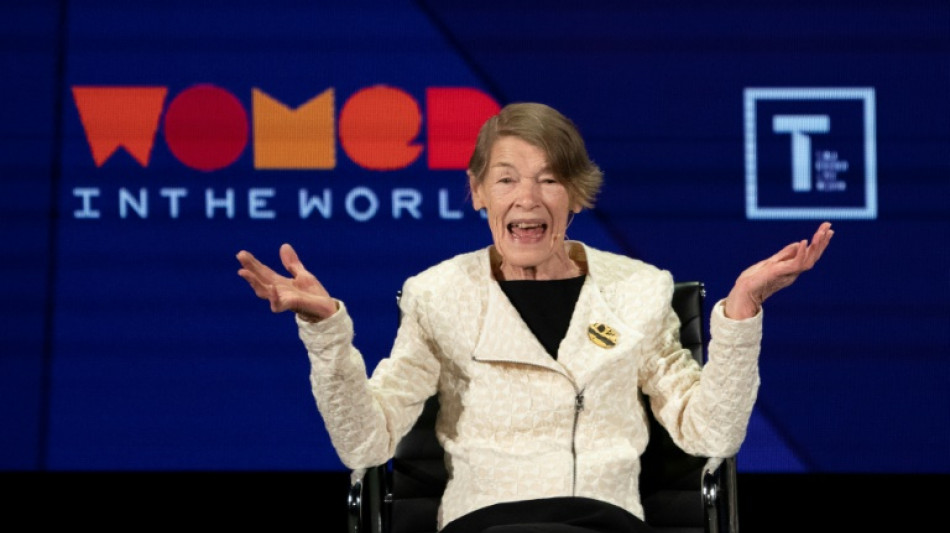
Glenda Jackson: 'fearless' actress turned politician
/ Photo: Don Emmert - AFP/File

 Myanmar leader lands in Malaysia for migrant return talks
 Indian central bank hikes rates for first time since 2023

 US military on Okinawa face curfew, alcohol ban after murder case

 Fierce lobbying in EU over 'forever chemicals'

 Dodgers beat Braves and Padres avoid sweep in MLB playoffs
 Mourning, war and elections as Israel marks October 7

 Messi says Argentina retirement is 'saddest day of my career'
 Oil rises and stocks fall as Hormuz worries flare

 Pacific presses world for help 'surviving' climate change at pre-COP summit
 Verstappen revival to be put to the test in steamy Singapore
 US woman who survived botched execution is conscious, speaking: lawyers
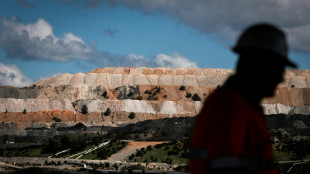
 Climate champion Australia digging more coal
 Emotion, tears as Messi retires from Argentina national team
 Dodgers push Braves to the brink of MLB playoff exit
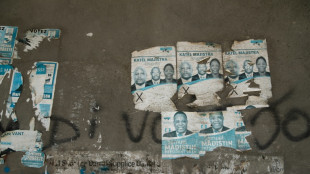 Crisis-stricken Haiti postpones elections
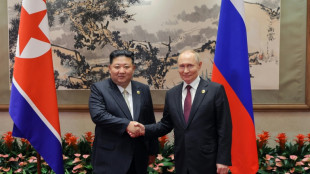 N. Korea's Kim pledges 'invariable support' in Putin birthday letter
 OGRD Alliance Advances PLPC Multi-Asset Platform Following APHELAR Milestone, Expanding Licensing and Strategic Capital Frameworks
 Emotion, tears as Messi prepares for Argentina farewell

 Kane eyes Ronaldo record after matching England cap mark
 Spain fight back to beat Croatia, Kane adds to record for England

 Merino double helps Spain beat Croatia, reach Nations League quarters

 US stocks hit fresh records as oil stabilizes on rising supplies

 As Messi bows out, Argentines say 'thank you'

 Ronaldo opens door for Portugal return, apologises for walkout

 'Nobody seems to care': Russian city shrugs off plague reports
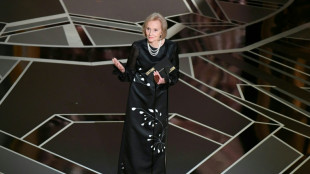
Oscar-winning British actress Glenda Jackson, who died on Thursday aged 87, played powerful female roles before abandoning stage and screen for a career in politics where she was unafraid to speak truth to power.
When she returned to acting in her 80s, she took on a male role and one of theatre's most challenging -- that of King Lear, for which she won high praise.
Jackson's two Oscars for best actress were decades earlier -- as a temperamental young artist in "Women in Love" (1970) and a feminist in the 1973 romantic comedy "A Touch of Class".
After 35 years in theatre and cinema, she quit to become a member of parliament for the Labour party, during years of Conservative rule under Margaret Thatcher and John Major.
In both acting and politics, she compensated for her small, slight stature with what Britain's The Independent newspaper described in 2016 as "a metal-tipped whiplash of a voice" that she used to "inflict devastating, incredulous scorn".
"Who's afraid of Glenda Jackson? Most people, and with some cause," The New York Times wrote in 2019.
- Queen power -
Jackson was born on May 9, 1936, in Birkenhead, a small port town near Liverpool, northwest England, to a bricklayer and a cleaning lady.
At 16 she went to work in a chemist's shop, doing amateur dramatics in her spare time.
When she was 18 she won a scholarship to the prestigious Royal Academy of Dramatic Art (RADA) in London.
Jackson was recruited to the Royal Shakespeare Company, working there from 1964 to 1968, including under fabled director Peter Brook.
Among her standout roles with the company were as Ophelia in "Hamlet" and as Charlotte Corday in "Marat/Sade", both in 1965.
In parallel she worked in cinema, being particularly successful in the early 1970s.
Besides her two Oscars during that period, Jackson won two Emmy Awards for playing Queen Elizabeth I in the hugely successful 1971 BBC television series, "Elizabeth R".
She was the same monarch in the film "Mary, Queen of Scots", also in 1971.
"There was the uncompromising, defiant strength she exuded in every role... She radiated a power that seemed to level her leading men," The Independent wrote in 2018.
- Political stage -
Jackson moved seamlessly to politics, challenging Thatcher's free-market capitalist policies that she said were destroying British society.
At the age of 55 in 1992 -- two years after Thatcher was ousted and Major took over -- she was elected to represent the north London constituency of Hampstead and Highgate in parliament, where she remained until 2015.
She was a junior transport minister in Tony Blair's Labour government from 1997 to 1999, before making an unsuccessful bid to be the party's candidate for mayor of London.
But she became a bitter opponent of Blair over the 2003 war in Iraq and among those who called on him to resign following the suicide of a defence advisor whose report was used to justify the invasion.
In one of her most memorable and controversial parliamentary interventions, Jackson launched an attack on Thatcher's "heinous" record on the day of her funeral in 2013.
"The first prime minister of female gender, ok. But a woman? Not on my terms," she railed.
- Return to acting -
Jackson never achieved a high rank in government but came to be known as a "fearless politician", The Guardian wrote in 2016.
She also advised the Labour mayor of London, Ken Livingstone, on housing policy and campaigned against homelessness in the capital from 2000 to 2004.
Jackson's return to the stage came after an absence of 23 years for a rare gender-swapping role in a London production of "King Lear" in 2016.
In 2018, aged 82, she won her first Tony -- the equivalent of the Oscars for theatre -- for best actress in "Three Tall Women".
In 2019 she reprised the role of "King Lear" in Broadway for a performance The New York Times described as "powerful and deeply perceptive".
Jackson was married to actor Roy Hodges from 1958 to 1976, having with him Dan Hodges, who is a political columnist.
In 1978 she was made a Commander of the British Empire by Queen Elizabeth II.
Q.Bulbul--SF-PST