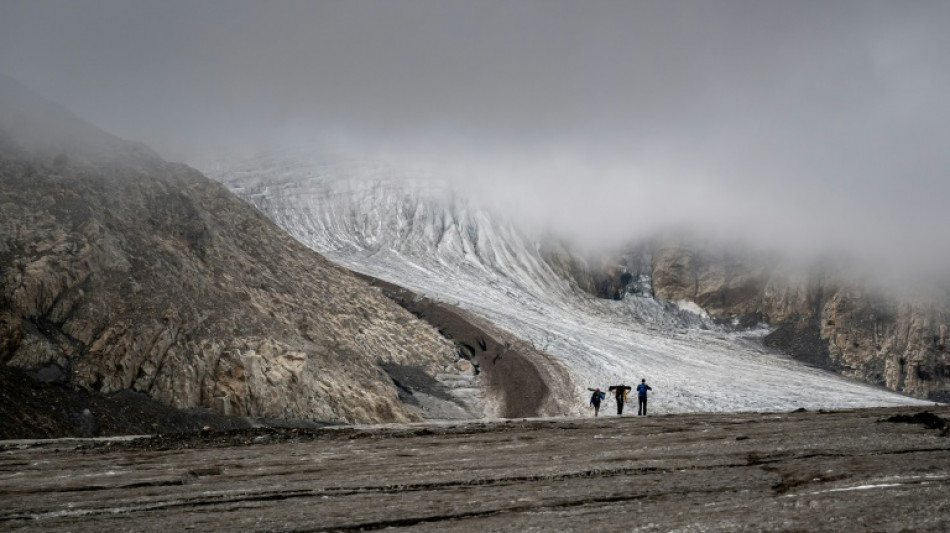
Amid melting glaciers, Swiss to vote on new climate law / Photo: Fabrice COFFRINI - AFP/File

 Indonesian court hears 'negligence' complaint against state over fires, haze
 Rubio in Greece to urge against Western civilisation 'decline'
 Micron workers at Taiwan plant vote in favour of strike

 In 'The Social Reckoning,' Jeremy Allen White takes on Facebook's 'frightening' ambition

 Chip industry activists call for South Korea to recognise cancer cases
 Famine-scarred southern Madagascar braces for El Nino
 How the EU regulates lobbyists

 I.Coast refuge offers lifelong care for youngsters scorned as 'sorcerers'

 Indian central bank hikes rates for first time in more than 3 years

 Hotel Blacklist Launches New Accommodation Industry Risk Assessment Tool

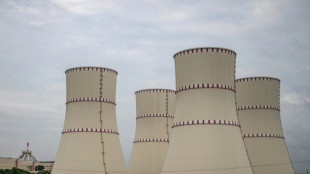 Bangladesh nuclear plant draws hope -- and worry
 US beat Canada 1-0 to wrap up four-win international break

 Turkey, Australia's joint COP31 leadership raises doubts

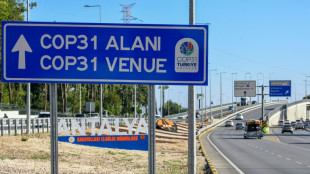 For Turkish NGOs, COP31 offers rare space for action

 Sleep, appetite, gene-editing experts contend for Nobel chemistry prize
 Nobel Peace Prize haunted by the 'spectre' of Trump

 Africa launches own credit agency in bid for cheaper borrowing

 US, China, EU: three paths to regulating AI

 Australia's High Court rules against coal mine in landmark climate case

 Australia touts new funds for Pacific infrastructure at Fiji 'pre-COP'

 Eva Marie Saint, Oscar winner of Hollywood classics, dies at 102

 Australia probes app used in cheap smart glasses over privacy fears

 England needed to 'move on' from World Cup pain, says Tuchel

 O'Neill to stay at Celtic after period of "reflection"

 Kane marks 125th England cap with Wembley Nations League double
The Swiss, feeling the impact of global warming on their rapidly melting glaciers, are expected Sunday to approve a new climate bill aimed at swiftly steering the country towards carbon neutrality.
The referendum, one of several issues in Sunday's round of votes, is over a proposed law that would commit Switzerland to slashing its dependence on imported oil and gas, and to scaling up the development and use of greener and more home-grown alternatives.
The bill, which would also commit Switzerland to becoming carbon neutral by 2050, enjoys strong public backing, though it has seen support slip in the latest survey by pollsters gfs.bern to 63 percent in favour.
The populist right-wing Swiss People's Party (SVP) -- Switzerland's largest party -- has been ramping up its calls for voters to reject the bill, warning it could harm the economy.
Supporters emphasise the need for more energy independence and to address the ravages of climate change, highlighted by the dramatic melting of glaciers in the Swiss Alps, which lost a third of their ice volume between 2001 and 2022.
The wealthy Alpine nation imports around three-quarters of its energy, with all the oil and natural gas consumed coming from abroad.
The proposed "Federal Act on Climate Protection Targets, Innovation and Strengthening Energy Security" would aim to reduce the dependence on other countries and also cut environmental pollution.
- Fossil fuel ban? -
The government proposed the law as an alternative to an effort by climate activists, dubbed the Glacier Initiative, for a popular vote on a total ban on all oil and gas consumption in Switzerland by 2050.
The government balked at the ban idea but drew up a counter-proposal including other elements from the initiative.
The text promises financial support of two billion Swiss francs ($2.2 billion) over a decade to promote the replacement of gas or oil heating systems with climate-friendly alternatives, as well as aid to push businesses towards green innovation.
Nearly all of Switzerland's major parties support the bill, except the SVP, which triggered the referendum under the country's direct democracy system against what it dismisses as the "electricity wasting law".
The SVP says the bill's goal of achieving climate neutrality in just over a quarter-century would effectively mean a fossil fuel ban, which it warns would threaten energy access and send household electricity bills soaring.
The party in 2021 successfully lobbied against a law that would have curbed greenhouse gas emissions.
But there has been a growing push for Switzerland to reduce its reliance on foreign energy sources, after Russia's invasion of Ukraine threw into doubt Swiss access to much of the foreign energy the country uses.
- Corporate tax hike -
Also on the ballot Sunday will be a referendum on whether to hike the tax rate for large businesses.
The government wants to amend the constitution so Switzerland can join an international agreement, led by the Organisation for Economic Cooperation and Development (OECD), towards a global minimum tax rate of 15 percent for multinational corporations.
The latest opinion poll indicated that 73 percent of Swiss voters back the plan, which would impose the new rate on all Swiss-based companies with a turnover above 750 million euros ($808 million).
Until now, many of Switzerland's 26 cantons have imposed some of the lowest corporate tax rates in the world, in what they often said was needed to attract businesses in the face of high wages and location costs.
The Swiss government estimates that revenues from the supplementary tax would amount to 1 billion to 2.5 billion francs in the first year alone.
Bern has acknowledged that efforts would be needed to continue attracting international companies.
It has proposed using some of the additional tax income to promote Switzerland as an attractive business location.
U.Shaheen--SF-PST