No respite for Sudan civilians two months into brutal war / Photo: - - AFP/File

 Indonesian court hears 'negligence' complaint against state over fires, haze

 Rubio in Greece to urge against Western civilisation 'decline'
 Micron workers at Taiwan plant vote in favour of strike

 In 'The Social Reckoning,' Jeremy Allen White takes on Facebook's 'frightening' ambition
 Chip industry activists call for South Korea to recognise cancer cases

 Famine-scarred southern Madagascar braces for El Nino
 How the EU regulates lobbyists
 I.Coast refuge offers lifelong care for youngsters scorned as 'sorcerers'

 Indian central bank hikes rates for first time in more than 3 years
 Hotel Blacklist Launches New Accommodation Industry Risk Assessment Tool

 Bangladesh nuclear plant draws hope -- and worry

 US beat Canada 1-0 to wrap up four-win international break

 Turkey, Australia's joint COP31 leadership raises doubts

 For Turkish NGOs, COP31 offers rare space for action

 Sleep, appetite, gene-editing experts contend for Nobel chemistry prize

 Nobel Peace Prize haunted by the 'spectre' of Trump

 Africa launches own credit agency in bid for cheaper borrowing

 US, China, EU: three paths to regulating AI

 Australia's High Court rules against coal mine in landmark climate case
 Australia touts new funds for Pacific infrastructure at Fiji 'pre-COP'

 Eva Marie Saint, Oscar winner of Hollywood classics, dies at 102

 Australia probes app used in cheap smart glasses over privacy fears

 England needed to 'move on' from World Cup pain, says Tuchel

 O'Neill to stay at Celtic after period of "reflection"

 Kane marks 125th England cap with Wembley Nations League double

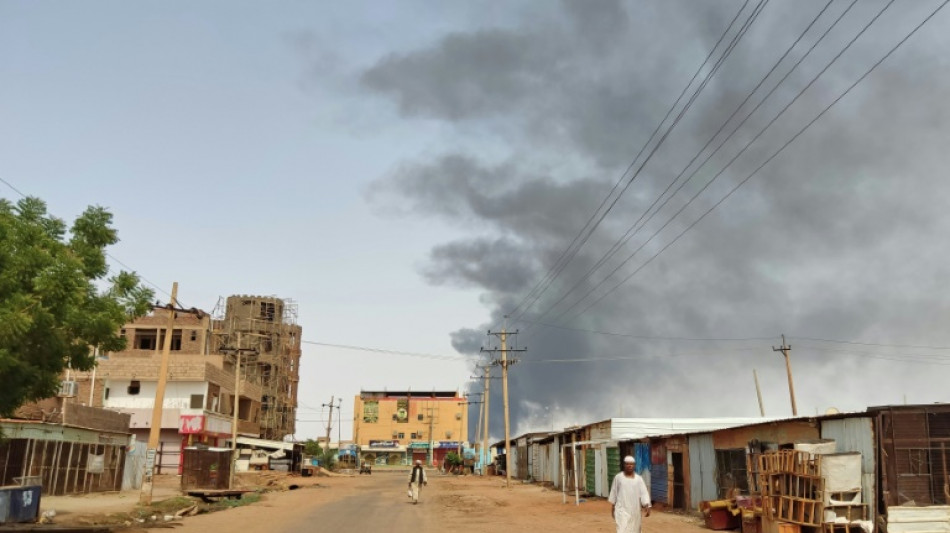
Army warplanes bombed the Sudanese city of El Obeid Wednesday, as the country prepared to mark two months since a power struggle between rival generals plunged the country into devastating conflict.
Since April 15, the regular army headed by Abdel Fattah al-Burhan and the paramilitary Rapid Support Forces commanded by his former deputy Mohamed Hamdan Daglo have been locked in urban combat that has left whole neighbourhoods of the capital Khartoum unrecognisable.
The fighting quickly spread to the provinces, particularly the flashpoint western region of Darfur, and has now killed at least 1,800 people, according to the Armed Conflict Location and Event Data Project (ACLED).
On Wednesday, the regular army carried out "air strikes for the first time in El Obeid," the capital of North Kordofan state, 350 kilometres (220 miles) south of the capital, which has been "surrounded by the RSF since the war began," witnesses told AFP.
Nationwide, some 2.2 million people have fled their homes, more than one million of them escaping Khartoum, according to the International Organisation for Migration.
Of those, more than 528,000 have sought refuge in neighbouring countries, according to the UN agency.
Those that remain have run out of "food, water and medicine," Khartoum resident Ahmed Taha told AFP.
"We have nothing left. The entire country has been completely devastated. Everywhere you look, you'll see where bombs have fallen and bullets have struck. Every inch of Sudan is a disaster area."
US and Saudi mediation efforts are at a standstill after the collapse of multiple ceasefires in the face of flagrant violations by both sides.
"We think we've given them every shot," a senior US State Department official said on Tuesday.
Aid agencies have pleaded for the opening of humanitarian corridors to allow assistance in and fleeing civilians out but to no avail.
Entire districts of Khartoum no longer have running water, mains electricity is only available for a few hours a week and most hospitals in combat zones are not functioning.
A record 25 million people -- more than half the population -- are in need of aid, according to the UN.
"We have been suffering and suffering and suffering the scourge of this war for two months," said Khartoum resident Soha Abdulrahman.
- 'Crimes against humanity' -
The conflict's other main battleground Darfur -- home to around a quarter of Sudan's population -- was already scarred by a two-decade war that left hundreds of thousands dead and more than two million displaced.
Amid what activists have called a total communications "blackout" in large parts of the region, hundreds of civilians have been killed in the current fighting.
Homes and markets have been burnt to the ground, hospitals and aid facilities looted and more than 149,000 sent fleeing into neighbouring Chad.
The head of the UN mission in Sudan, Volker Perthes, said Tuesday there was "an emerging pattern of large-scale targeted attacks against civilians based on their ethnic identities, allegedly committed by Arab militias and some armed men" in RSF uniform.
If these reports are verified they "could amount to crimes against humanity", he said.
Daglo's RSF have their origins in the Janjaweed militias which ousted strongman Omar al-Bashir unleashed on ethnic minorities in the region in 2003, drawing charges of genocide, war crimes and crimes against humanity.
The paramilitaries remain highly mobile and adept at the sort of urban combat that has gripped Khartoum and Darfur's cities but the regular army has so far enjoyed a virtual monopoly of the skies.
However, an army official said Wednesday that the RSF had begun using "drones", which an RSF source said they had obtained "from commandeered army centres".
Both sources spoke to AFP on condition of anonymity because they are not authorised to speak to the media.
According to a military analyst from the region who requested anonymity for his safety, the RSF "might have obtained them from the Yarmouk" weapons manufacturing and arms depot complex, which they overran just days after the collapse of US and Saudi-brokered ceasefire talks.
Q.Bulbul--SF-PST