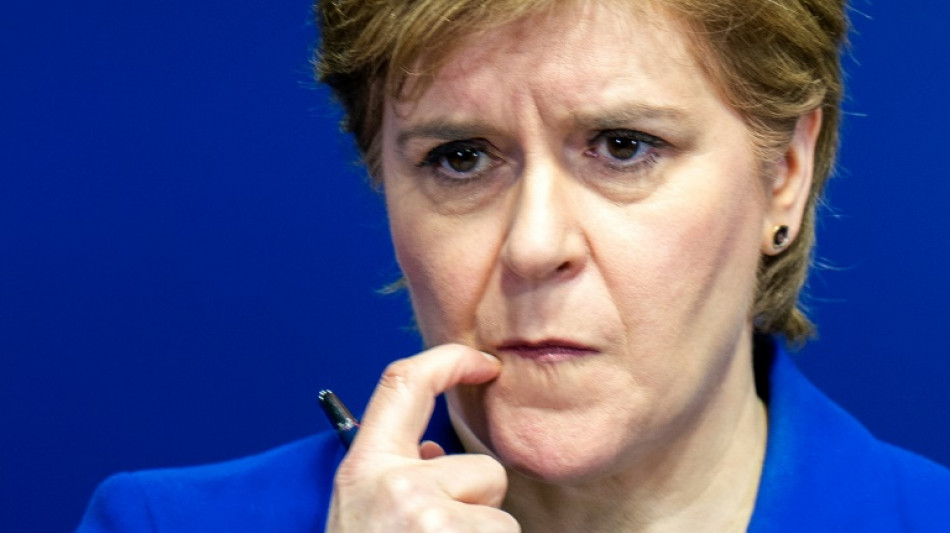
Nicola Sturgeon: 'Queen of Scots' turns financial crimes suspect / Photo: Jane Barlow - POOL/AFP

 Gauff says online abuse was 'draining' after China Open exit
 As sector struggles, Porsche puts luxury ahead of volume
 'It's personal': Fiji minister pushes better climate finance at pre-COP
 Russia glosses over dark Soviet past in reinvented museum
 UK tax body opened probe into Man City in 2018: FT
 Yemen's Houthis claim new attacks on Saudi airports as conflict deepens
 Germany factory production at highest level for 18 months
 Thailand floods death toll rises to 60 since mid-September
 US pushes Russia for information on plague reports
 Myanmar leader lands in Malaysia for migrant return talks
 Indian central bank hikes rates for first time since 2023
 US military on Okinawa face curfew, alcohol ban after murder case
 Fierce lobbying in EU over 'forever chemicals'
 Dodgers beat Braves and Padres avoid sweep in MLB playoffs
 Mourning, war and elections as Israel marks October 7
 Messi says Argentina retirement is 'saddest day of my career'
 Oil rises and stocks fall as Hormuz worries flare

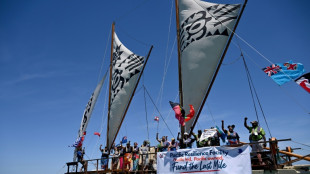 Pacific presses world for help 'surviving' climate change at pre-COP summit
 Verstappen revival to be put to the test in steamy Singapore
 US woman who survived botched execution is conscious, speaking: lawyers
 Climate champion Australia digging more coal
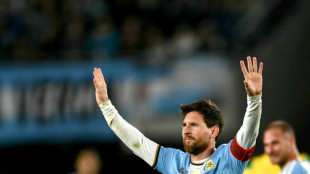 Emotion, tears as Messi retires from Argentina national team
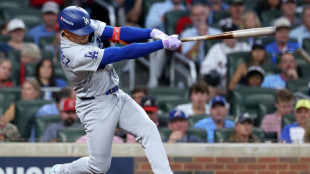 Dodgers push Braves to the brink of MLB playoff exit
 Crisis-stricken Haiti postpones elections
 N. Korea's Kim pledges 'invariable support' in Putin birthday letter
Nicola Sturgeon kicked off the year with the vow that she still had "plenty in the tank" after eight years as Scotland's leader, only to quit her role shortly after.
And her brief arrest on Sunday as part of a financial probe into the Scottish National Party (SNP) capped a spectacular fall from grace for the woman once dubbed by media as the "Queen of Scots."
Questioned for seven hours before being released, Sturgeon emerged proclaiming her innocence.
"To find myself in the situation I did today when I am certain I have committed no offence is both a shock and deeply distressing," she said in a statement.
"I know beyond doubt that I am in fact innocent of any wrongdoing."
Regarded as one of Britain's most formidable politicians, the 52-year-old Sturgeon quit as first minister and SNP leader in February after coming under pressure in a fierce row over transgender rights.
She was also struggling to find momentum for the party's raison d'etre -- Scottish independence.
There were already rumblings about a possible police probe into party finances dangerously close to home.
Those rumours were realised when her husband Peter Murrell was arrested in April, followed soon after by the SNP treasurer.
Sturgeon's arrest had been largely expected, a blow for a woman once regarded as an almost invincible presence at the head of Scottish politics.
Acknowledging the strains of office, Sturgeon said upon her departure that she felt unable to give "every ounce of energy that it needs" to see out the high-pressure job.
"I am a human being as well as a politician."
- Internal splits -
The transgender controversy erupted over a male rapist who had changed gender after being convicted. Under contentious reforms pushed through by her SNP government, they would have been allowed to serve in a women's prison.
In a move unprecedented since Scotland won back self-government in 1999, the law was blocked by the UK government in London, and Sturgeon's handling of the affair drew internal SNP criticism.
She also had a very public falling out with her former mentor and predecessor as first minister Alex Salmond over her handling of sexual harassment claims against him.
Above all, Scottish independence had been hitting the buffers despite her attempts to up the ante, after the UK government rejected demands for a new referendum.
Criticism had also mounted over Sturgeon's intention to turn the next UK general election into a vote to leave, leaving voters with a stark choice that some in the party feared could backfire on the SNP.
- Waning appetite for independence -
Several surveys have indicated waning popular support for breaking away, after Scottish voters rejected independence in 2014.
For Sturgeon and the SNP, Britain's vote in 2016 to quit the European Union changed the picture entirely. Mosts Scots wanted to stay in the EU.
She was born in the industrial town of Irvine southwest of Glasgow, in 1970 to an electrician father and a mother who was active in local SNP politics.
Sturgeon joined the SNP aged 16, becoming politicised in the 1980s when Conservative Margaret Thatcher, still widely reviled in Scotland, was Britain's prime minister.
She studied law at Glasgow University and stood unsuccessfully for the House of Commons in 1992, aged just 21, before starting her career as a lawyer.
When the Scottish Parliament was created in 1999, with Labour ahead of the SNP as the biggest party, Sturgeon was one of its first wave of lawmakers.
Her nickname at that stage was "nippy sweetie" -- a Scots term for a pushy person. Sturgeon has pointed out that this is how the media characterises female politicians when they adopt the same qualities praised in their male counterparts.
Her mother Joan once joked about her daughter's hard-working tendencies: "The phone is never switched off -- many of my family can vouch for that."
Sturgeon argued for socially conscious policies she says were abandoned by the centre-left Labour party, once the dominant force in Scottish politics.
Sturgeon married SNP colleague Murrell in 2010.
Their partnership came under scrutiny after Murrell, the party's chief executive, was also embroiled in the Salmond investigation and questions mounted over a loan he extended to the SNP.
Y.Zaher--SF-PST