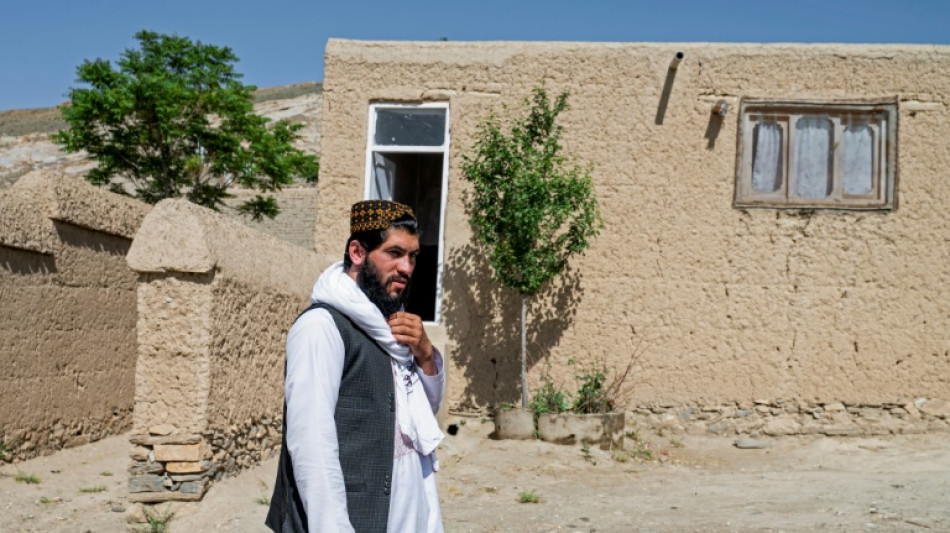
The Afghan valley proud of its young suicide bombers / Photo: Wakil KOHSAR - AFP

 Gauff says online abuse was 'draining' after China Open exit

 As sector struggles, Porsche puts luxury ahead of volume
 'It's personal': Fiji minister pushes better climate finance at pre-COP

 Russia glosses over dark Soviet past in reinvented museum

 UK tax body opened probe into Man City in 2018: FT
 Yemen's Houthis claim new attacks on Saudi airports as conflict deepens
 Germany factory production at highest level for 18 months

 Thailand floods death toll rises to 60 since mid-September

 US pushes Russia for information on plague reports

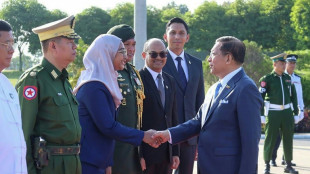 Myanmar leader lands in Malaysia for migrant return talks
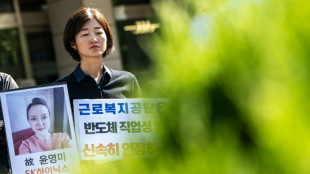
 Indian central bank hikes rates for first time since 2023
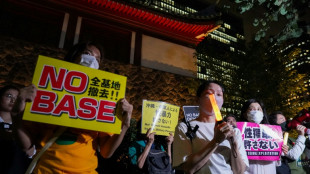 US military on Okinawa face curfew, alcohol ban after murder case

 Fierce lobbying in EU over 'forever chemicals'
 Dodgers beat Braves and Padres avoid sweep in MLB playoffs

 Mourning, war and elections as Israel marks October 7

 Messi says Argentina retirement is 'saddest day of my career'

 Oil rises and stocks fall as Hormuz worries flare

 Pacific presses world for help 'surviving' climate change at pre-COP summit

 Verstappen revival to be put to the test in steamy Singapore
 US woman who survived botched execution is conscious, speaking: lawyers

 Climate champion Australia digging more coal

 Emotion, tears as Messi retires from Argentina national team

 Dodgers push Braves to the brink of MLB playoff exit

 Crisis-stricken Haiti postpones elections
 N. Korea's Kim pledges 'invariable support' in Putin birthday letter

Taliban-trained suicide bomber Ismail Ashuqullah regrets missing the chance to blow himself up at the height of the Afghan war -- like many other young men from the lush green Tangi Valley.
He had fought for eight years with the Taliban against US-led foreign forces and Afghan government troops before joining a special brigade trained for suicide missions.
But the withdrawal of foreign troops in 2021 and the collapse of the Western-backed government meant he missed his chance.
"When I was informed by my superiors that I had to join the battalion, I was delighted that God had chosen me. I felt a lot of joy," says 25-year-old newlywed Ashuqullah, his eyes lined with kohl.
"I was doing jihad, but it didn't satisfy me. So I thought I had to carry out an operation that could satisfy the hearts of Muslims around the world, and mine too."
Ashuqullah, spoke with AFP in the presence of his father and Taliban intelligence agents in Tangi Valley, a mountainous region of east Afghanistan where locals are proud of the young men sent to their deaths in the name of jihad.
In Islam, the Arabic term "jihad" is used to describe a wide range of religious struggles, ranging from the private spiritual realm to waging actual combat.
Under their austere interpretation of Islam, Taliban leaders told their fighters that suicide attacks were the ultimate form of jihad.
"Obviously the role of the Isteshhadi Mujahideen (suicide fighters) was prominent," said Bilal Karimi, spokesman for the current Taliban authorities.
"All the forces of the Islamic Emirate, especially these Mujahideen, fought with their national and Islamic spirit."
- 'Reduce their bones to ashes' -
After ousting the first Taliban regime in 2001, the United States and its NATO allies fought a two-decade war against the insurgents to prop up the Western-backed Afghan government.
Tangi valley, home to at least 22,000 people, was mostly under Taliban control through much of that war, and was targeted by foreign forces because of its strategic position some 70 kilometres (40 miles) from the capital.
American forces occupied a base overlooking the valley between 2009 and 2011, and troops regularly carried out night raids in their search for Taliban members.
They stormed homes where women lived in seclusion -- a huge dishonour according to local custom -- breeding anger among Afghans.
"We had no weapons to compete with, so we saw fit to equip ourselves with explosives and enter the places sheltering the infidels to break their jaws and reduce their bones to ashes," said Abdul Wahab Siraj, another suicide volunteer.
"We were so crazy about the love of Allah that life had no importance for us... We were trying to get closer to him as soon as possible through martyrdom."
- Leader's son sacrificed -
Suicide attacks became a trademark of the Taliban -- effective not only in causing mass casualties but also for garnering publicity and fostering widespread fear.
The Taliban claim foreign fighters and Afghan troops were always the target, but civilians made up the largest proportion of victims -- including women and children.
According to a report by the United Nation's mission in Afghanistan, in 2019 alone there were 1,499 civilian casualties from suicide attacks claimed by the Taliban.
Attacks ranged from lone bombers in suicide vests targeting convoys of foreign forces to complex missions against military installations involving explosive-laden cars and gunmen impersonating police.
The son of Supreme Leader Hibatullah Akhundzada blew himself up in one such attack.
The bombers were usually young men, and conditioned to believe they were superior to the rest of society, said Michael Semple, a professor at the Peace and Security Institute at Queen's University in Ireland.
During the indoctrination phase "they are encouraged to believe that this world in which we live today is fundamentally unimportant" and that "glory is in martyrdom", he said.
- 'Congratulations, your son died' -
In the Tangi Valley, 60-year-old Mir Aslam Amiri -- who fought against the Soviet invasion in the 1980s -- speaks with intense pride of his 20-year-old son Najeebullah's "success" as a suicide bomber.
"When he graduated from the madrassa, I told him, 'Son! Go and start the jihad... The infidels have occupied our country so you should do jihad now'," he told AFP.
He claims to have never seen his son as happy as the day he left to complete his mission in 2014.
As news reached him of the death of his son, he told his wife Amina: "Congratulations, your son died a martyr."
Hiding her face behind a long white veil and sitting under her husband's watchful gaze, she concurs.
"He did a very honourable job at such a young age," she said, adding he had decided to become a bomber after being beaten by American troops who raided the family home.
"He went with my permission but the memory of him affects me a lot."
M.Qasim--SF-PST