'Black city': Polish port Gdansk chokes on coal dust / Photo: MATEUSZ SLODKOWSKI - AFP

 Gauff says online abuse was 'draining' after China Open exit

 As sector struggles, Porsche puts luxury ahead of volume

 'It's personal': Fiji minister pushes better climate finance at pre-COP

 Russia glosses over dark Soviet past in reinvented museum

 UK tax body opened probe into Man City in 2018: FT

 Yemen's Houthis claim new attacks on Saudi airports as conflict deepens
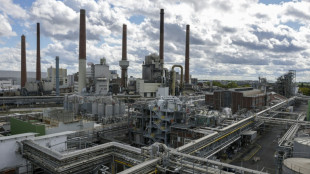 Germany factory production at highest level for 18 months

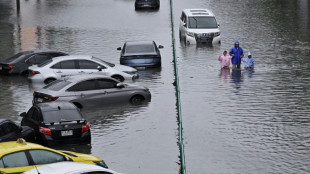 Thailand floods death toll rises to 60 since mid-September

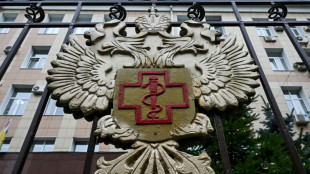 US pushes Russia for information on plague reports

 Myanmar leader lands in Malaysia for migrant return talks

 Indian central bank hikes rates for first time since 2023
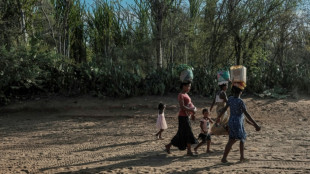
 US military on Okinawa face curfew, alcohol ban after murder case

 Fierce lobbying in EU over 'forever chemicals'
 Dodgers beat Braves and Padres avoid sweep in MLB playoffs

 Mourning, war and elections as Israel marks October 7

 Messi says Argentina retirement is 'saddest day of my career'
 Oil rises and stocks fall as Hormuz worries flare

 Pacific presses world for help 'surviving' climate change at pre-COP summit

 Verstappen revival to be put to the test in steamy Singapore
 US woman who survived botched execution is conscious, speaking: lawyers
 Climate champion Australia digging more coal

 Emotion, tears as Messi retires from Argentina national team
 Dodgers push Braves to the brink of MLB playoff exit
 Crisis-stricken Haiti postpones elections
 N. Korea's Kim pledges 'invariable support' in Putin birthday letter
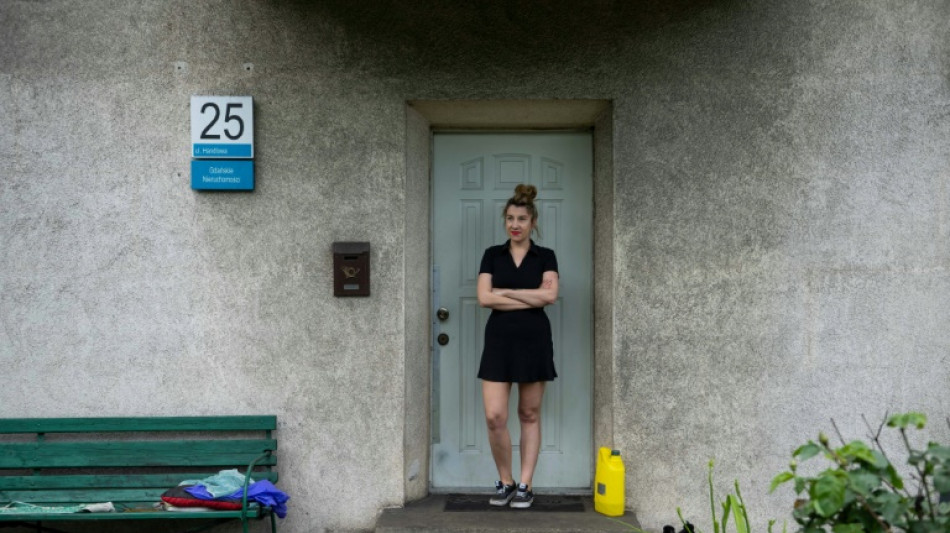
Iwona Wozniewska's family has lived next to the Polish port of Gdansk for decades. But dust from surging coal imports has left her longing for something she once took for granted -- fresh air.
Poland has traditionally been heavily reliant on its southern coalfields, with people there exposed to the health and environmental impacts of mining.
But now a new coal problem has emerged in its northern Baltic ports.
"The coal dust is everywhere," Wozniewska told AFP from in front of the house she grew up in.
"It used to be beige," the 37-year-old added, pointing at the facade now covered in a thick black layer of coal dust.
"Our day starts with constant cleaning and mopping, because every time we open a window or door, the dust gets inside."
In addition to its own coal, Poland imports it from abroad. Most of the foreign coal used to come from neighbouring Russia but after Moscow invaded Ukraine, Poland banned Russian supplies.
Faced with soaring energy prices, it turned to Kazakhstan, Colombia and Indonesia for supplies, with port authorities storing coal closer than ever to residential areas.
Wozniewska, who has a month-old daughter, said her family can no longer spend time in their garden.
"We have air filters and humidifiers running non-stop. And when we want to take our kid outside... we drive elsewhere for a walk, instead of hanging around here," she said.
Wozniewska, who is forced to speak up because of the constant rumble of lorries at the port, said the trucks "run non-stop, around the clock, regardless of the hour".
"It's never been this bad," she added.
The sentiment is echoed by Elzbieta Rostalska, whose house overlooks the port canal flanked by piles of coal.
"I've lived here for more than 40 years... it's never been as dire as it is now. It's the 21st century, they could do things differently," she told AFP.
- 'Desert storm' -
When the coal dust came, "it was like a desert storm, you couldn't see the world on the other side, it was all dusty," the 64-year-old added.
"I have asthma, so sometimes when the pollution gets really bad, it leaves this bad aftertaste in your throat."
Wozniewska said her father suffers from emphysema, a chronic lung disease. Another of the district's residents, Henryk Motyl, struggles with chronic obstructive pulmonary disease.
"I'm supposed to leave the window wide open for a bit every day -- that's what they told me in treatment," the 66-year-old said.
His wife too has struggled with her own health issues. Recently she went away and "miraculously her headaches stopped", Motyl said.
Their daughter Anna Motyl-Kosinska is now battling to put an end to the scourge, which began last autumn when coal imports intensified ahead of winter.
"Coal of poor quality from various parts of the world is kept in every vacant nook and cranny," she said.
"They stuff it wherever they can, even in places it shouldn't be."
- 'Black city' -
Her citizens' campaign against pollution is calling for preventive measures -- like sprinkling the coal piles with water and covering the lorries to keep down the dust.
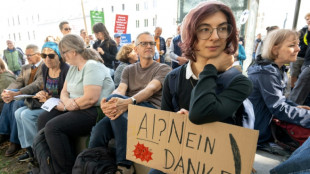
Pressure from the movement led to a special city council meeting, where residents unfurled banners that read, "Gdansk: the black city."
"Nearly 90 percent of the coal arriving in Poland is reloaded in Gdansk, near homes," mayor Aleksandra Dulkiewicz told AFP, adding that the problem affects "thousands of people".
"There are places in Gdansk, kindergartens, where children have not ventured outside for many, many weeks," Dulkiewicz said.
A lifelong Gdansk resident, she said the situation reminded her of the communist-era pollution of her own childhood.
"After washing the windowsill, the next day you could see residue on it from burning coal. We haven't had that here for many, many years."
The city council invited government and port authorities to the meeting, but they didn't show up.
The port is 95 percent owned by the state.
"This shows that no one today wants to face the residents and their real issues, nor to try to brainstorm a solution," Dulkiewicz said.
The council called on the government to act immediately and some of the measures have already been introduced, but residents say it is not enough.
"It's better now -- but better doesn't mean good," Wozniewska said.
D.AbuRida--SF-PST