Lacking other options, UN Security Council takes watchdog role in Ukraine war

 Sainz signs new contract with F1 team Williams
 Playing at Real Madrid 'not for everyone': Bernardo Silva
 As election nears, Israelis fear polarisation could spark violence
 Bayern's Hoeness 'speechless' after second Musiala collapse
 Reijnders leaves Man City for Saudi's Al Qadsiah: source
 Arsenal chief expects Arteta to sign new contract 'very shortly'
 Oil rises, stocks waver amid tech sell-off
 Belgian fire of the century 'encircled' but fight goes on

 Japan target record medal haul at home Asian Games
 ICC says US sanctions 'flagrant attack' on court independence
 Kyrgios admits 'huge mistake' after failing test for cocaine
 Europe can't afford to miss AI revolution: ECB chief
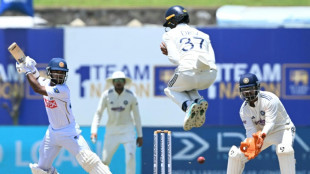 Suthar shines as India crush Sri Lanka in 600th Test
 UK PM unveils plan to help rough sleepers off streets by Christmas

 Tokyo opposes US sanctions on Japanese ICC chief Akane
 Humanoid-maker Unitree surges more than 600% on Shanghai debut
 Bowling great Donald warns Bangladesh that Australia will hit back hard
 STARPRIME Completes Beta Testing of Market-Maker Model for Retail Brokers
 Campaigns kick off in Nigerian presidential race
 Aussie Rules club suspends five players for drinking, bringing women to hotel

 Trump pauses 50% tariffs on Canadian goods for three days
 Five Premier League stars to watch this season
 China's robots open to opportunities in search of commercial breakthrough
 Tech leads losses as Asian stocks track Wall St selloff
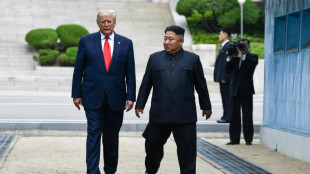 US, South Korea cut drills short after Trump criticism
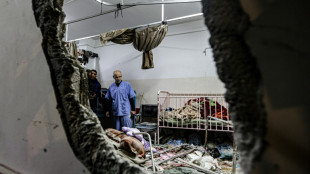
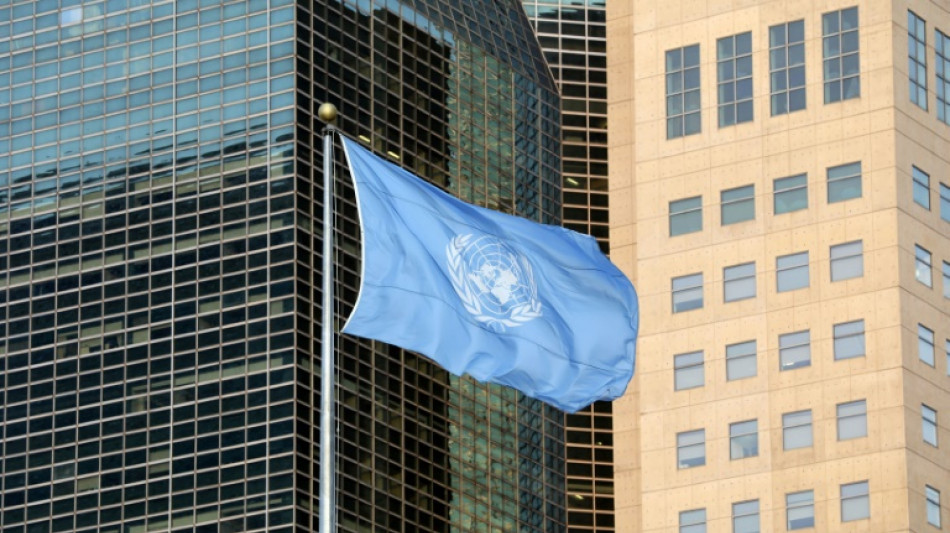
Unable to assure global peace, the UN Security Council is consigned to a watchdog role in the Russia-Ukraine conflict, with little else to do but set more urgent sessions this week on the crisis.
After five meetings since Russia's invasion of its eastern European neighbor on February 24, the 15-member council will gather again on Monday for two sessions on humanitarian aid -- one public and one behind closed doors.
"Exposing the situation in the Security Council, even if you know that the outcome is going to be stopped through a veto, is still worthwhile," said the European Union's ambassador to the UN, Olof Skoog.
"Pressure" is the aim, several council members told AFP, with representatives even vying to call for sessions. The United States and Albania joined together to convene the first meeting on the conflict, while France and Mexico are pushing for a resolution, though its future is unclear.
With its veto power, Russia -- one of the five permanent members of the council that also includes 10 other members elected for two years -- has the power to block any declaration or resolution.
As the founding document of the organization established after World War II, the UN Charter cannot oust one of the five permanent members even if the state violates the body's fundamental principle of not resorting to violence to resolve a crisis -- as Russia stands accused of doing.
However, the charter does provide for cases in which the Security Council can take action.
Article 27 stipulates that a council member can abstain from voting when it is party to a conflict on which there is a vote. In practice, this doesn't always happen.
Russia has never abstained from a vote on Syria -- deploying its veto some 15 times in 10 years -- nor has the United States or Britain on Iraq, France on Mali or the United Arab Emirates over Yemen.
"There has not been any real appetite to go after" Article 27, said a Western ambassador on condition of anonymity.
- 'Privilege' of permanence -
A spokesperson for British Prime Minister Boris Johnson recently said that expelling Russia from the Security Council figures among the "options."
But in reality, "no," it's not on the table, said another diplomat, also speaking on condition of anonymity.
Article 6 of the UN Charter says if a member "has persistently violated the Principles" of the document, it "may be expelled from the Organization by the General Assembly upon recommendation of the Security Council."
Therein lies the issue: veto-wielding Russia will never recommend its own expulsion to the 193-member General Assembly.
Such an attempt has only been made once in the history of the global body, in 1974, when several countries urged the Security Council to exclude South Africa, according to SC Procedure, a specialized news outlet.
The resolution received 10 votes in favor, but France, Britain and the United States vetoed, it added.
The permanent members, which also include China, sometimes "have each other's back," the Western ambassador said.
"They don't agree with all substance always, but they do agree that the privilege is something that sets them a little bit above the rest of us."
Under the impetus of the EU, the General Assembly -- where there are no vetoes -- had looked to succeed where the Security Council failed by adopting a resolution condemning Russia on March 2.
A record 141 countries from across every continent approved the non-binding text, with just five in opposition: Russia, Belarus, Eritrea, Syria and North Korea.
Beyond the council and the assembly, the UN has deployed other wings to try to help mitigate the fallout of the war.
The UN humanitarian affairs agency OCHA, the refugees body UNHCR and the World Food Programme have stepped up responses to the crisis, while the Human Rights Council recently backed the creation of an international commission of inquiry into abuses in Ukraine.
UN chief Antonio Guterres, who has long denounced the "dysfunction" of global governance, is working behind the scenes but to little avail so far, having offered mediation to Russia, which rebuffed any idea of the secretary-general going to Moscow, according to an official.
S.Abdullah--SF-PST