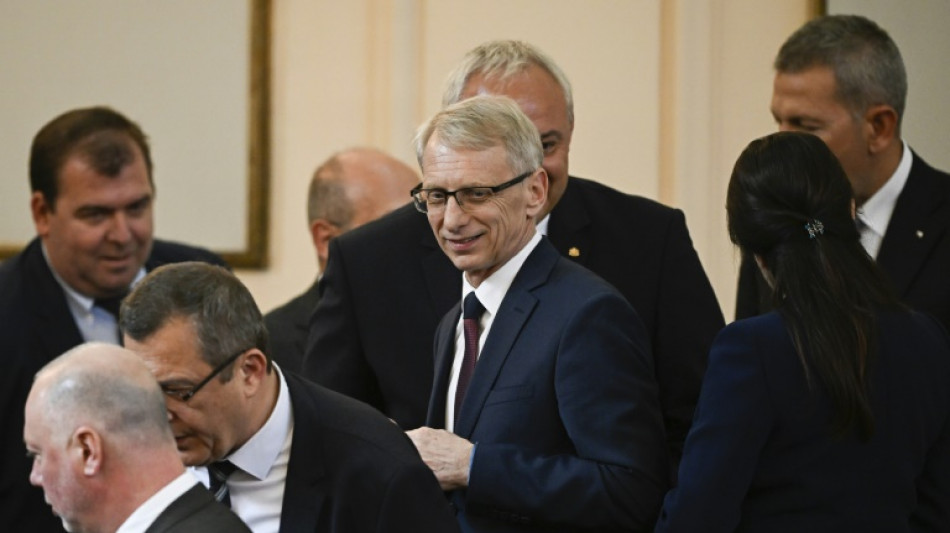
Bulgaria parliament approves pro-European government, ending deadlock / Photo: Nikolay DOYCHINOV - AFP

 West must embrace 'national power' or face decline: Rubio

 Shell refining margins reach record highs as wars hit supply

 Former Spain, Barca winger Pedro retires from football
 Arteta signs new Arsenal deal until 2030

 Stocks decline as oil climbs on Mideast flareup

 Gauff says online abuse was 'draining' after China Open exit

 As sector struggles, Porsche puts luxury ahead of volume
 'It's personal': Fiji minister pushes better climate finance at pre-COP

 Russia glosses over dark Soviet past in reinvented museum

 UK tax body opened probe into Man City in 2018: FT

 Yemen's Houthis claim new attacks on Saudi airports as conflict deepens
 Germany factory production at highest level for 18 months
 Thailand floods death toll rises to 60 since mid-September

 US pushes Russia for information on plague reports

 Myanmar leader lands in Malaysia for migrant return talks
 Indian central bank hikes rates for first time since 2023

 US military on Okinawa face curfew, alcohol ban after murder case
 Fierce lobbying in EU over 'forever chemicals'
 Dodgers beat Braves and Padres avoid sweep in MLB playoffs
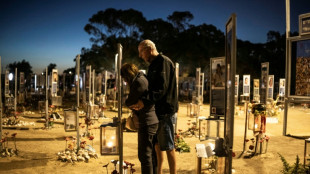 Mourning, war and elections as Israel marks October 7

 Messi says Argentina retirement is 'saddest day of my career'
 Oil rises and stocks fall as Hormuz worries flare

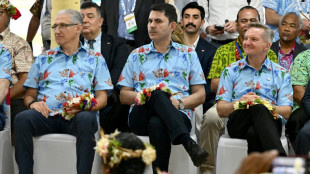
 Pacific presses world for help 'surviving' climate change at pre-COP summit
 Verstappen revival to be put to the test in steamy Singapore
 US woman who survived botched execution is conscious, speaking: lawyers

Bulgarian lawmakers on Tuesday approved a new pro-European government put forward by We Continue the Change (PP) and the centre-right GERB party, ending a two-year-long impasse marked by five elections.
The new technocrat cabinet was elected without difficulty by Bulgaria's 240-seat National Assembly, securing a majority of 132 votes.
Former education minister and researcher Nikolay Denkov of the PP-DB coalition will govern as prime minister for nine months, before EU ex-commissioner for innovation Mariya Gabriel will take over as part of a rotation.
The graft-ridden Balkan nation has been struggling to elect a new government to implement badly needed reforms.
In May, Gabriel -- tasked by the conservative GERB party to lead negotiations -- alongside the PP-DB coalition announced a power-sharing government with rotating prime ministers.
Forty-four-year Gabriel, who recently resigned from her post in Brussels, will hold the Foreign Affairs portfolio under the leadership of 60-year-old Denkov, before taking over as prime minister in March 2024.
The European Union's poorest country has been plagued by political instability and led by caretaker governments over the past two years.
A fifth vote in early April failed again to provide a clear majority.
Bulgaria has never before had a rotating premiership but the compromise was the only remaining option for a cabinet.
The new government's priorities include the urgent passing of a budget, reforming the country's justice system, and making progress on accession to the eurozone and Schengen area.
Weakened by the turmoil, Bulgaria was forced to abandon its bid to join the eurozone in 2024 and was unable to accede to the Schengen free movement zone.
The cabinet will also usher in a new pro-European stance within the eastern European country amid Russia's war in Ukraine.
Under the leadership of pro-Russian President Rumen Radev, the country's interim governments have refused to send direct military aid to Kyiv.
The GERB party of three-time PM Boyko Borisov had governed almost uninterruptedly between 2009 and April 2021.
But it lost many voters and became badly isolated by other parties after massive anti-corruption protests against it in 2020.
R.Shaban--SF-PST