
-
 West must embrace 'national power' or face decline: Rubio
-
Kyiv 'cannot agree' to EU membership limiting food exports: minister

-
 Shell refining margins reach record highs as wars hit supply
-
Arteta targets more Arsenal glory after signing new deal until 2030

-
 Former Spain, Barca winger Pedro retires from football
-
Russell hit with Singapore grid penalty for taking new power unit

-
 Arteta signs new Arsenal deal until 2030
-
Spotify expands audiobooks to more than 180 markets

-
 Stocks decline as oil climbs on Mideast flareup
-
French-Japanese duo wins chemistry Nobel for solving molecular 'mystery'

-
 Gauff says online abuse was 'draining' after China Open exit
-
England's Nations League surge helps heal World Cup wounds

-
 As sector struggles, Porsche puts luxury ahead of volume
-
Mayor of opposition stronghold Izmir defects to Erdogan party
-
 'It's personal': Fiji minister pushes better climate finance at pre-COP
-
Mertens beats Gauff to set up Swiatek clash at China Open

-
 Russia glosses over dark Soviet past in reinvented museum
-
Benin full of pride at role in Messi's last dance

-
 UK tax body opened probe into Man City in 2018: FT
-
France suspends stun grenade use at student protests ahead of PM speech

-
 Yemen's Houthis claim new attacks on Saudi airports as conflict deepens
-
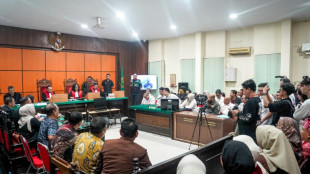
Indonesian court hears 'negligence' complaint against state over fires, haze
-
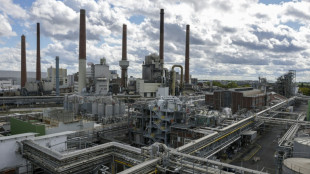 Germany factory production at highest level for 18 months
-
Rubio in Greece to urge against Western civilisation 'decline'

-
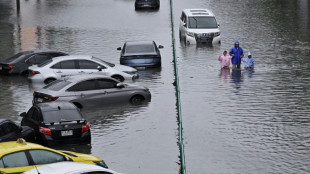 Thailand floods death toll rises to 60 since mid-September
-
Micron workers at Taiwan plant vote in favour of strike

-
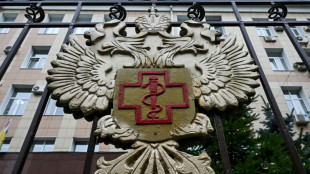 US pushes Russia for information on plague reports
-
In 'The Social Reckoning,' Jeremy Allen White takes on Facebook's 'frightening' ambition

-
 Myanmar leader lands in Malaysia for migrant return talks
-
Chip industry activists call for South Korea to recognise cancer cases

-
 Indian central bank hikes rates for first time since 2023
-
Famine-scarred southern Madagascar braces for El Nino
-
 US military on Okinawa face curfew, alcohol ban after murder case
-
How the EU regulates lobbyists

-
 Fierce lobbying in EU over 'forever chemicals'
-
I.Coast refuge offers lifelong care for youngsters scorned as 'sorcerers'
-
 Dodgers beat Braves and Padres avoid sweep in MLB playoffs
-
Indian central bank hikes rates for first time in more than 3 years

-
 Mourning, war and elections as Israel marks October 7
-
Hotel Blacklist Launches New Accommodation Industry Risk Assessment Tool

-
 Messi says Argentina retirement is 'saddest day of my career'
-
Bangladesh nuclear plant draws hope -- and worry
-
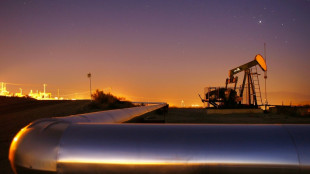 Oil rises and stocks fall as Hormuz worries flare
-
US beat Canada 1-0 to wrap up four-win international break

-
 Pacific presses world for help 'surviving' climate change at pre-COP summit
-
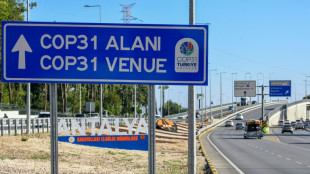
Turkey, Australia's joint COP31 leadership raises doubts

-
 Verstappen revival to be put to the test in steamy Singapore
-
For Turkish NGOs, COP31 offers rare space for action
-
 US woman who survived botched execution is conscious, speaking: lawyers
-
Sleep, appetite, gene-editing experts contend for Nobel chemistry prize

Destruction of frontline dam forces Ukraine evacuations
An attack on a major Russian-held dam in southern Ukraine Tuesday unleashed a torrent of water that flooded a small city, two dozen villages and sent hundreds fleeing.
Moscow and Kyiv traded blame for ripping a gaping hole in the Kakhovka dam in what Kyiv said was an attempt by Russia to hamper Ukraine's long-awaited offensive.
People in the city of Kherson, the largest population centre in the area, headed for higher ground as water, which had been held back by the dam and a hydroelectric plant, rose in the Dnipro River.
"There is shooting, now there is flooding," said Lyudmyla, who had loaded a washing machine onto a cart that was attached to an old Soviet car.
Ukraine's interior ministry said 650 people had been evacuated as of 1000 GMT and 420 more had left the area, with a total of 24 villages flooded.
Ukrainian officials said there were a total of 16,000 people living in the "critical zone" for potential flooding.
On the Russian-controlled riverbank, Vladimir Leontyev, the Moscow-installed mayor of Nova Kakhovka where the dam is located, said the city was underwater and 900 people had been evacuated.
He said 53 evacuation buses were being sent by the authorities to take people from Nova Kakhovka and two other settlements nearby to safety.
"We are organising temporary accommodation centres with hot meals," he said.
The Kakhovka dam and its power plant were seized by Russia in the first hours of the war.
- 'War crime' -
Ukrainian President Volodymyr Zelensky accused Russia of blowing up the dam and said that the "world must react."
He said Russia had carried out "an internal explosion of the structures" of the plant at 2:50 am local time (2350 GMT).
Ukraine also called for a meeting of the UN Security Council and warned of a potential "ecocide" after 150 tonnes of engine oil spilled into the river as a result of the attack.
Western powers also blamed Russia for the damage to the Kakhovka dam, with EU chief Charles Michel calling it a "war crime."
NATO chief Jens Stoltenberg said the dam breach was "outrageous" and "puts thousands of civilians at risk and causes severe environmental damage."
Russia however said the dam was partially destroyed by "multiple strikes" coming from Ukrainian forces.
Kremlin spokesman Dmitry Peskov said the destruction was the result of "deliberate sabotage by the Ukrainian side."
The Soviet-era dam sits on the Dnipro River, which provides cooling water for the Russian-occupied Zaporizhzhia nuclear power plant, the largest in Europe.
The flooding fuelled already existing fears for the safety of the Zaporizhzhia plant, under Russian control.
The plant is some 150 kilometres (about 90 miles) away from the damaged dam.
Moscow and Kyiv offered conflicting versions on the safety of the facility.
The UN's International Atomic Energy Agency (IAEA) said its experts "are closely monitoring the situation" but that there was "no immediate nuclear safety risk at plant."
The Russian-installed director of the plant, Yuri Chernichuk, echoed the UN agency and said that "at the moment, there is no security threat to the Zaporizhzhia nuclear power plant."
"The water level in the cooling pond has not changed," he said, adding that the "situation was controlled by personnel."
Chernichuk said the water cooling system was not in direct contact with the outside environment and could be refilled from several alternative sources.
- 'Slow down' Ukraine-
But Ukraine -- which in 1986 suffered the devastating Chernobyl nuclear disaster -- sounded the alarm.
"The world once again finds itself on the brink of a nuclear disaster, because the Zaporizhzhia nuclear power plant lost its source of cooling. And this danger is now growing rapidly," Ukrainian presidential aide Mykhaylo Podolyak said.
The Ukrainian nuclear operator, Energoatom, said the water level of the Kakhovka reservoir was "rapidly decreasing, which is an additional threat to the temporarily occupied Zaporizhzhia nuclear power plant."
It said it was "monitoring the situation" and that currently the cooling plant's pond water level is "sufficient for the power plant's needs."
News of the damage came after Russia claimed Ukraine had begun a long-expected counter-offensive.
Ukraine has called for silence about its military movements and said there would be no formal announcement of the start of the operation.
On Monday, Zelensky praised his troops for advances claimed near the devastated city of Bakhmut, while Russia said it had repelled a large-scale attack.
Ukraine said that Russia's goal was to "create obstacles" for Kyiv's offensive to retake territory from Moscow's forces.
Kyiv already accused Moscow of mining the dam as combat raged nearby in October, during the last major offensive by Ukrainian forces seeking to regain lost territory. Russia denies the claim.
Built in the 1950s, the Kakhovka dam has strategic value as it pumps water into the North Crimean Canal, which starts in southern Ukraine and crosses the entire Crimean peninsula.
This means that any problem with the dam could cause water supply problems for Crimea, which has been under Russian control since 2014.
A.AlHaj--SF-PST