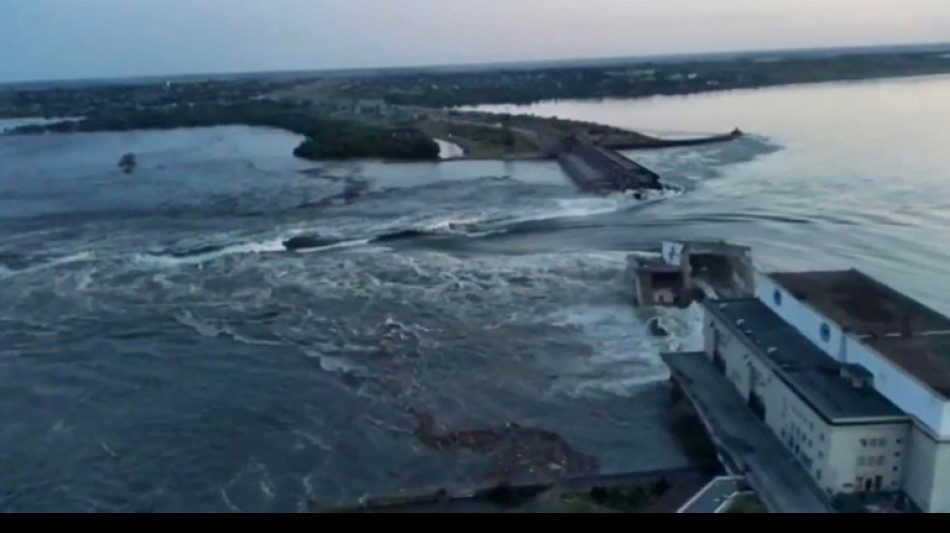
Kakhovka: a strategic dam in Russian-occupied Ukraine / Photo: Handout - AFP

 West must embrace 'national power' or face decline: Rubio

 Shell refining margins reach record highs as wars hit supply

 Former Spain, Barca winger Pedro retires from football

 Arteta signs new Arsenal deal until 2030

 Stocks decline as oil climbs on Mideast flareup

 Gauff says online abuse was 'draining' after China Open exit

 As sector struggles, Porsche puts luxury ahead of volume

 'It's personal': Fiji minister pushes better climate finance at pre-COP

 Russia glosses over dark Soviet past in reinvented museum

 UK tax body opened probe into Man City in 2018: FT

 Yemen's Houthis claim new attacks on Saudi airports as conflict deepens

 Germany factory production at highest level for 18 months

 Thailand floods death toll rises to 60 since mid-September

 US pushes Russia for information on plague reports

 Myanmar leader lands in Malaysia for migrant return talks

 Indian central bank hikes rates for first time since 2023

 US military on Okinawa face curfew, alcohol ban after murder case

 Fierce lobbying in EU over 'forever chemicals'

 Dodgers beat Braves and Padres avoid sweep in MLB playoffs

 Mourning, war and elections as Israel marks October 7

 Messi says Argentina retirement is 'saddest day of my career'
 Oil rises and stocks fall as Hormuz worries flare

 Pacific presses world for help 'surviving' climate change at pre-COP summit

 Verstappen revival to be put to the test in steamy Singapore
 US woman who survived botched execution is conscious, speaking: lawyers

Thousands are at risk of flooding in southern Ukraine, with Kyiv and Moscow blaming each other for damage to the strategic Russian-held Kakhovka hydroelectric dam.
The dam on the Dnipro River is a strategic water source for the Russian-annexed Crimean peninsula, and flooding could potentially block Ukrainian forces seeking to regain lost territory.
The damage has also increased fears of a nuclear incident, since the Zaporizhzhia power plant relies on the upstream Kakhovka reservoir for its cooling systems.
The 3.3-kilometre-long (two-mile-long) dam was captured by Russian forces at the beginning of the invasion on February 24, 2022, along with its hydroelectric power station.
Upstream from the dam is the Kakhovka reservoir, which can hold 18 cubic kilometres of water -- approximately the same capacity as Utah's Great Salt Lake.
Ukraine, which now controls the river's right bank, said on Tuesday there was flooding in at least eight areas along the Dnipro River.
About 16,000 people are in a critical flood zone, according to Ukrainian officials.
The dam is about 60 kilometres (40 miles) east of Kherson, which Ukraine took back in November, turning the river into the new front line.
Russia, which controls the left bank of the river, said over 22,000 residents in 14 areas were in potential flood zones but there was no risk of flooding for major population centres.
- Disputing claims -
Besides flooding, there are fears of a nuclear incident because the Zaporizhzhia power station relies on the Kakhovka reservoir for its cooling system.
The United Nations and Russia said there was no major risk to the nuclear power plant but Ukraine said there was a growing danger.
Built in Soviet times in the 1950s, the Kakhovka dam has strategic value. It pumps water into the North Crimean Canal, which starts in southern Ukraine and crosses the entire Crimean peninsula.
This means that any problem with the dam could cause water supply problems for Crimea, which has been under Russian control since 2014.
Kyiv accused Moscow of mining the dam when combat raged nearby in October, during the last major offensive by Ukrainian forces seeking to regain lost territory.
Kremlin proxies in the Kherson region on Tuesday denied any plans to blow up the dam, calling Ukraine's assertions "lies".
Kyiv says Moscow destroyed the dam to slow down its military counteroffensive.
Russia said the dam was damaged by multiple Ukrainian strikes.
N.Awad--SF-PST