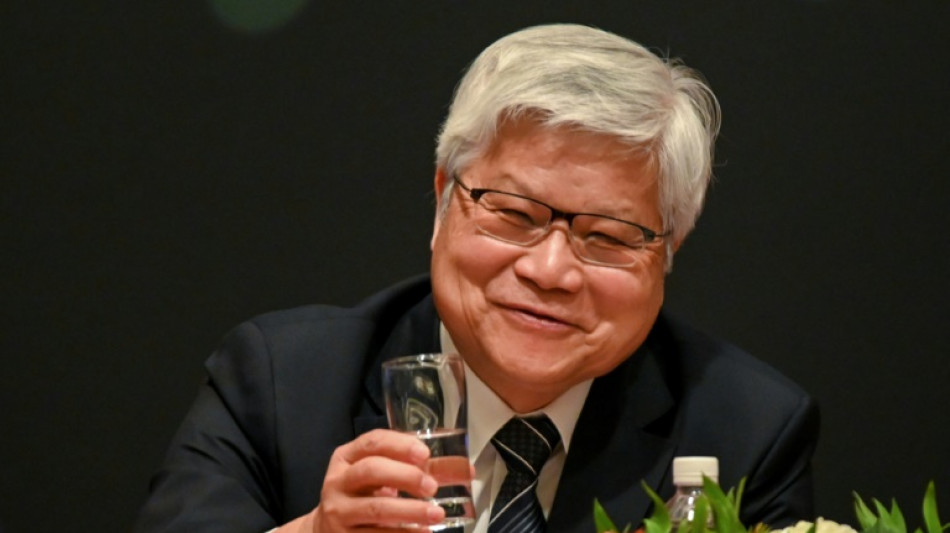
Taiwanese chip giant TSMC says industry could have 'stabilising' effect / Photo: Sam Yeh - AFP

 West must embrace 'national power' or face decline: Rubio

 Shell refining margins reach record highs as wars hit supply

 Former Spain, Barca winger Pedro retires from football

 Arteta signs new Arsenal deal until 2030

 Stocks decline as oil climbs on Mideast flareup
 Gauff says online abuse was 'draining' after China Open exit

 As sector struggles, Porsche puts luxury ahead of volume
 'It's personal': Fiji minister pushes better climate finance at pre-COP

 Russia glosses over dark Soviet past in reinvented museum

 UK tax body opened probe into Man City in 2018: FT

 Yemen's Houthis claim new attacks on Saudi airports as conflict deepens
 Germany factory production at highest level for 18 months
 Thailand floods death toll rises to 60 since mid-September
 US pushes Russia for information on plague reports

 Myanmar leader lands in Malaysia for migrant return talks
 Indian central bank hikes rates for first time since 2023

 US military on Okinawa face curfew, alcohol ban after murder case

 Fierce lobbying in EU over 'forever chemicals'

 Dodgers beat Braves and Padres avoid sweep in MLB playoffs
 Mourning, war and elections as Israel marks October 7

 Messi says Argentina retirement is 'saddest day of my career'
 Oil rises and stocks fall as Hormuz worries flare

 Pacific presses world for help 'surviving' climate change at pre-COP summit
 Verstappen revival to be put to the test in steamy Singapore
 US woman who survived botched execution is conscious, speaking: lawyers

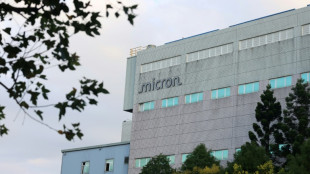
Taiwanese semiconductor giant TSMC said Tuesday its production of ever-smaller microchips will remain on the island, hopeful that the critical industry will have a "stabilising effect on global geopolitical conflicts".
Taiwan Semiconductor Manufacturing Company -- whose clients include Apple and Intel -- controls more than half the world's output of silicon wafers, used in everything from smartphones to cars and missiles.
Recent years have seen it navigating geopolitical tussles between the United States and China, with the countries facing off over a range of issues including technology, trade, and Taiwan -- the primary manufacturing base of the world's semiconductors.
Alarm has spiked in recent months over the future of the semiconductor industry -- the lifeblood of the global economy -- if Taiwan were to be invaded by China, which considers the self-ruled island its own territory.
"I can assure everyone that for the three-nanometre, two-nanometre (chips), we will manufacture here in Taiwan," said TSMC CEO CC Wei on Tuesday during a shareholder meeting in the northern city of Hsinchu.
TSMC's three-nanometre and two-nanometre chips are expected to be among the world's most advanced technologies -- to be used in high-performing devices as the global market pivots towards products deploying artificial intelligence, like ChatGPT.
Wei also said that an even smaller product -- the 1.4-nanometre chip -- will be manufactured "almost entirely in Taiwan".
China has ramped up military and political pressures on Taiwan, strongly protesting against any diplomatic engagement with the island.
In April, Beijing conducted three days of military exercises simulating a blockade of the island in response to US House Speaker Kevin McCarthy meeting Taiwanese President Tsai Ing-wen in California.
On Tuesday, TSMC sought to project an image of calm.
"I think Taiwan's semiconductor industry plays a stabilising role amid global geopolitical tensions. Whether it's China or the United States... they all hope that TSMC is around," said executive chairman Mark Liu.
"I hope Taiwan's semiconductor industry can do well to have a stabilising effect on global geopolitical conflict."
The US-China trade conflict combined with the impacts of the Russia-Ukraine war and climate change have led to lowered expectations for the semiconductor market, said Liu, though TSMC's performance in the second half of the year "will be better than the first half".
He added TSMC is still negotiating with German authorities over a factory in Dresden, though they are concerned about the talent pool there and the country's supply chain systems.
"There are some gaps indeed, but... the local government promises to build them up in the short-term," said Liu. "We feel rather good about it."
U.Shaheen--SF-PST