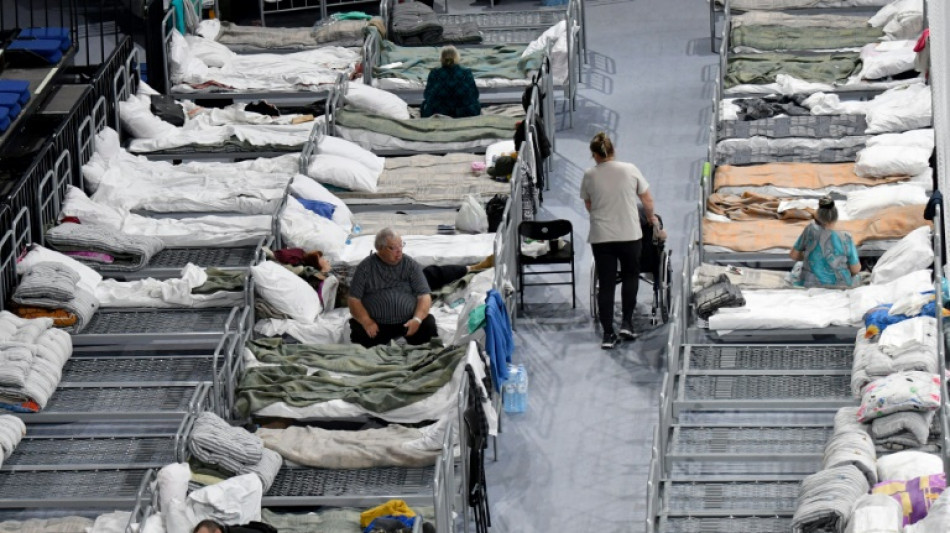
In Belgorod, Russians who fled border shelling find help / Photo: Olga MALTSEVA - AFP

 West must embrace 'national power' or face decline: Rubio

 Shell refining margins reach record highs as wars hit supply

 Former Spain, Barca winger Pedro retires from football

 Arteta signs new Arsenal deal until 2030

 Stocks decline as oil climbs on Mideast flareup

 Gauff says online abuse was 'draining' after China Open exit

 As sector struggles, Porsche puts luxury ahead of volume
 'It's personal': Fiji minister pushes better climate finance at pre-COP

 Russia glosses over dark Soviet past in reinvented museum

 UK tax body opened probe into Man City in 2018: FT
 Yemen's Houthis claim new attacks on Saudi airports as conflict deepens
 Germany factory production at highest level for 18 months

 Thailand floods death toll rises to 60 since mid-September

 US pushes Russia for information on plague reports

 Myanmar leader lands in Malaysia for migrant return talks

 Indian central bank hikes rates for first time since 2023
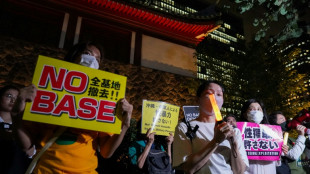 US military on Okinawa face curfew, alcohol ban after murder case

 Fierce lobbying in EU over 'forever chemicals'
 Dodgers beat Braves and Padres avoid sweep in MLB playoffs

 Mourning, war and elections as Israel marks October 7

 Messi says Argentina retirement is 'saddest day of my career'
 Oil rises and stocks fall as Hormuz worries flare

 Pacific presses world for help 'surviving' climate change at pre-COP summit

 Verstappen revival to be put to the test in steamy Singapore
 US woman who survived botched execution is conscious, speaking: lawyers

Soap, wet wipes and children's toys: Irina Burlakova, a 30-year-old Russian woman, picks up humanitarian aid after having fled Shebekino, a border town heavily shelled by Ukraine this week.
She is one of several thousand people from border homes who fled to the regional hub of Belgorod as attacks intensified on Shebekino and nearby villages.
According to Russian authorities, seven people were killed on Friday and Saturday in border villages around Shebekino.
The intense shelling comes after the area saw an extraordinary incursion from Ukraine, and as Kyiv says it is preparing for a major counteroffensive.
"We fled as fast as we could," Burlakova, who left Shebekino with her husband and son, told AFP at a youth centre where volunteers were giving out aid.
The family lived in the centre of Shebekino, a city that recently had a population of around 40,000.
"We left after three days of shelling, after two terrifying nights," Burlakova said.
"Of course, we are in a terrible state. But we are holding on, trying to be strong ourselves, because we have children."
She added that she "of course did not know what would happen next".
Belgorod volunteers were handing out aid to displaced people in the youth centre that had huge Russian flag on its entrance and was decorated with emblems in support of the Russian army.
One of them, Oleg Cherkashin, a 37-year-old self-employed man from Belgorod, said, "This could happen to anyone."
"We have to be good-natured and understand the situation."
Some volunteers wore t-shirts with the letter "Z" -- the symbol of Moscow's forces fighting in Ukraine.
Another volunteer, 26-year-old Viktoria Kovaleva, who is also a blogger, said help is being organised on social media.
"I want to help people who found themselves in a difficult situation," she said.
- 'We are not being defended' -
The Belgorod region has been hit by drone and artillery attacks from Ukraine for months but the shelling has never been as intense as in recent days.
On Thursday, Moscow said it had pushed back a ground attack from Ukraine in the region, which late last month was the scene of a dramatic incursion from across the border.
Displaced people in Belgorod told AFP they were satisfied with the way they have been treated and praised local authorities.
Regional governor Vyacheslav Gladkov said Sunday that more than 4,000 people had been placed in temporary accommodation around Belgorod city.
At the Orthodox Marfo-Marinsky monastery, religious women were also handing out humanitarian aid to those arriving from the border zone.
The convent had already been active in distributing aid to Ukrainian refugees who had arrived in Russia at the start of Moscow's offensive.
"We cannot stand aside when our citizens are forced to leave their land, their homes," said Yelena Khimchenko, in charge of aid distribution at the monastery.
She wore a white headband with a red cross on it.
Tatiana Kozheleva, a pensioner who fled Shebekino, said her balcony was damaged by shelling in the border city.
As the 64-year-old received aid in the monastery, she was the only person AFP spoke with to question who bore responsibility for Shebekino's misery.
"Our city Shebekino was bombed and bombed," she said, comparing it to the east Ukrainian city of Donetsk.
She indicated she had some questions for the authorities.
"There is some resentment, for our Belgorod region. We are not being defended," she said.
"We are being hit, but we (Russia) are smiling," she said with a worried smile.
B.Khalifa--SF-PST