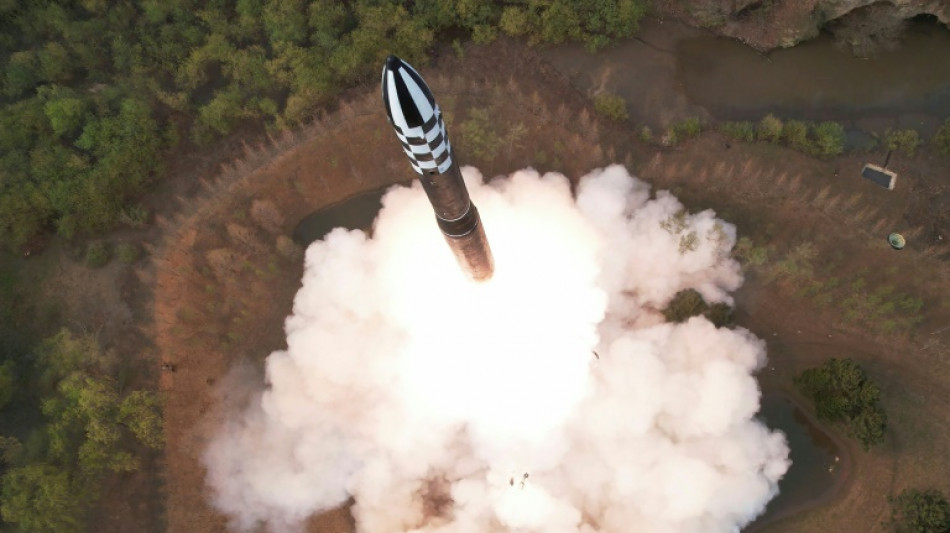
US, Japan, S.Korea aim to share N.Korea missile warning data / Photo: STR - KCNA VIA KNS/AFP/File

 West must embrace 'national power' or face decline: Rubio

 Shell refining margins reach record highs as wars hit supply

 Former Spain, Barca winger Pedro retires from football

 Arteta signs new Arsenal deal until 2030

 Stocks decline as oil climbs on Mideast flareup

 Gauff says online abuse was 'draining' after China Open exit

 As sector struggles, Porsche puts luxury ahead of volume
 'It's personal': Fiji minister pushes better climate finance at pre-COP

 Russia glosses over dark Soviet past in reinvented museum

 UK tax body opened probe into Man City in 2018: FT

 Yemen's Houthis claim new attacks on Saudi airports as conflict deepens
 Germany factory production at highest level for 18 months

 Thailand floods death toll rises to 60 since mid-September

 US pushes Russia for information on plague reports

 Myanmar leader lands in Malaysia for migrant return talks

 Indian central bank hikes rates for first time since 2023

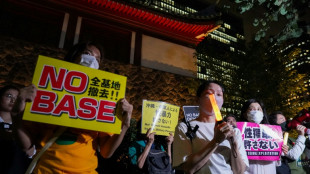 US military on Okinawa face curfew, alcohol ban after murder case

 Fierce lobbying in EU over 'forever chemicals'

 Dodgers beat Braves and Padres avoid sweep in MLB playoffs

 Mourning, war and elections as Israel marks October 7

 Messi says Argentina retirement is 'saddest day of my career'

 Oil rises and stocks fall as Hormuz worries flare

 Pacific presses world for help 'surviving' climate change at pre-COP summit

 Verstappen revival to be put to the test in steamy Singapore

 US woman who survived botched execution is conscious, speaking: lawyers

The United States, Japan and South Korea aim to share North Korean missile warning data before the end of 2023, the three countries said in a statement following a Saturday meeting of their defence chiefs in Singapore.
The announcement followed a North Korean attempt to launch a spy satellite that ended with it crashing into the sea after a rocket failure earlier in the week, the latest in a string of banned tests conducted by Pyongyang.
The three sides "recognised trilateral efforts to activate a data sharing mechanism to exchange real-time missile warning data before the end of the year in order to improve each country's ability to detect and assess missiles launched" by North Korea, their joint statement said.
US Defense Secretary Lloyd Austin and his Japanese and South Korean counterparts Yasukazu Hamada and Lee Jong-sup met on the sidelines of the Shangri-La Dialogue defence summit.
They "discussed the growing nuclear and missile threats from the Democratic People's Republic of Korea (DPRK) as well as efforts to enhance trilateral security exercises and address common security challenges in the Indo-Pacific region", the statement said.
South Korea's defence ministry said in a separate statement that they "committed to making further progress in the coming months towards the activation of a real-time sharing mechanism for missile warning information".
Hamada told a news conference the initiative "will improve the ability of countries to detect and assess the threat of missiles launched by North Korea, and we will work firmly to achieve this as soon as possible".
A senior US defence official said ahead of the announcement that the planned data sharing is ultimately about "strengthening trilateral cooperation, which we believe is in all three of our countries' interests, which we believe strengthens deterrence, and which we believe also institutionalises this cooperation".
- 'Grave danger' -
Seoul, Tokyo and Washington all slammed the failed North Korean satellite launch, which they said violated a raft of UN resolutions barring Pyongyang from any tests using ballistic missile technology.
South Korea's military said it had managed to locate and salvage a portion of the suspected debris in a potential intelligence bonanza.
North Korea does not have a functioning satellite in space and leader Kim Jong Un has made developing a military spy satellite a top priority, despite UN resolutions barring its use of such technology.
Because long-range missiles and rockets used for space launches share the same technology, analysts say developing the ability to put a satellite in orbit would provide Pyongyang with cover for testing its banned intercontinental ballistic missiles (ICBMs).
Before the failed launch, Pyongyang had launched five satellites since 1998. Three failed immediately and two appeared to have been put into orbit.
North Korea has doubled down on military development since diplomatic efforts collapsed in 2019, conducting a string of prohibited weapons tests, including test-firing multiple ICBMs.
Kim last year declared his country an "irreversible" nuclear power and called for an "exponential" increase in weapons production, including tactical nuclear weapons.
The North's weapons of mass destruction and ballistic missile programmes "pose a grave threat to international peace and stability", the United States, Japan and South Korea said in their statement.
J.AbuShaban--SF-PST