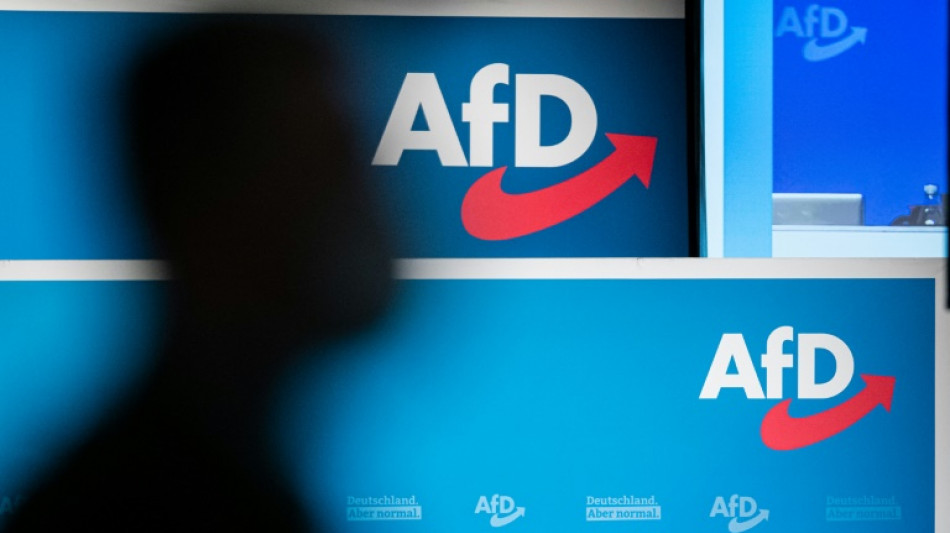
Far-right party at new high as climate issues split Germany / Photo: JENS SCHLUETER - AFP

 West must embrace 'national power' or face decline: Rubio
 Shell refining margins reach record highs as wars hit supply

 Former Spain, Barca winger Pedro retires from football

 Arteta signs new Arsenal deal until 2030

 Stocks decline as oil climbs on Mideast flareup

 Gauff says online abuse was 'draining' after China Open exit

 As sector struggles, Porsche puts luxury ahead of volume
 'It's personal': Fiji minister pushes better climate finance at pre-COP

 Russia glosses over dark Soviet past in reinvented museum

 UK tax body opened probe into Man City in 2018: FT

 Yemen's Houthis claim new attacks on Saudi airports as conflict deepens

 Germany factory production at highest level for 18 months
 Thailand floods death toll rises to 60 since mid-September

 US pushes Russia for information on plague reports

 Myanmar leader lands in Malaysia for migrant return talks

 Indian central bank hikes rates for first time since 2023

 US military on Okinawa face curfew, alcohol ban after murder case
 Fierce lobbying in EU over 'forever chemicals'

 Dodgers beat Braves and Padres avoid sweep in MLB playoffs
 Mourning, war and elections as Israel marks October 7

 Messi says Argentina retirement is 'saddest day of my career'
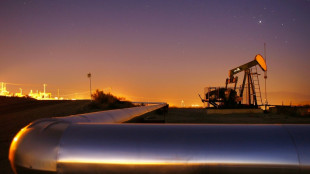 Oil rises and stocks fall as Hormuz worries flare

 Pacific presses world for help 'surviving' climate change at pre-COP summit

 Verstappen revival to be put to the test in steamy Singapore
 US woman who survived botched execution is conscious, speaking: lawyers

Long an anti-immigration party, the Alternative for Germany (AfD) has scaled new heights in national polls as discontent with the government in Berlin and its climate agenda grows.
The far-right party would receive 18 percent of the vote if elections were held tomorrow, according to the most recent survey by national broadcaster ARD.
The figure is the AfD's best in the closely watched election monitor, putting it level with Chancellor Olaf Scholz's Social Democrats and behind only the conservative CDU-CSU on 29 percent of the vote.
The AfD was also topping polls in the eastern regions of Saxony, Thuringia and Brandenburg.
While the party continues to leverage anti-immigration sentiment, it has also increasingly sought to capitalise on dissatisfaction with Scholz's ruling coalition with the Greens and the pro-business FDP.
In particular, the AfD has taken aim at the government's plans to clean up the Germany's energy system amid a painful cost of living crisis triggered by the Russian invasion of Ukraine.
"The AfD has discovered the topic of climate protection for itself," said Ursula Muench, political scientist at the Bundeswehr University Munich.
- 'Heating hammer' -
The AfD started out at as an anti-euro outfit in 2013 before capitalising on public anger over former chancellor Angela Merkel's 2015 decision to allow in a wave of asylum seekers from conflict-torn countries like Syria, Afghanistan and Iraq.
It took nearly 13 percent of the vote in the 2017 general election, catapulting the party into the German Bundestag, before it fell back to 10 percent in the last national vote in 2021.
The recent polling rebound owed much to the fact that Scholz's three-way coalition was "always at odds on very central points such as climate", said Hajo Funke, a political scientist at the Free University of Berlin.
The coalition members have traded blows of late over a plan put forward by the Green-led economy ministry to ban new fossil-fuel boilers and reduce emissions.
Concern over energy-led inflation has allowed the far-right party make hay with criticism of the government's climate policy -- slammed by well-read tabloid Bild as a "heating hammer" for consumers.
"Voters are seeing where the value-based politics of the Greens is leading us, namely, to economic war, inflation and deindustrialisation," AfD co-leader Tino Chrupalla told the Funke media group.
-'Resentment'-
The AfD is succeeding in "mobilising and creating a mood" by targeting the government's supposedly costly climate agenda for criticism, political scientist Muench told AFP.
The far-right faction in the Bundestag had done better than the main opposition CDU at capitalising on "resentment and lack of understanding about the heating law", she said.
The government had not done enough to address concerns of rising bills and "does not communicate well" around the issue, Funke told AFP.
The discord at the heart of the government has hurt the public image of the ruling parties. Only one in five voters said they were satisfied with the work being done by Scholz's coalition in the ARD poll.
The AfD "will continue to thrive as long and only as long as politics gives this bad impression of itself", Funke said.
But while climate issues were high among the reasons why voters were turning towards the AfD, migration concerns remained a core part of the AfD's appeal. Almost two in three of the party's voters named the issue as a reason for choosing the AfD in the ARD poll.
The sore subject is not going away, with the number of refugees headed for Germany climbing again after the war in Ukraine.
"I suspect the AfD will continue to focus on the issue in their campaigns," Muench said.
T.Samara--SF-PST