US says talks with China 'essential' to curb chance of conflict / Photo: Roslan RAHMAN - AFP

 West must embrace 'national power' or face decline: Rubio

 Shell refining margins reach record highs as wars hit supply
 Former Spain, Barca winger Pedro retires from football
 Arteta signs new Arsenal deal until 2030

 Stocks decline as oil climbs on Mideast flareup

 Gauff says online abuse was 'draining' after China Open exit

 As sector struggles, Porsche puts luxury ahead of volume
 'It's personal': Fiji minister pushes better climate finance at pre-COP

 Russia glosses over dark Soviet past in reinvented museum

 UK tax body opened probe into Man City in 2018: FT
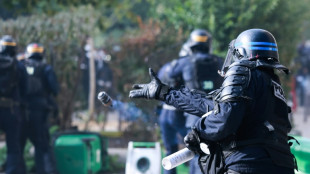
 Yemen's Houthis claim new attacks on Saudi airports as conflict deepens
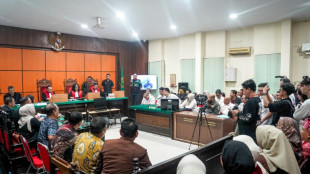
 Germany factory production at highest level for 18 months
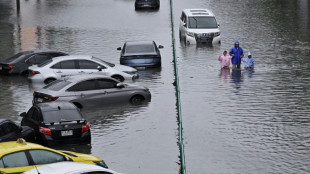 Thailand floods death toll rises to 60 since mid-September

 US pushes Russia for information on plague reports

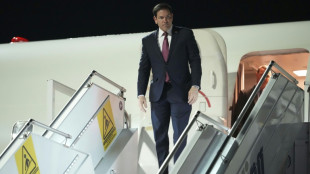
 Myanmar leader lands in Malaysia for migrant return talks

 Indian central bank hikes rates for first time since 2023

 US military on Okinawa face curfew, alcohol ban after murder case

 Fierce lobbying in EU over 'forever chemicals'

 Dodgers beat Braves and Padres avoid sweep in MLB playoffs
 Mourning, war and elections as Israel marks October 7

 Messi says Argentina retirement is 'saddest day of my career'
 Oil rises and stocks fall as Hormuz worries flare

 Pacific presses world for help 'surviving' climate change at pre-COP summit
 Verstappen revival to be put to the test in steamy Singapore
 US woman who survived botched execution is conscious, speaking: lawyers

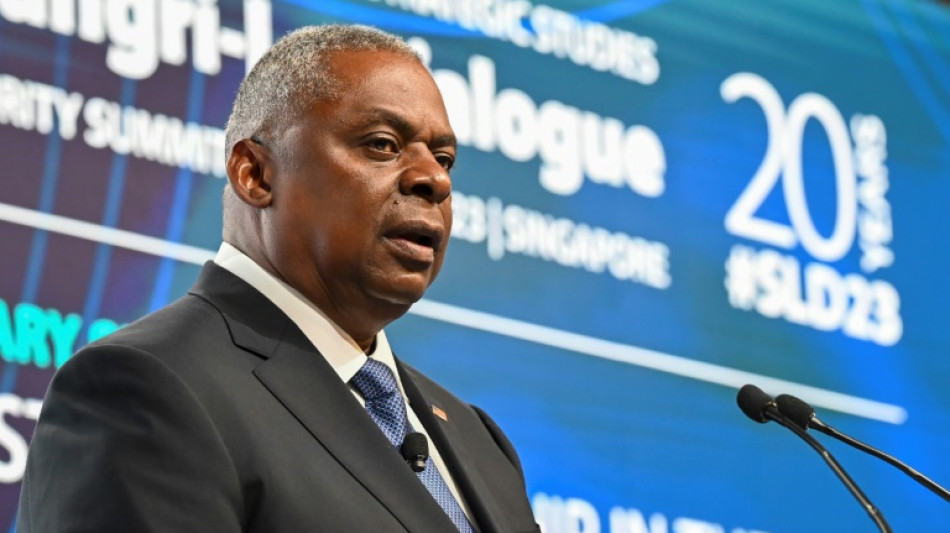
Dialogue between the United States and China is "essential" to avoiding miscalculations that could lead to conflict, US Defence Secretary Lloyd Austin said Saturday, after Beijing rejected a formal meeting between him and his Chinese counterpart.
Austin and Li Shangfu shook hands and briefly spoke for the first time at the opening dinner of the Shangri-La Dialogue defence summit in Singapore the night before, but the interaction fell short of the Pentagon's hopes for a more substantive exchange.
The US defence chief is on a tour of Asia that previously took him to Japan and will also include a visit to India -- part of a push by top American officials to shore up alliances and partnerships in the region to help counter Beijing.
"The United States believes that open lines of communication with the People's Republic of China are essential -- especially between our defense and military leaders," Austin said in remarks at the Shangri-La Dialogue.
"The more that we talk, the more that we can avoid the misunderstandings and miscalculations that could lead to crisis or conflict."
The United States had invited Li to meet on the sidelines of the summit, but Beijing declined, with a spokeswoman saying "the US knows clearly why there are currently difficulties in military communication".
Li was sanctioned by the US government in 2018 for buying Russian weapons, but the Pentagon says that does not prevent Austin from conducting official business with him.
A senior US defence official said it was good for the two to speak, but Austin told the defence summit that "a cordial handshake over dinner is no substitute for a substantive engagement."
Austin said he was "deeply concerned that (China) has been unwilling to engage more seriously on better mechanisms for crisis management between our two militaries", expressing hope that would soon change.
He also took aim at Beijing for conducting "an alarming number of risky intercepts of US and allied aircraft flying lawfully in international airspace", including one last week.
- 'Preserving the status quo' -
In that incident, the US military said a Chinese fighter pilot had performed an "unnecessarily aggressive maneuver" near an American surveillance aircraft operating over the South China Sea.
Video footage released by the US military showed a Chinese fighter plane crossing in front of the American aircraft, which could be seen shaking from the resulting turbulence.
But China's military said the US plane "broke into" a military training area.
Tensions between Washington and Beijing have soared this year over issues including Taiwan and an alleged Chinese spy balloon that was shot down by a US warplane after traversing the country.
Another recent flashpoint has been high-end microchips, with Beijing saying in May that US semiconductor giant Micron had failed a national security review and would not be allowed to sell to operators of "critical information infrastructure".
The announcement came after Washington and its allies took measures in recent months that China claimed were designed to restrict its ability to purchase or manufacture cutting-edge chips and curb its rising global power.
In April, Beijing launched three days of military exercises around the democratic self-ruled island of Taiwan, simulating targeted strikes and a blockade.
China considers Taiwan a part of its territory to be taken one day, by force if necessary, and the island lives under the constant fear of invasion.
The Chinese exercises came in response to a meeting between Taiwanese President Tsai Ing-wen and US House Speaker Kevin McCarthy in California, which China's consulate in Los Angeles said undermined "the political foundation of China-US relations".
Austin said at the defence summit that the United States "remains deeply committed to preserving the status quo" in the Taiwan Strait and "will continue to categorically oppose unilateral changes to the status quo from either side."
X.AbuJaber--SF-PST