US urges keeping Russia nuclear arms limits, eyes China / Photo: Brendan SMIALOWSKI - AFP/File

 West must embrace 'national power' or face decline: Rubio

 Shell refining margins reach record highs as wars hit supply

 Former Spain, Barca winger Pedro retires from football

 Arteta signs new Arsenal deal until 2030

 Stocks decline as oil climbs on Mideast flareup
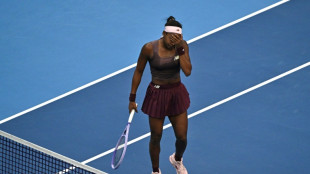
 Gauff says online abuse was 'draining' after China Open exit

 As sector struggles, Porsche puts luxury ahead of volume
 'It's personal': Fiji minister pushes better climate finance at pre-COP
 Russia glosses over dark Soviet past in reinvented museum

 UK tax body opened probe into Man City in 2018: FT

 Yemen's Houthis claim new attacks on Saudi airports as conflict deepens
 Germany factory production at highest level for 18 months
 Thailand floods death toll rises to 60 since mid-September

 US pushes Russia for information on plague reports

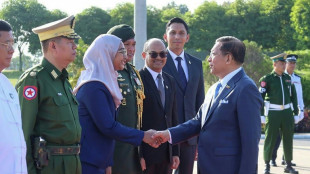 Myanmar leader lands in Malaysia for migrant return talks

 Indian central bank hikes rates for first time since 2023

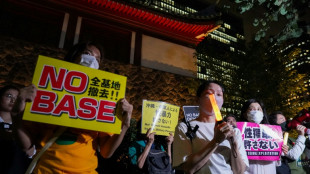 US military on Okinawa face curfew, alcohol ban after murder case

 Fierce lobbying in EU over 'forever chemicals'

 Dodgers beat Braves and Padres avoid sweep in MLB playoffs
 Mourning, war and elections as Israel marks October 7

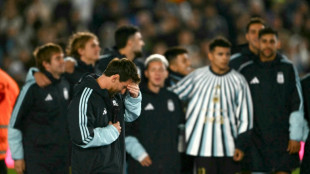 Messi says Argentina retirement is 'saddest day of my career'

 Oil rises and stocks fall as Hormuz worries flare

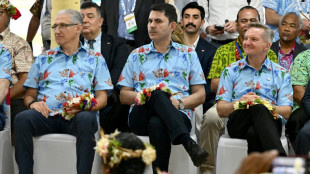
 Pacific presses world for help 'surviving' climate change at pre-COP summit
 Verstappen revival to be put to the test in steamy Singapore

 US woman who survived botched execution is conscious, speaking: lawyers

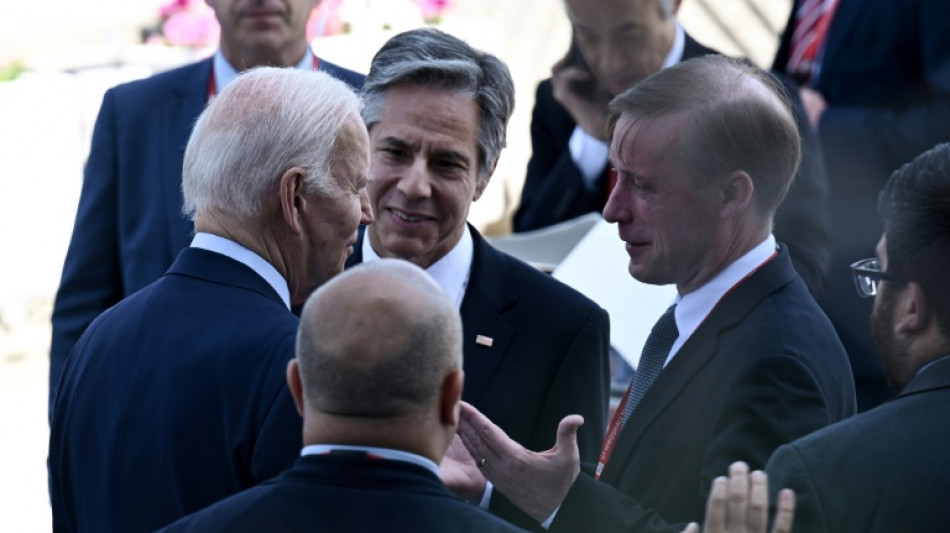
A top White House official on Friday offered to maintain current nuclear warhead limits with Russia, while making the case for putting rising power China at the center of future arms control efforts.
National Security Advisor Jake Sullivan made the comments in a speech at the annual National Arms Control Association meeting in Washington, as he outlined the attempt by Joe Biden administration to confront what he called "substantial" and "deep" cracks in the post-Cold War nuclear landscape.
With the last US-Russia arms control treaty -- New START -- largely moribund and due to expire in 2026, Sullivan said the United States is keen to forge a new treaty.
In the meantime, however, Washington wants the world's two leading nuclear powers to preserve the core of that treaty -- a limit for each of 1,550 warheads.
"We're prepared to stick to the central limits as long as Russia does," Sullivan said.
He also called on Moscow to start new talks for a post-2026 framework, saying "rather than waiting to resolve all of our bilateral differences, the United States is ready to engage Russia now to manage nuclear risks."
Unlike during the Cold War, when there were only two global nuclear powers, the future of arms control will revolve around China's rapidly expanding arsenal and global presence, Sullivan said.
"By 2035, (China) is on track to have as many as 1,500 nuclear warheads -- one of the largest peacetime nuclear buildups in history," Sullivan said, meaning that "the United States will need to deter two near-peer nuclear powers for the first time in its history."
"We're also ready to engage China without preconditions," he said.
A senior US official told reporters that the China factor not only involves the need for Washington to manage the threat directly but to consider the ripple effects created for US nuclear allies Britain and France, whose own smaller arsenals are largely directed at countering Russia.
Agreements with China "of course will affect our ability to come to some sort of accord with the Russians," the official said.
- Difficult path -
With relations at rock bottom with President Vladimir Putin's Russia and currently at a near standstill with Beijing, a difficult path lies ahead.
China "has thus far opted not to come to the table for substantive dialogue on arms control. It has declined to share the size and scope of its nuclear forces or to provide launch notifications. And it has not shown much interest in discussions regarding the changes to its nuclear forces," Sullivan said.
In February this year, Putin announced that Russia was suspending participation in New START, a Cold War-era treaty which limits warheads and allows verification by both sides.
The State Department said Thursday that it has made reciprocal "countermeasures" by suspending various aspects of the treaty, including on-site inspections and exchange of data.
While offering to rebuild arms control treaties, Sullivan stressed that the United States will simultaneously improve its nuclear forces.
"Responsibly enhancing our deterrent capabilities allows us to negotiate arms control from a position of strength," he said.
Z.AbuSaud--SF-PST