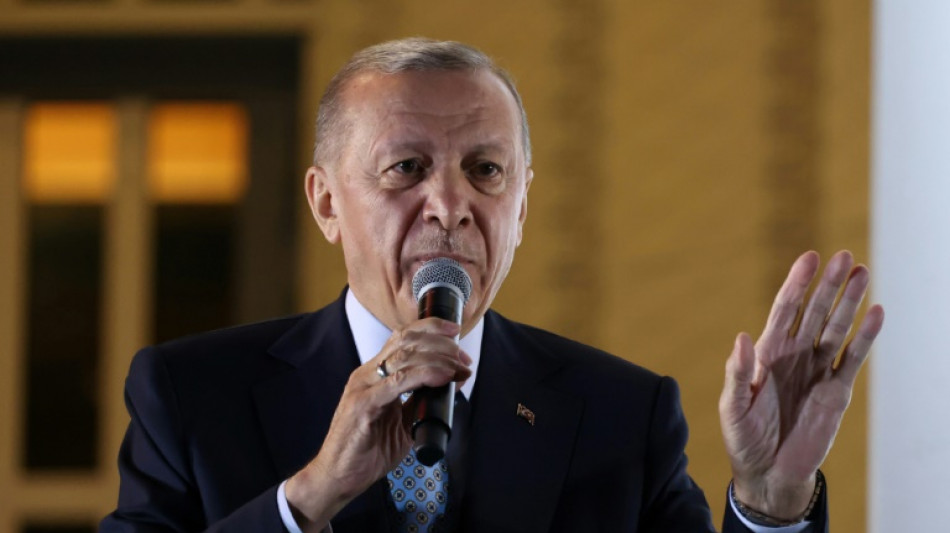
Turkish support in Germany for Erdogan fuels integration debate / Photo: Adem ALTAN - AFP

 HSBC 'consults' over UK unit job cuts amid AI adoption

 UK court quashes five ex-traders' Libor rate rigging convictions

 XM Receives “Global Customer Experience Leader Award 2026” at the TrustFinance Performance Awards
 Stocks slide as oil climbs on Mideast flareup
 Heavy casualties in Ukraine after Russian strikes
 French wine harvest set to hit historic low
 Kyiv 'cannot agree' to EU membership limiting food exports: minister

 Arteta targets more Arsenal glory after signing new deal until 2030

 Russell hit with Singapore grid penalty for taking new power unit

 Spotify expands audiobooks to more than 180 markets

 French-Japanese duo wins chemistry Nobel for solving molecular 'mystery'

 England's Nations League surge helps heal World Cup wounds

 Mayor of opposition stronghold Izmir defects to Erdogan party
 Mertens beats Gauff to set up Swiatek clash at China Open

 Benin full of pride at role in Messi's last dance

 France suspends stun grenade use at student protests ahead of PM speech

 Indonesian court hears 'negligence' complaint against state over fires, haze
 Rubio in Greece to urge against Western civilisation 'decline'

 Micron workers at Taiwan plant vote in favour of strike

 In 'The Social Reckoning,' Jeremy Allen White takes on Facebook's 'frightening' ambition
 Chip industry activists call for South Korea to recognise cancer cases
 Famine-scarred southern Madagascar braces for El Nino
 How the EU regulates lobbyists

 I.Coast refuge offers lifelong care for youngsters scorned as 'sorcerers'

 Indian central bank hikes rates for first time in more than 3 years

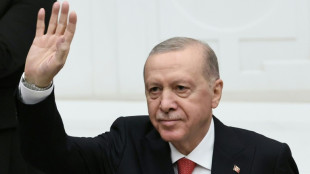
Strong backing for President Recep Tayyip Erdogan among Turks in Germany in last weekend's historic election has sparked renewed soul-searching about whether Berlin's attempts to integrate the minority are failing.
There were scenes of jubilation in some German cities after Erdogan extended his two-decade rule in Sunday's runoff vote, with cars decked out with flags driving through the streets and honking.
Germany -- home to the world's biggest Turkish community overseas -- had about 1.5 million registered voters in the polls, and Erdogan received some 67 percent of votes cast.
That is far above the 52 percent share of the vote Turkey's longest-serving leader garnered at home, where he had to overcome strong competition from secular challenger Kemal Kilicdaroglu.
That so many voters in a liberal European democracy opted for a ruler frequently accused of pursuing increasingly authoritarian policies sparked fresh debate over Berlin's integration policies.
Most of those celebrating Erdogan's victory in Germany "were born here, went to school here, enjoy freedom and prosperity, but consider the 'West' the realm of evil," read a commentary piece in conservative daily the Frankfurter Allgemeine Zeitung.
"It is a truism that is now being echoed from left to right -- something is going wrong with integration in Germany."
The results fed into a political row on a plan by the coalition government, led by the left-leaning SPD, to ease the path to gaining German citizenship and make it easier to become a dual citizen, which is almost impossible under current rules.
"After this Turkish election, the (coalition) should finally have understood: 'turbo-naturalisation' and dual citizenship for all are the wrong way," Andrea Lindholz, a lawmaker from the right-wing CSU party told the Bild tabloid.
But Islam expert Ahmad Mansour argued the result should not stop the rules on dual citizenship being changed -- as most of those who voted only held Turkish citizenship and were banned from having two passports.
- 'Emotional approach' -
Erdogan's success in Germany was helped in large part by well-organised, and well-funded overseas organisations, said Gokay Sofuoglu, chairman of the Turkish Community in Germany, which advocates for greater rights for those of Turkish origin.
"Of course, they can mobilise a lot of people," he told AFP.
Erdogan was presented as a strong, successful leader in a way that would appeal to Turks in Germany, many of whom are descended from so-called "guest workers" who arrived under an economic programme in the 1960s and '70s, and hailed from rural, conservative communities.
While many Turks in modern-day Germany have high levels of education, good jobs and decent incomes, critics say some can still feel disillusioned by relatively low levels of participation in politics and civil society.
In contrast to Erdogan's "emotional approach" to the Turkish community in Europe's most populous country, Germany appeared to have little to offer, said Eren Guvercin, a Turkish journalist living in the country.
Those who are not seeking to develop "counter-offers" to build up "emotional access" to Turks in Germany, "should not be surprised that Erdogan fills this gap," he added.
- 'Conservative attitudes' -
As Germany sought to get back on its feet after World War II, hundreds of thousands of Turks came over to work in industries ranging from construction to car-making.
Times were often tough for the newcomers, many of whom earned lower salaries than Germans and lived in low-quality housing. But many stayed and brought family members over, and are now an integral party of society.
Germany is home to about three million people of Turkish origin, although many hold only German citizenship, due to the current ban on dual nationalities.
Despite the worries triggered by the weekend election results, some argue that the backing for Erdogan in Germany should not ring alarm bells.
Many of the best integrated Turks have in fact taken on German nationality over the years, which excluded them from the vote, observers note.
The result also fits with a trend of strong support for the leader among Turks in other parts of Europe where, as in Germany, migrant communities originally came from rural communities, Yunus Ulusoy, from the Centre for Turkish Studies at the University of Duisburg-Essen, told AFP.
"They brought conservative, religious attitudes with them to the countries where they migrated," he said.
In countries like the United States and Britain, where Turkish migrants usually hail from more affluent backgrounds, the opposition typically performs better, he added.
Y.AlMasri--SF-PST