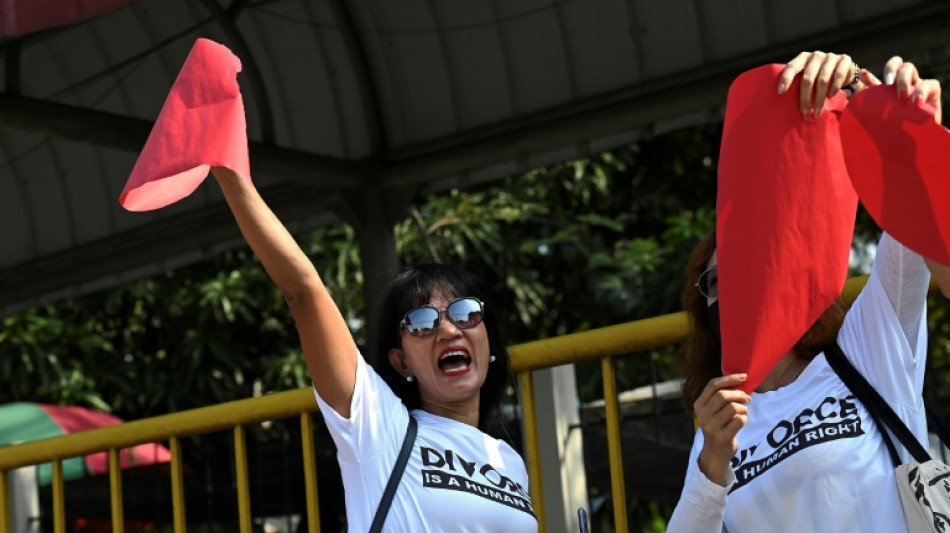
'We want to be free': Filipinos demand right to divorce / Photo: JAM STA ROSA - AFP

 US woman who survived botched execution is awake and speaking
 From 1800s to modern pharma: a Nobel-winning chemistry quest

 Southampton boss Eckert given suspended ban over 'Spygate'

 Russia warns of 'false' information as second plague case reported
 IEA ready to release more oil reserves if necessary

 HSBC 'consults' over UK unit job cuts amid AI adoption

 UK court quashes five ex-traders' Libor rate rigging convictions
 XM Receives “Global Customer Experience Leader Award 2026” at the TrustFinance Performance Awards
 Stocks slide as oil climbs on Mideast flareup

 Heavy casualties in Ukraine after Russian strikes
 French wine harvest set to hit historic low

 Kyiv 'cannot agree' to EU membership limiting food exports: minister

 Arteta targets more Arsenal glory after signing new deal until 2030

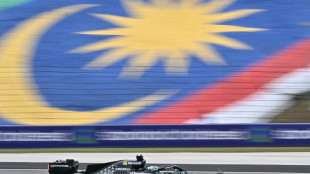 Russell hit with Singapore grid penalty for taking new power unit

 Spotify expands audiobooks to more than 180 markets

 French-Japanese duo wins chemistry Nobel for solving molecular 'mystery'

 England's Nations League surge helps heal World Cup wounds

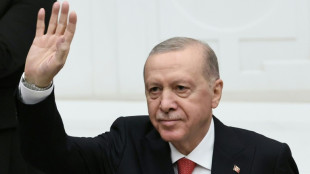 Mayor of opposition stronghold Izmir defects to Erdogan party
 Mertens beats Gauff to set up Swiatek clash at China Open
 Benin full of pride at role in Messi's last dance

 France suspends stun grenade use at student protests ahead of PM speech

 Indonesian court hears 'negligence' complaint against state over fires, haze

 Rubio in Greece to urge against Western civilisation 'decline'
 Micron workers at Taiwan plant vote in favour of strike

 In 'The Social Reckoning,' Jeremy Allen White takes on Facebook's 'frightening' ambition
Philippine mother-of-three Stella Sibonga is desperate to end a marriage she never wanted. But divorce in the Catholic-majority country is illegal, and a court annulment takes years.
The Philippines is the only place outside the Vatican where divorce is outlawed, with the Catholic Church -- which holds great influence on Philippine society -- opposing the practice as against its teachings.
Those in favour of legalising divorce say the ban makes it difficult to escape violent or otherwise abusive spouses, or even for couples to amicably cut ties.
People wanting to end their marriage can ask a court for an annulment or a declaration that the nuptials were invalid from the start, but the government can appeal against those decisions.
The legal process is slow and expensive -- cases can cost as much as $10,000 or more in a country plagued by poverty -- with no guarantee of success, and some people seeking a faster result fall for online scams.
"I don't understand why it has to be this difficult," said Sibonga, who has spent 11 years trying to get out of a marriage that her parents forced her into after she became pregnant.
Sibonga's legal battle began in 2012, when she applied to a court to cancel her marriage on the basis of her husband's alleged "psychological incapacity", one of the grounds for terminating a matrimony.
After five years and$3,500 in legal feesa judge finally agreed. The former domestic worker's relief was, however, short-lived.
The Office of the Solicitor General, which as the government's legal representative is tasked with protecting the institution of marriage, successfully appealed the decision in 2019.
Sibonga said she requested the Court of Appeals to reverse its ruling, but is still waiting for an answer.
"Why are we, the ones who experienced suffering, abandonment and abuse, being punished by the law?" said Sibonga, 45, who lives near Manila.
"All we want is to be free."
- 'Dysfunctional marriages' -
The most powerful opponent to divorce in the Philippines is the Catholic Church, which is also against abortion and contraceptives.
Around 78 percent of the country's 110 million people are Catholic, according to official census data, and many politicians are wary of contradicting the Church on sensitive social issues.
But Congress has scored significant wins in recent years.
A controversial birth control law was passed in 2012, despite strong opposition from the Church.
And in 2018, majority and opposition parties in the House of Representatives approved a divorce bill that later stalled in the Senate. It was the first time such a proposal had got that far.
Surveys conducted by polling company Social Weather Stations show a shift in Philippine attitudes towards divorce.
In 2005, 43 percent of Filipinos supported legalising divorce "for irreconcilably separated couples", while 45 percent disagreed.
The same survey in 2017 showed 53 percent in favour, while only 32 percent disagreed.
A group of lawmakers is now leading a fresh push to legalise divorce, with several bills filed in the House and the Senate.
"We are not destroying any marriage," said Edcel Lagman, a congressman and author of one of the bills.
Lagman said divorce was for "dysfunctional marriages beyond repair" and legalising it would enable women and their children to escape "intolerant and abusive husbands".
Before he was elected, President Ferdinand Marcos said the country should consider allowing divorce, but insisted it should not be easy.
- Annulment scams -
The burdensome process for getting a court order to end a marriage has spawned online scams offering to secure a quick ruling without time-consuming court appearances.
AFP fact checkers found numerous Facebook posts spreading false information about the legal process for annulment in order to attract clients, underscoring a growing global trend of fraudsters profiting off disinformation.
One victim told AFP she was charged the equivalent of $2,400 for an annulment service that turned out to be fake.
She is now considering converting to Islam in the hope of securing a divorce under Muslim law.
"I'm really trying every possible option just to be single again," she told AFP on the condition of anonymity.
"Annulment takes so long, it's so expensive and it's not guaranteed, so I'm seeking a more convenient way."
Family law specialist Katrina Legarda said the number of people falling for bogus services showed there was a "dire need" for new legislation.
But Father Jerome Secillano, of the Catholic Bishops' Conference of the Philippines, said the nation should be "proud" to be the only country outside the Vatican "holding on to the traditional concept of marriage".
"There will always be imperfections in a relationship," he said.
Secillano said divorcing an abusive partner would "perpetuate the violence" because the perpetrator would go on to abuse their next partner.
"You are not actually curing the disease itself," he said.
- 'I'm a sinner' -
Sibonga was raised a Catholic, but stopped attending church to avoid accusations of adultery.
She has a long-term boyfriend, but cannot tie the knot with him until her first marriage is legally terminated.
That her case has dragged on for so long is not unusual in the Philippines, where a creaky justice system can take years to resolve even minor issues.
"People think that because I am still technically married, I'm a sinner," she said.
"They really believe that what God has united cannot be separated. Really? Even if your husband is trying to kill you, even after everything he's done, divorce is still not allowed?"
Sibonga said her relationship with her husband had been traumatic and had pushed her to attempt suicide twice.
She does not want her children to marry until divorce is allowed.
"I told them they can cohabitate and have as many children as they want, but I won't ever consent to them getting married," she said.
"I just don't want them to end up like me."
Z.AbuSaud--SF-PST