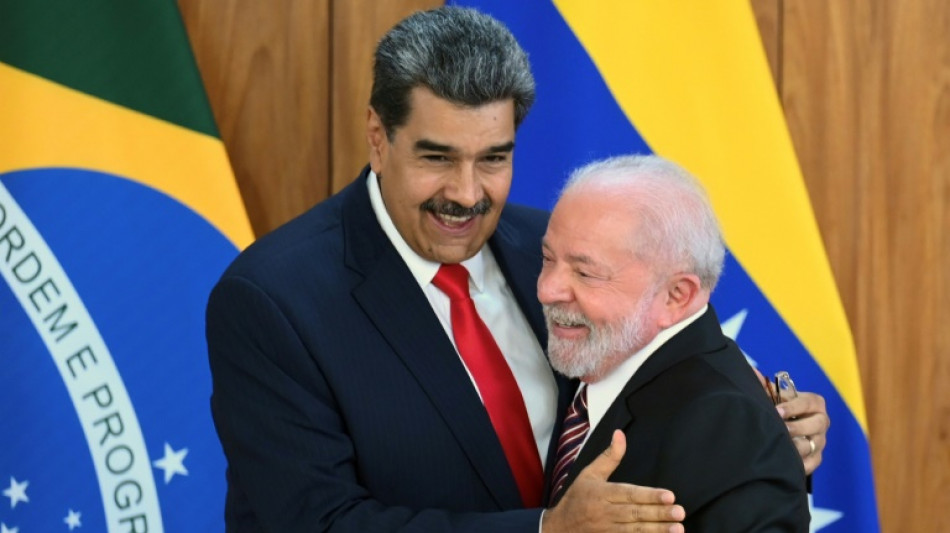
At Lula's S.American unity summit, Venezuela turns divisive / Photo: EVARISTO SA - AFP

 US woman who survived botched execution is awake and speaking
 From 1800s to modern pharma: a Nobel-winning chemistry quest
 Southampton boss Eckert given suspended ban over 'Spygate'
 Russia warns of 'false' information as second plague case reported
 IEA ready to release more oil reserves if necessary
 HSBC 'consults' over UK unit job cuts amid AI adoption
 UK court quashes five ex-traders' Libor rate rigging convictions
 XM Receives “Global Customer Experience Leader Award 2026” at the TrustFinance Performance Awards
 Stocks slide as oil climbs on Mideast flareup
 Heavy casualties in Ukraine after Russian strikes
 French wine harvest set to hit historic low
 Kyiv 'cannot agree' to EU membership limiting food exports: minister

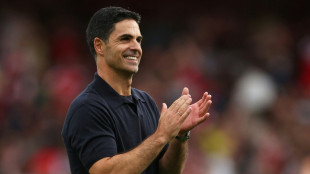
 Arteta targets more Arsenal glory after signing new deal until 2030
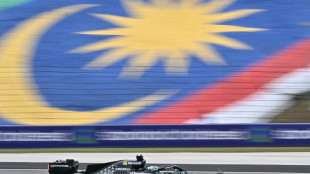 Russell hit with Singapore grid penalty for taking new power unit
 Spotify expands audiobooks to more than 180 markets

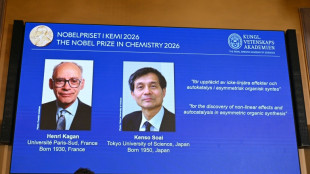 French-Japanese duo wins chemistry Nobel for solving molecular 'mystery'
 England's Nations League surge helps heal World Cup wounds

 Mayor of opposition stronghold Izmir defects to Erdogan party
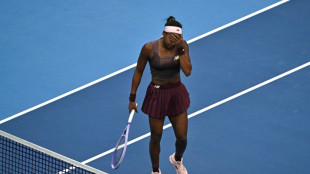
 Mertens beats Gauff to set up Swiatek clash at China Open
 Benin full of pride at role in Messi's last dance
 France suspends stun grenade use at student protests ahead of PM speech
 Indonesian court hears 'negligence' complaint against state over fires, haze
 Rubio in Greece to urge against Western civilisation 'decline'
 Micron workers at Taiwan plant vote in favour of strike
 In 'The Social Reckoning,' Jeremy Allen White takes on Facebook's 'frightening' ambition
Brazilian President Luiz Inacio Lula da Silva called for South American unity Tuesday as he hosted fellow leaders for a regional "retreat," but drew barbs for his warm welcome of Venezuelan socialist Nicolas Maduro.
Veteran leftist Lula, who returned to office in January after leading Brazil from 2003 to 2010, is looking to strengthen diplomatic ties in a region where left-wing governments are newly back in style.
But he drew criticism for hosting Maduro, a pariah in some quarters for his government's alleged human-rights violations and crackdown on political dissent -- a depiction Lula questioned Monday as a hostile "narrative."
The issue exposed fissures at what was meant to be a display of South American diplomatic goodwill and cooperation.
"I was surprised to hear what's happening in Venezuela described as a 'narrative,'" said Uruguay's center-right President Luis Lacalle Pou, who has labeled Maduro a "dictator."
"If there are so many groups in the world trying to mediate for full democracy in Venezuela, for the respect of human rights, for the release of political prisoners, the worst thing we can do is try to sweep that under the rug," he told the summit.
"Let's call it what it is and try to help."
Chile's left-wing President Gabriel Boric also weighed in, saying the situation in Venezuela is "not a 'narrative'" but a "serious reality."
"Human rights must be respected everywhere, always, no matter the political colors of the leader in power," he said.
However, Boric backed the Venezuelan government's call for the United States and European Union to lift sanctions on Maduro and his inner circle.
Lula warmly welcomed Maduro to Brasilia Monday, reversing the policy of his far-right predecessor, Jair Bolsonaro (2019-2022), who had cut ties with Venezuela's socialist government and joined a US-led group of more than 50 countries in recognizing opposition leader Juan Guaido instead.
Lula, who greeted Maduro with a hug and a back-slap, hailed it as a "new moment" in the countries' relations.
- 'New pink tide' -
Eleven of South America's 12 heads of state attended the summit in Brasilia, the first of its kind in nearly a decade, which Lula said turned the page on an era of divisions.
The only absence was Peruvian President Dina Boluarte.
"We let ideology divide us and interrupt our efforts to integrate. We abandoned our channels of dialogue and our mechanisms of cooperation, and we all lost because of it," Lula said in his opening remarks.
The 77-year-old ex-metalworker took a jab at Bolsonaro, saying his predecessor -- who closely allied himself with US ex-president Donald Trump -- had "closed our doors to historic partners."
This is the first summit of regional leaders since 2014 in Quito, Ecuador, at a gathering of UNASUR, a continental bloc launched in 2008 by Lula and Maduro's mentor, late Venezuelan president Hugo Chavez.
That was the moment of Latin America's so-called "pink tide," when a wave of left-wing governments led the region.
Now, some political analysts are talking of a "new pink tide" in South America, with the elections of Lula, Boric and Colombia's Gustavo Petro.
Lula wants to get the region cooperating again.
His government has touted projects such as a "Bi-Oceanic Corridor," a transportation artery to enable countries to ship goods across the continent overland instead of by sea.
- Regional reset? -
"Groundbreaking visions" for South America's future are unlikely to emerge from the summit, said international relations specialist Oliver Stuenkel.
But "even a basic dialogue between heads of state is genuine progress after Brazil largely retreated from its neighborhood during the Bolsonaro years," he wrote in Americas Quarterly.
Since Lula defeated Bolsonaro in a divisive election to return to office in January, he has been overhauling Brazil's foreign policy, vowing to seek friendly relations across the board and cultivating closer ties with partners as disparate as China and US President Joe Biden's administration.
But he has drawn accusations from opponents of being overly cozy with Russia, China and Latin American leftists such as Maduro and Nicaragua's Daniel Ortega, both accused of human rights violations.
Some questioned the likelihood of a new era of South American unity.
The continent "is united in rhetoric, but not on concrete projects," said Colombia's Petro.
E.Aziz--SF-PST