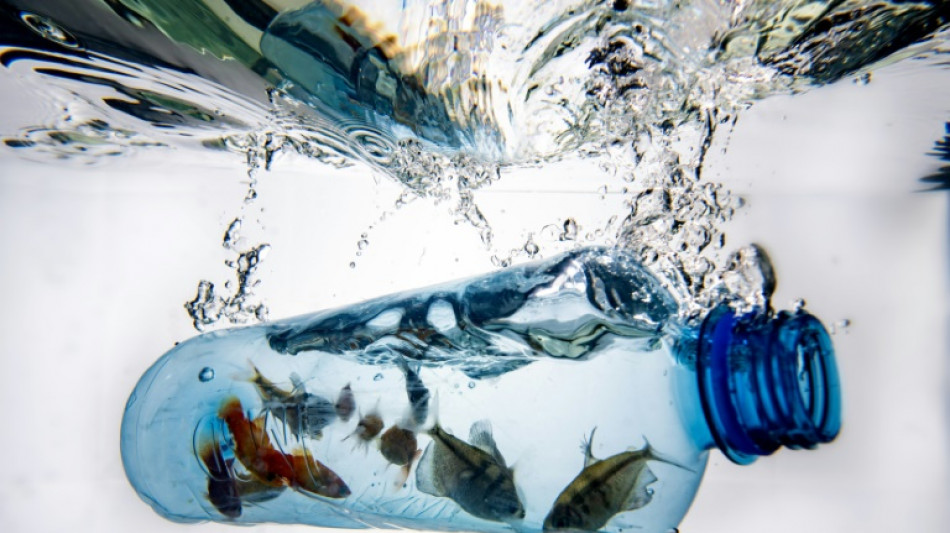
Plastic pollution: treaty talks get into the nitty-gritty / Photo: Olivier MORIN - AFP/File

 Golf star Rahm quitting LIV tour over 'unacceptable' terms
 Thousands march fearing return of a Bolsonaro presidency in Brazil
 French PM denies police ordered to confront student protesters

 Rubio touts US power, calls on Europe to emerge from 'slumber'

 Trump says 'we don't think' Russian plague is bio-weapon

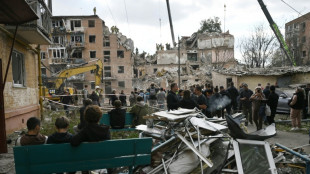 Five children among 26 killed in Ukraine after Russian strikes

 Man City should 'accept' punishment for rule breaches, says Lineker
 US woman who survived botched execution is awake and speaking
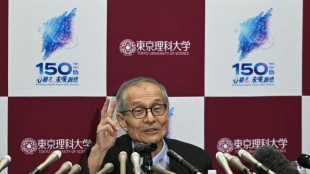 From 1800s to modern pharma: a Nobel-winning chemistry quest
 Southampton boss Eckert given suspended ban over 'Spygate'
 Russia warns of 'false' information as second plague case reported

 IEA ready to release more oil reserves if necessary
 HSBC 'consults' over UK unit job cuts amid AI adoption
 UK court quashes five ex-traders' Libor rate rigging convictions
 XM Receives “Global Customer Experience Leader Award 2026” at the TrustFinance Performance Awards
 Stocks slide as oil climbs on Mideast flareup
 Heavy casualties in Ukraine after Russian strikes
 French wine harvest set to hit historic low
 Kyiv 'cannot agree' to EU membership limiting food exports: minister
 Arteta targets more Arsenal glory after signing new deal until 2030

 Russell hit with Singapore grid penalty for taking new power unit
 Spotify expands audiobooks to more than 180 markets
 French-Japanese duo wins chemistry Nobel for solving molecular 'mystery'

 England's Nations League surge helps heal World Cup wounds

 Mayor of opposition stronghold Izmir defects to Erdogan party
French President Emmanuel Macron on Monday warned that global plastics pollution was a "time bomb", as diplomats began five days of talks in Paris to make progress on a treaty to end plastic waste.
Representatives of 175 nations with divergent ambitions met at UNESCO headquarters for the second of five sessions with the aim of inking an historic agreement covering the entire plastics life cycle.
Macron urged nations negotiating a world treaty against plastic pollution to put an end to today's "globalised and unsustainable" production model.
"Plastic pollution is a time-bomb and at the same time already a scourge today," he said in a video message, in which he called for an end to a system where richer countries export plastic waste to poorer ones.
He added that the first priorities of the negotiations should be to reduce production of fossil-fuel based plastics and to ban "as soon as possible" the most polluting products like single use plastics.
NGOs -- as well as representatives of plastics companies and lobbyists, much to the chagrin of environmentalists -- will also take part in the negotiations.
In February 2022, nations agreed in principle on the need for a legally binding UN treaty to end plastic pollution around the world, setting an ambitious 2024 deadline.
Host country France organised a ministerial summit on Saturday with 60 countries to kick-start the talks.
"If we don't act now, by 2050 there will be more plastic than fish in the oceans", said French Foreign Minister Catherine Colonna.
- 'Complicated -
"Combatting plastic pollution will make our lives easier, both in terms of fighting climate change and in terms of preserving our oceans and biodiversity", noted Christophe Bechu, France’s Minister for Ecological Transition.
The stakes are high, given that annual plastics production has more than doubled in 20 years to 460 million tonnes, and is on track to triple within four decades.
Two-thirds of this output is discarded after being used once or a few times, and winds up as waste. More than a fifth is dumped or burned illegally, and less than 10 percent is recycled.
But scaling up recycling is not a silver bullet, the head of the UN Environment Programme told AFP.
"It is one of many keys that we will need to make this work," Inger Andersen said before the talks opened. "We can't recycle our way out of this mess."
Policy actions to be debated during the talks include a global ban on single-use plastic items, "polluter pays" schemes, and a tax on new plastic production.
Environmental groups are encouraged global plastics pollution is finally being tackled, but are concerned the treaty may not include targets to reduce overall plastic production.
"There is a consensus on the issues at stake and the will to act", Diane Beaumenay-Joannet, an advocate at the Surfrider Foundation, told AFP.
But "the precise content of the obligations is going to be complicated, particularly as regards reducing production."
A.Suleiman--SF-PST