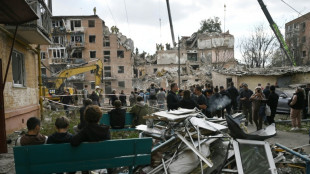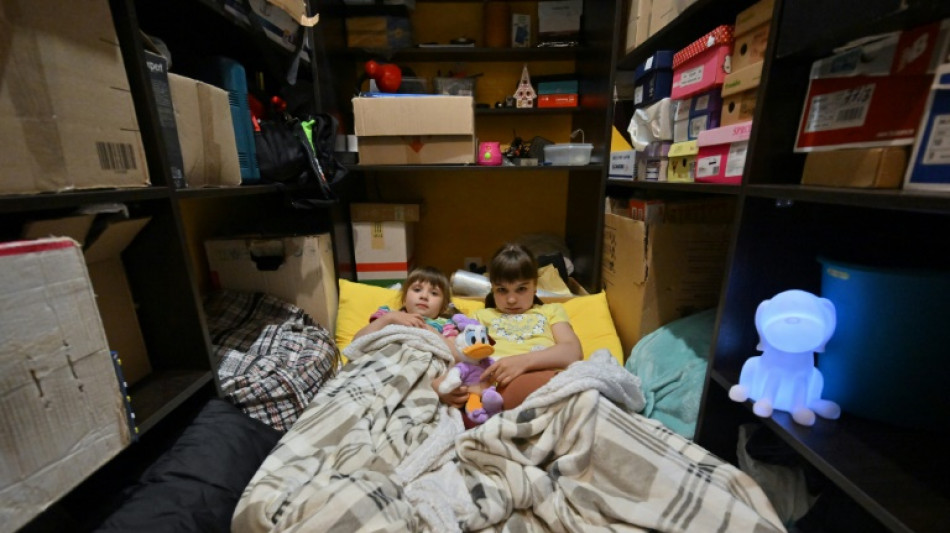
Sleeping in a closet: Kyiv adapts to Russian night strikes / Photo: Sergei SUPINSKY - AFP

 Golf star Rahm quitting LIV tour over 'unacceptable' terms

 Thousands march fearing return of a Bolsonaro presidency in Brazil

 French PM denies police ordered to confront student protesters

 Rubio touts US power, calls on Europe to emerge from 'slumber'

 Trump says 'we don't think' Russian plague is bio-weapon

 Five children among 26 killed in Ukraine after Russian strikes

 Man City should 'accept' punishment for rule breaches, says Lineker

 US woman who survived botched execution is awake and speaking

 From 1800s to modern pharma: a Nobel-winning chemistry quest

 Southampton boss Eckert given suspended ban over 'Spygate'

 Russia warns of 'false' information as second plague case reported

 IEA ready to release more oil reserves if necessary
 HSBC 'consults' over UK unit job cuts amid AI adoption

 UK court quashes five ex-traders' Libor rate rigging convictions

 XM Receives “Global Customer Experience Leader Award 2026” at the TrustFinance Performance Awards

 Stocks slide as oil climbs on Mideast flareup

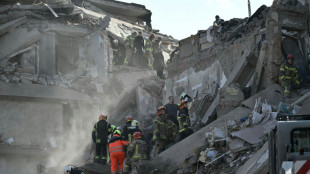 Heavy casualties in Ukraine after Russian strikes

 French wine harvest set to hit historic low

 Kyiv 'cannot agree' to EU membership limiting food exports: minister

 Arteta targets more Arsenal glory after signing new deal until 2030

 Russell hit with Singapore grid penalty for taking new power unit

 Spotify expands audiobooks to more than 180 markets

 French-Japanese duo wins chemistry Nobel for solving molecular 'mystery'

 England's Nations League surge helps heal World Cup wounds

 Mayor of opposition stronghold Izmir defects to Erdogan party

At the sound of the air raid siren, two little girls quickly unroll a mattress on the ground as their mother takes her other daughter, still asleep, to a closet.
The scene is repeated in households across Kyiv on an almost nightly basis as Russian missile and drone attacks on the capital have intensified this month.
Lyudmyla Denysenko, 44, the mother of the three girls, said that at first when the siren went off, the whole family would shelter in a corner of their flat and do online activities like music classes.
But, as the night attacks became more frequent, the parents bought extra mattresses and prepared spaces where they could sleep far away from the windows.
"Everyone gets up, picks up their pillow and their blanket and goes to sleep" in a specific place, said Denysenko.
"Even if it is not very comfortable, at least the girls get enough sleep. Otherwise they could not study," she said.
The mother, who said she stops herself from being afraid for the sake of her children, sleeps in a closet with four-year-old Tusya.
Her husband shares the hallway with Katya, 10, and Tonya, seven.
The dogs sleep at their feet.
"The siren is when the missiles are flying," said Tusya. "We go to the closet. I take my toy with me."
- 'Like in Star Wars' -
Despite repeated requests from local authorities for people to use bomb shelters, Kyiv residents prefer to stay in their apartments -- usually seeking refuge in a corridor or bathroom.
Many buildings are not equipped with basements that can be used as shelters and metro stations may be too far away.
Sergiy Chuzavkov, a 52-year-old photographer, said one night he watched air defence hitting drones and missiles from his balcony "like in Star Wars".
Every night, he goes to bed very late because he monitors social media for the first signs of imminent Russian strikes.
He wakes up his wife and their 14-year-old daughter, Nastya, if he thinks the strike risk is significant.
One night this month, when Russian Kinzhal hypersonic missiles were shot down over Kyiv, the explosions were so powerful and close that Sergiy put his helmet and bullet-proof vest on his daughter as she hid in the corridor.
But Nastya said she is not afraid.
"The first night it was scary but after that I got used to it and I feel more angry at Russians than scared."
- Sedatives and heart attacks -
Every morning after the strikes, Ukrainian social media users praise air defences for downing most, if not all, the drones and missiles aimed at Kyiv.
In the first months of the invasion, only 20 to 30 percent of Russian missiles were intercepted but that number went up to 92 percent in May, according to the Ukrainian edition of Forbes magazine.
This success is due largely to donations of Western arms, including US Patriot missiles which have allowed Ukraine to intercept Kinzhal missiles.
While the destruction and losses have been minimal in Kyiv this month, the constant night-time stress is not insignificant.
"The more sirens there are, the more calls we get," said Sergiy Karas, a doctor at Kyiv's medical emergency centre.
He said the average of daily calls increased to 1,300-1,400 in May compared to around 1,000 in the preceding months.
The young suffer panic and anxiety attacks, while older people get hypertension and arythmia.
"Usually sedatives are enough but sometimes there are heart attacks or strokes," Karas said.
Each time there is a siren, single mother Olena Mazur and her five-year-old son Sasha go down to the underground car park of the building next to theirs.
They have followed this routine ever since the time their whole building shook from a series of explosions.
Sometimes they descend the stairs twice a night.
In the morning, whether they have slept or not, Olena goes to work and Sasha to kindergarten.
"We cope because we have to live," the 42-year-old accountant said, saying she wished Russians could spend "even just a week of nights like ours".
"It is not possible to hate them any more than we do already," she said.
J.Saleh--SF-PST