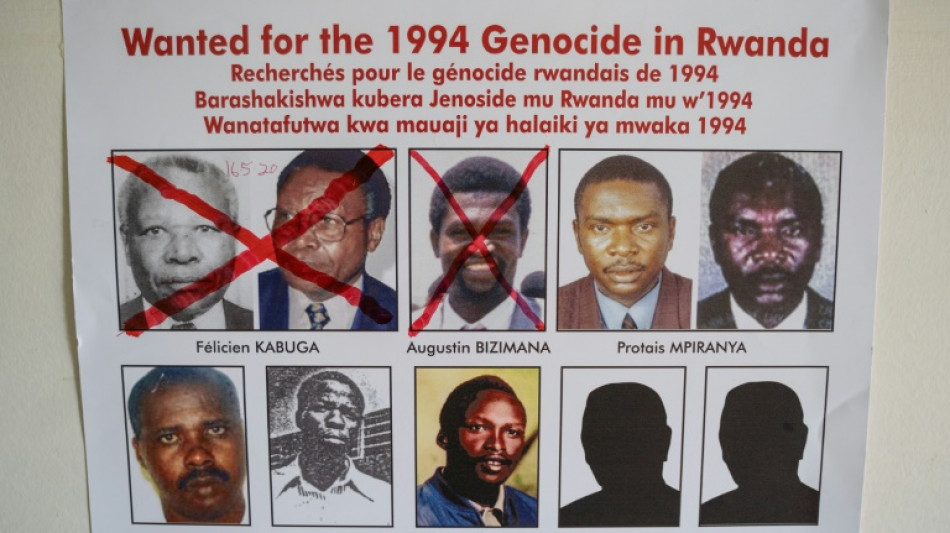
One of last four Rwanda genocide fugitives arrested in S.Africa / Photo: Simon Wohlfahrt - AFP/File

 'Never again Bolsonaro': thousands march ahead of Brazil election runoff

 After botched execution, US woman was nearly taken off life support before revival
 Searing AIDS drama 'Elsinore' opens London film festival

 Evicted pensioner who sparked Spain housing protests dies: tenant union
 Golf star Rahm quitting LIV tour over 'unacceptable' terms

 Thousands march fearing return of a Bolsonaro presidency in Brazil
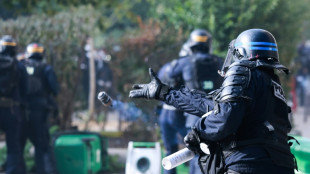 French PM denies police ordered to confront student protesters
 Rubio touts US power, calls on Europe to emerge from 'slumber'

 Trump says 'we don't think' Russian plague is bio-weapon
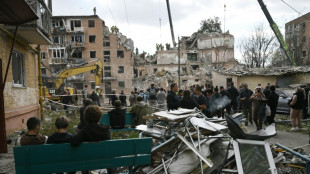
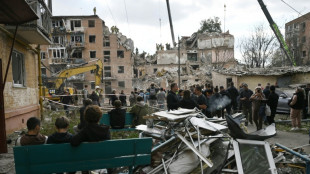 Five children among 26 killed in Ukraine after Russian strikes

 Man City should 'accept' punishment for rule breaches, says Lineker

 US woman who survived botched execution is awake and speaking
 From 1800s to modern pharma: a Nobel-winning chemistry quest

 Southampton boss Eckert given suspended ban over 'Spygate'

 Russia warns of 'false' information as second plague case reported
 IEA ready to release more oil reserves if necessary
 HSBC 'consults' over UK unit job cuts amid AI adoption
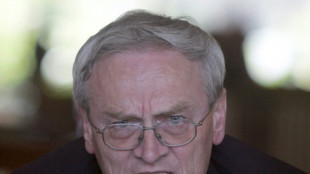
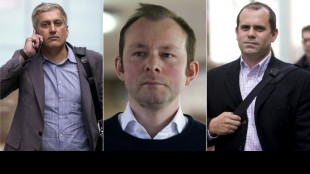 UK court quashes five ex-traders' Libor rate rigging convictions
 XM Receives “Global Customer Experience Leader Award 2026” at the TrustFinance Performance Awards
 Stocks slide as oil climbs on Mideast flareup
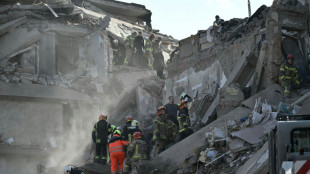 Heavy casualties in Ukraine after Russian strikes
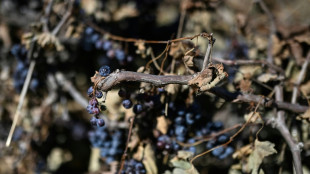 French wine harvest set to hit historic low

 Kyiv 'cannot agree' to EU membership limiting food exports: minister

 Arteta targets more Arsenal glory after signing new deal until 2030

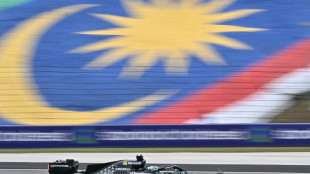 Russell hit with Singapore grid penalty for taking new power unit

Fulgence Kayishema, one of four remaining fugitives sought for their role in the 1994 Rwanda genocide, has been arrested in South Africa, UN investigators said on Thursday.
"Yesterday afternoon, Fulgence Kayishema -– one of the world’s most wanted genocide fugitives -– was arrested in Paarl, South Africa in a joint operation," the International Residual Mechanism for Criminal Tribunals (MICT) said in a statement.
Around 800,000 Rwandans, most of them ethnic Tutsis, were slaughtered over 100 days at the hands of Hutu extremists.
Kayishema, a former judicial police inspector, faces charges of genocide, complicity in and conspiracy to commit genocide, and crimes against humanity.
He has been on the run since July 2001, according to the MICT website, which gives his year of birth as 1961.
He and others allegedly murdered more than 2,000 Tutsi men, women and children who had taken refuge in a Catholic church in Nyange in Kivumu district.
"Kayishema directly participated in the planning and execution of this massacre, including by procuring and distributing petrol to burn down the church with the refugees inside," the statement said.
"When this failed, Kayishema and others used a bulldozer to collapse the church, burying and killing the refugees inside.
"Kayishema and others then supervised the transfer of corpses from the church grounds into mass graves over the next approximately two days."
- 'Finally face justice' -
MICT, which is based in The Hague and the Tanzanian city of Arusha, in 2015 took over the work of the International Criminal Tribunal for Rwanda (ICTR), which the United Nations set up following the genocide.
His arrest was carried out in a joint operation by MICT's Fugitive Tracking Team and the South African authorities, the statement said.
“Fulgence Kayishema was a fugitive for more than twenty years. His arrest ensures that he will finally face justice for his alleged crimes," MICT Chief Prosecutor Serge Brammertz said in the statement.
The three other fugitives on the wanted list also face multiple charges of genocide and crimes against humanity: Aloys Ndimbati; Charles Ryandikayo; and Charles Sikubwabo.
The ICTR court issued dozens of rulings, from life sentences to acquittals, before closing in late 2015 and handing over over to the MICT.
In September 2022, one of Rwanda's richest men before the genocide, Felicien Kabuga, who moved to France under a false identity, went on trial in The Hague.
He is accused of setting up hate media that urged ethnic Hutus to kill rival Tutsis and supplying death squads with machetes.
His trial was put on hold in March amid concerns over his health.
Kigali itself started trying genocide suspects in 1996, and on a single day in April 1998 had 22 of them executed by firing squad.
It abolished the death penalty in 2007, lifting the main obstacle for the ICTR to extradite genocide suspects to Rwanda for trial.
Between 2005 and 2012, more than 12,000 "gacaca" community-based courts put nearly two million people on trial and convicted 65 percent, sending most to prison.
Other convictions have been handed down in the former colonial power Belgium as well as in France, Sweden, Finland, Norway, Germany, the Netherlands, the United States and Canada.
E.Aziz--SF-PST