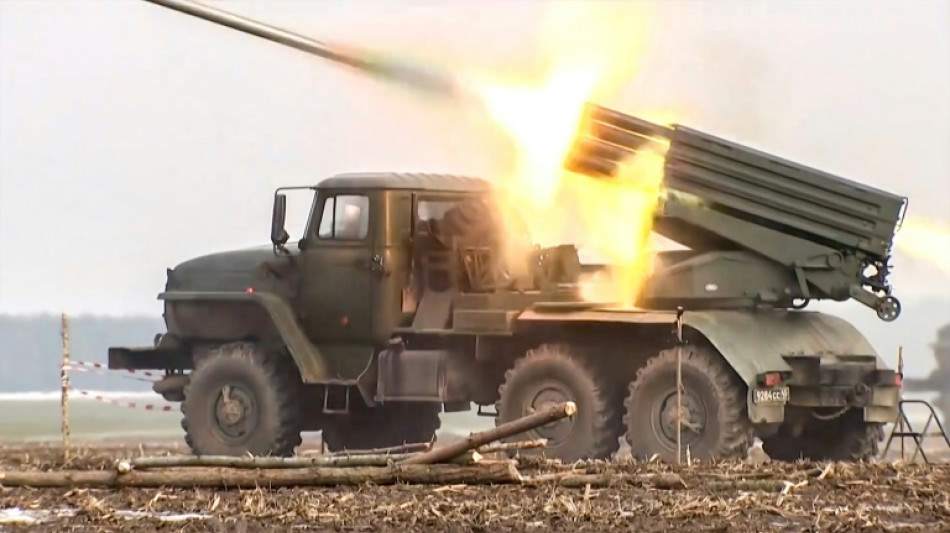
Five scenarios for Ukraine after Russia invasion

 Trump says will meet North Korea's Kim later this year
 Stocks waver, dollar drops as US Treasury moves to lower bond yields

 France recalls rare disease drug Tavneos after deaths
 Arsenal agree to sign Villa defender Konsa: reports
 Evacuation orders lifted in Belgian wildfire zone
 UK media skewered for 'hounding' black academic
 More than 7,300 excess deaths in France's historically hot summer so far
 US socialists score shock Florida win as Trump picks stumble
 Iran warns Gulf countries against helping US after UAE cuts trade ties
 Senior FIFA official withdraws support from embattled Infantino
 Lawson replaces injured Hadjar for Red Bull at Dutch GP
 Robots sort packages and serve fast food at Beijing showcase

 Leeds sign Swiss defender Elvedi from Monchengladbach

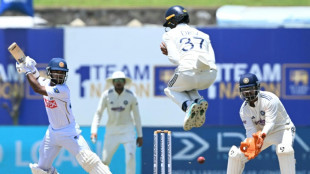
 Robinson double rocks Pakistan in first Test before rain stops play
 Queen Camilla says was 'difficult' keeping King Charles' cancer private
 UK PM launches bid to get rough sleepers off streets by Christmas
 England bowl against Pakistan in first Test of post-Bazball era
 Villa sign Japanese 'keeper Suzuki, Italian defender Ruggeri
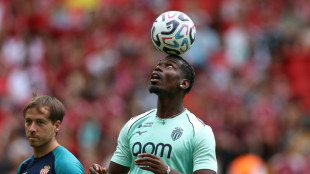 Injury-plagued Pogba released by Monaco
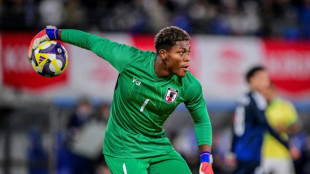 Japanese 'keeper Suzuki signs for Aston Villa
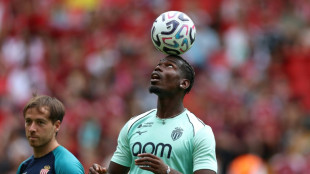 Paul Pogba to be released by Monaco: club

 Texas Counseling Center Highlights the Role of Counseling in Supporting Immigration Psychological Evaluations
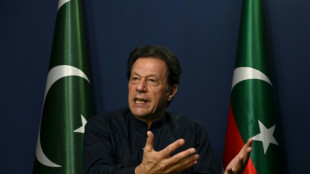 Pakistan govt to challenge court on moving ex-PM Khan to private hospital
 India four wickets away from victory in Sri Lanka Test

 Belgian wildfire 'encircled' but situation still 'complicated'

Russia's invasion of Ukraine on February 24 shocked the world but President Vladimir Putin shows no sign of pulling back.
Here are possible scenarios for the weeks and months ahead, according to Western government sources and think-tank experts.
1) Military quagmire
Ukrainian forces have resisted Russia's invasion so far, defeating an attempt by paratroopers to seize the capital in the opening days and keeping control over major cities such as Kharkiv and Mariupol.
Although Russia claims it has full air superiority, Ukraine's air defences around the capital Kyiv and in other areas appear to be degraded but still working, Western officials say.
"That's caused them so many problems," a European source told reporters on Friday on condition of anonymity.
Vast numbers of Ukrainians have also joined territorial defence units and there remain questions about the morale of the Russian army and its logistical support.
Backed by Western intelligence and a flow of anti-tank and surface-to-air missiles, Ukraine's troops might be able to hold out in the capital and force some sort of military stalemate.
Deepening Western sanctions that are strangling the Russian economy might force Putin to change his calculations.
"The West could leverage some sanctions to push Putin to abandon his core war aim of decapitating the Ukrainian government and installing a pro-Russian puppet," wrote Samuel Charap from the RAND Corporation, a US think-tank, this week.
Pressure from Beijing, increasingly a Kremlin ally under President Xi Jinping, might also be necessary.
2) Domestic Russian change
Russian President Vladimir Putin is keeping a close eye on domestic dissent.
A crackdown on independent media and foreign news providers has removed alternative sources of information about the war, cementing the grip of the ultra-loyal Russian state media.
Nevertheless, small anti-war demonstrations have taken place in cities from Saint Petersburg to Moscow, with at least 6,000 people arrested, according to local rights groups.
There are also signs of cracks in the ruling elite, with some oligarchs, MPs, and even private oil group Lukoil calling openly for a ceasefire or an end to fighting.
Though not seen as likely at this stage, the possibility of Putin being brought down in a popular backlash or even a palace coup is not being ruled out.
"His personal security is very good and it will be very good until the moment it isn't," said Eliot A. Cohen from the Center for Strategic and International Studies, a Washington-based think-tank.
"That's happened numerous times in Soviet and Russian history."
3) Russian military success
Given Russian troops' superior weapons, air power and devastating use of artillery, Western defence analysts expect them to continue grinding forward.
A huge convoy of vehicles has been assembled outside of Kyiv ahead of what is expected to be an assault on the capital.
French President Emmanuel Macron concluded that "the worst is still to come" after a call with Putin on Thursday morning.
Putin wants "to seize control of the whole of Ukraine", an aide told reporters afterwards.
But even if Russian troops depose Ukrainian President Volodymyr Zelensky and overrun Ukraine's resistance elsewhere, Putin would then face the challenge of occupying a nation of 40 million.
"Getting into a city is not the same as holding it," wrote British warfare historian and King's College London professor Lawrence Freedman on Substack this week.
4) Conflict spreads
Ukraine has a border with four former Soviet states that are now members of the US-led NATO military alliance, which considers an attack on one member to be an attack against all.
Putin's nostalgia for the Soviet Union and his pledge to protect Russian minorities -- which are found in the Baltic States -- has left an open question about his territorial ambitions.
After Ukraine, some speculate that Putin might also be eyeing Moldova, a former Soviet state wedged between Ukraine and Romania.
Few expect Putin to openly attack a NATO member, which would run the risk of nuclear war, but other provocations are possible.
"Neutral Sweden is keeping a watchful eye on Russia's intentions towards the Gotland island in the Baltic Sea," wrote analyst Bruno Tertrais for the Montaigne Institute, a French think-tank.
Charap warned of the "risks of an accident, incident, or miscalculation that spirals into a NATO-Russia war", with anything from a stray missile to cyberattacks providing the spark.
5) NATO confrontation
This was always thought to be impossible because of the nuclear weapons' mutual guarantee of destruction.
The US and Russia have opened up a so-called "deconfliction line" over which they can exchange military information quickly to reduce the chances of a misunderstanding.
The same method is employed in Syria, where US and Russian forces have been active on opposite sides of the country's civil war since 2015.
But Putin has ordered Russia's nuclear deterrent forces onto high alert and Foreign Minister Sergei Lavrov has warned that "World War Three can only be a nuclear war".
Western analysts say such warnings should be taken as posturing to deter the United States and Europe from considering ideas such as a "no-fly zone" over Ukraine.
"These announcements are predominately addressed to a Western audience to make us fear and our societies insecure," said Gustav Gressel, an expert on missile defence at the European Council on Foreign Relations.
"They use nuclear deterrence as a form of information operation. There's no substance."
K.Hassan--SF-PST