Sudan war locks depositors out of savings / Photo: - - AFP

 Samsung expects 780% quarterly operating profit jump on AI boom
 Guardians survive with 9-3 win over White Sox
 Saudi Arabia says 3 dead at airports after Houthis claim attacks
 Stocks slide as oil sees volatile trading day over Iran war fears
 Microsoft pushes AI vision with new, expensive Surface laptop
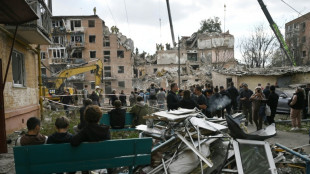 Five children among 28 killed in Russian strikes on Ukraine

 Odell Beckham Jr signs with Minnesota Vikings
 Saudi Arabia says three dead at airports after Houthis claim attacks

 Trump plans to turn Florida golf course into presidential retreat
 WHO says cannot conduct full risk assessment on Russia plague reports
 After botched execution, US woman is awake and shackled to bed
 New Zealand fly-half Mo'unga ruled out of Australia Tests
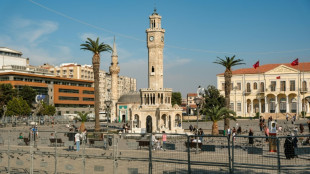 Protests in major Turkish city after mayor defects to Erdogan party
 Climate change strips island's title of largest penguin colony: study
 Rubio says West must choose between national power or decline
 Russia's plague scare: What we know

 French luxury giant to fund redevelopment of two Paris streets: city hall

 Trump wants to turn Florida golf course into presidential retreat
 Mayor of Turkish opposition stronghold defects to Erdogan party
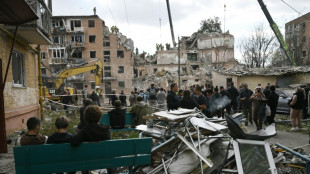 Children among heavy casualties in Ukraine after Russian strikes
 Court orders German ex-spy chief kept in jail after spying, treason arrest
 Guinea caps bottled water prices after sachets banned

 Spared, married, hanged: the last weeks of Iranian protester Alireza Sepahi
 Nobel physics winner's pride at pioneering AI role
 IMF preparing El Nino assistance, concerned about AI bubble burst: chief to AFP

On a scorching sidewalk, Ibrahim Said hopes to withdraw his savings from a Sudanese bank, but the wait seems as unending as the war that has brought the country's financial system to a standstill.
Said is one of dozens of depositors who have queued at a branch of the Bank of Khartoum in Madani, a city about 160 kilometres (100 miles) southeast of the capital, to recover their savings.
"I have been here since seven in the morning hoping to withdraw money from my account," he told AFP.
One of half a million people who fled Khartoum for safer cities, Said escaped with what little cash he happened to have in the house when the capital was rocked on April 15 by air strikes and shelling that have not stopped since.
Now, he is locked out of his savings as the fighting between the army under General Abdel Fattah al-Burhan and his deputy-turned-foe Mohamed Hamdan Daglo's paramilitary Rapid Support Forces (RSF) shows no signs of abating.
Ishraq al-Rih has been coming to the same bank branch for three days, and on each occasion it has been the same.
"At around 3:00 pm, they open the doors, let in a very small number of people, and if you're not one of the lucky ones you have to come back the next day," she said.
Every passing day brings more anxiety, as families ration their cash to make ends meet, terrified of what footage shared online of looted banks and empty safes means for their savings.
- Locked out -
"We don't know what to do. We have money in the bank but we can't touch it," Ahmed Abdelaziz told AFP, standing outside the closed gate of Omdurman National Bank.
The 45-year-old civil servant thought he was safe in Madani, where tens of thousands of people have settled but cannot escape the impact of the battles that rage in the capital.
"The servers that control every bank's operations are all in Khartoum, and employees can't get to them because of the fighting," said Mohamed Abdelaziz, who works in the banking sector.
Even in states untouched by the violence, "branches have lost contact with the headquarters that used to validate operations," leaving managers unable to replenish reserves and allow withdrawals, he said.
In a move questioned by observers considering the entire sector is at a standstill, army chief Burhan declared a freeze on RSF assets this week and dismissed the central bank governor.
"Bank-to-bank payments have been completely cut; we can't transfer any money between accounts," said an employee of Sudanese French Bank who spoke on condition of anonymity.
Sudan was brought to its knees by two decades of international sanctions against former dictator Omar al-Bashir, as well as rampant corruption and the 2011 independence of South Sudan which held almost all the country's oil.
Even after Bashir was toppled in 2019 and the sanctions were lifted, the International Monetary Fund said Sudan remained on an international donors' list of "heavily indebted poor countries" and characterised its banking sector as "fragile, with several banks undercapitalised".
- Emptied out safes -
Sudan's fledgling banking sector -- which does not accommodate credit card payments or international transfers between individuals -- had $11.2 billion in assets at the end of 2019, according to the IMF.
It is unclear how much of that is left, however, as the country had already experienced years of economic woes, including a free-falling currency, before fighters began smashing their way into banks and emptying safes.
From the first week of the war, the army accused the RSF of breaking into a subsidiary of the central bank in Khartoum and stealing "huge sums of money".
The country's banking federation has repeatedly moved to assure clients that their assets and financial records are intact and has vowed to "restore banking services as soon as conditions permit".
Despite promises of ceasefires and the restoration of services to increasingly desperate civilians, conditions have remained unchanged for over a month.
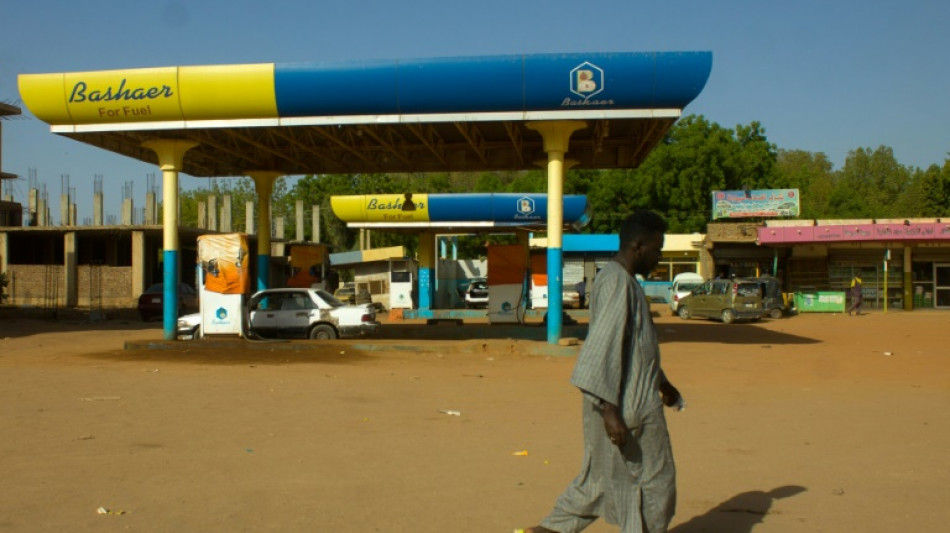
For the time being, depositors like Said, Rih and Abdelaziz are being forced to use whatever means they have to get staples such as flour, which has doubled in price, or petrol -- now 20 times what it cost before the conflict.
Z.Ramadan--SF-PST