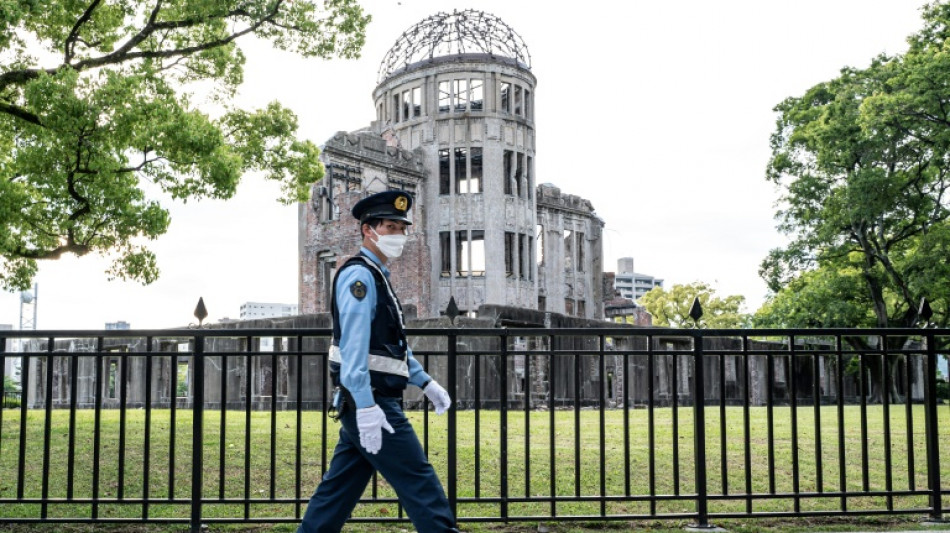
Japan ramps up G7 security after PM attacks / Photo: Richard A. Brooks - AFP/File

 The British historian helping the French rediscover de Gaulle
 Dodgers beat Braves to advance, Guardians survive in MLB playoffs
 Latin American, Caribbean women top Nobel literature buzz
 US says Fiji-based Chinese official paid bribes for Beijing
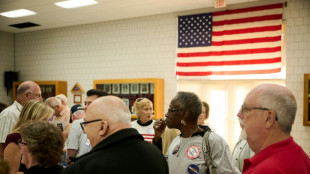
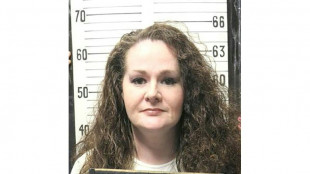 After botched US execution, Christa Pike was nearly taken off life support

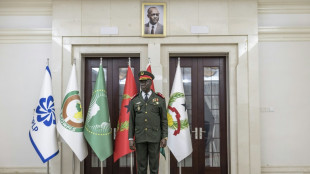 Guinea-Bissau junta urges military unit loyal to ex-president to disarm
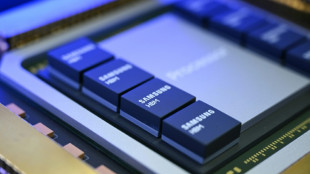
 As species decline, green turtles offer glimmer of hope
 Brothers Scott and Beauden Barrett named to start for All Blacks
 EU trade chief seeks to dial down China tensions
 'Never again Bolsonaro': thousands march ahead of Brazil election runoff

 After botched execution, US woman was nearly taken off life support before revival
 Searing AIDS drama 'Elsinore' opens London film festival
 Evicted pensioner who sparked Spain housing protests dies: tenant union
 Golf star Rahm quitting LIV tour over 'unacceptable' terms
 Thousands march fearing return of a Bolsonaro presidency in Brazil
 French PM denies police ordered to confront student protesters
 Rubio touts US power, calls on Europe to emerge from 'slumber'
 Trump says 'we don't think' Russian plague is bio-weapon
 Five children among 26 killed in Ukraine after Russian strikes
 Man City should 'accept' punishment for rule breaches, says Lineker
 US woman who survived botched execution is awake and speaking
 From 1800s to modern pharma: a Nobel-winning chemistry quest

 Southampton boss Eckert given suspended ban over 'Spygate'
 Russia warns of 'false' information as second plague case reported
 IEA ready to release more oil reserves if necessary
Security is tight at every G7 summit, but this year's host Japan has more to prove than most, after an attack last month on the prime minister and the 2022 assassination of ex-premier Shinzo Abe.
Some 24,000 security personnel are reportedly being deployed to Hiroshima during the summit, most dispatched from other parts of the country.
Well ahead of the May 19-21 talks, patrolling police have been weaving between tour groups in the western city's famed Peace Park.
Security personnel were also motoring up and down the river that runs alongside sites like the Atomic Bomb Dome, with helicopters regularly buzzing overhead.
The measures have extended far beyond the city, including to the capital Tokyo, where messages on the train system warn of heightened security for the summit.
Major cities in Japan do not generally have rubbish bins in public places, but security personnel have been sealing off other places considered to pose a potential threat.
Coin lockers, which are common in many stations, have been put out of operation at major stations as far afield as Tokyo.
Vending machines on subway platforms have also been unplugged and sealed with tape, along with apologetic signs warning they will be unavailable during the summit for security reasons.
In Hiroshima, signs across the city and in hotels remind locals and tourists alike that the summit will cause disruption, including the closure of streets and access to the island of Miyajima, which leaders are expected to visit.
Dozens of schools and other institutions have simply opted to close during the summit, according to local media.
The measures are likely to be closely scrutinised less than a year after a gunman assassinated former prime minister Abe as he campaigned in the city of Nara.
Then in April, a man hurled an explosive device towards Prime Minister Fumio Kishida shortly before he was due to deliver a campaign speech in the city of Wakayama.
He escaped unharmed, but the fact that an assailant was able to throw the device at such close range so soon after the Abe murder prompted renewed criticism of security arrangements in Japan.
The head of Japan's National Police Agency, and the local police chief, resigned in the wake of Abe's assassination after an investigation confirmed "shortcomings" in the security for the former leader.
The investigation slammed a system under which local police were given responsibility for the security of visiting senior officials and argued that with better measures, it was "highly probable" the attack could have been prevented.
Kishida has instructed police to step up security around the G7 "so that guests can visit Japan with peace of mind".
Leaders from G7 members Japan, the United States, Canada, Britain, France, Germany, Italy and the European Union will be joined by invitees including Brazilian President Luiz Inacio Lula da Silva and Indian Prime Minister Narendra Modi.
C.AbuSway--SF-PST