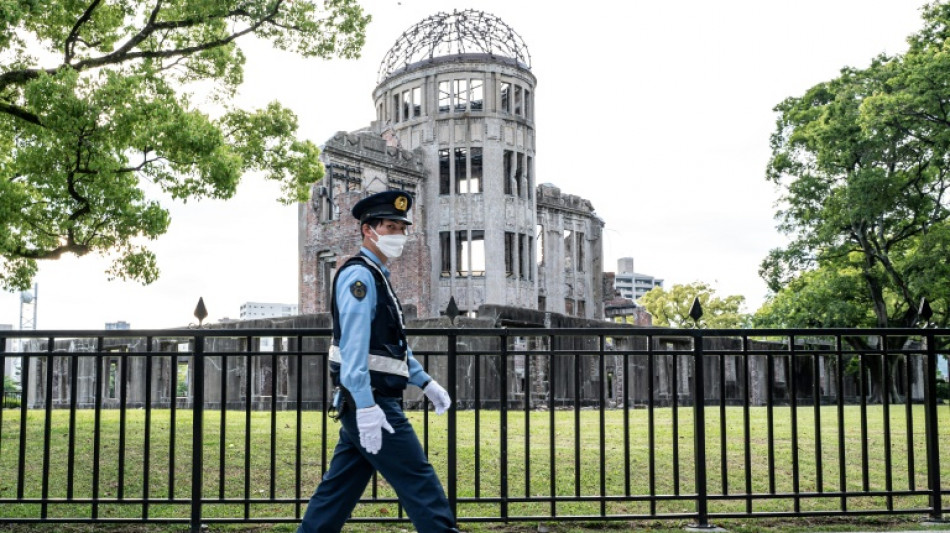
Japan to push disarmament in Hiroshima, with modest hopes / Photo: Richard A. Brooks - AFP

 The British historian helping the French rediscover de Gaulle
 Dodgers beat Braves to advance, Guardians survive in MLB playoffs
 Latin American, Caribbean women top Nobel literature buzz
 US says Fiji-based Chinese official paid bribes for Beijing

 After botched US execution, Christa Pike was nearly taken off life support

 Guinea-Bissau junta urges military unit loyal to ex-president to disarm
 As species decline, green turtles offer glimmer of hope
 Brothers Scott and Beauden Barrett named to start for All Blacks
 EU trade chief seeks to dial down China tensions
 'Never again Bolsonaro': thousands march ahead of Brazil election runoff

 After botched execution, US woman was nearly taken off life support before revival
 Searing AIDS drama 'Elsinore' opens London film festival

 Evicted pensioner who sparked Spain housing protests dies: tenant union
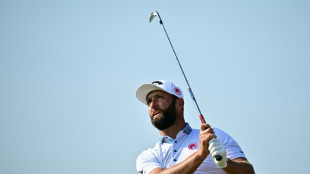 Golf star Rahm quitting LIV tour over 'unacceptable' terms
 Thousands march fearing return of a Bolsonaro presidency in Brazil
 French PM denies police ordered to confront student protesters

 Rubio touts US power, calls on Europe to emerge from 'slumber'
 Trump says 'we don't think' Russian plague is bio-weapon
 Five children among 26 killed in Ukraine after Russian strikes
 Man City should 'accept' punishment for rule breaches, says Lineker

 US woman who survived botched execution is awake and speaking
 From 1800s to modern pharma: a Nobel-winning chemistry quest

 Southampton boss Eckert given suspended ban over 'Spygate'
 Russia warns of 'false' information as second plague case reported
 IEA ready to release more oil reserves if necessary
Japan hosts G7 leaders in Hiroshima this week hoping to drive home the dangers of nuclear weapons and push for progress on disarmament.
But with North Korea and Russia making nuclear threats, and China growing its arsenal, there may be little appetite for bold action on Prime Minister Fumio Kishida's stated goal of a "world free of nuclear weapons."
Here are some questions and answers about nuclear weapons and what Japan hopes to achieve:
Which G7 states are nuclear-armed?
Three G7 members -- the United States, Britain and France -- have nuclear arsenals, with Washington holding an estimated 5,244 warheads, according to the Federation of American Scientists (FAS).
The figure, which includes stockpiled, reserve and retired warheads, dwarves the inventories of France and Britain, estimated by FAS at 290 and 225 respectively.
Several G7 members, however, either host US nuclear weapons or are covered by the US "nuclear umbrella" -- an expectation that Washington would deploy the weapons in their defence if necessary -- including Japan.
What treaties cover nuclear weapons?
Perhaps the most famous treaty covering nuclear weapons remains the Nuclear Non-Proliferation Treaty (NPT), which opened for signature in 1968.
A total of 191 states, including China, Russia, France, Britain and the United States are parties.
The core of the treaty is a pledge by nations not to acquire nuclear weapons if they do not have them, and for nuclear-armed countries to share peaceful technology while aiming to dismantle their arsenals.
However, in July 2017, the Treaty on the Prohibition of Nuclear Weapons (TPNW) was adopted by over 100 UN states.
Campaigners view the more recent pact as filling the NPT's "gaps" by demanding the elimination of nuclear weapons.
No nuclear power has signed it and it is actively opposed by some.
France and the United States last year called it "at odds with the existing non-proliferation and disarmament architecture."
Japan is not party to the TPNW.
What about other nuclear powers?
There are nine nuclear-armed states in the world: the United States, Britain, France, Russia, China, India, Pakistan, North Korea and Israel, which does not officially acknowledge its arsenal.
FAS estimates most nuclear-armed states are working to increase their arsenal, with only Washington decreasing its stockpile, and those of France and Israel seen as stable.
The spectre of nuclear weapons use has reemerged in recent months, with fresh missile tests by Pyongyang and thinly veiled threats from Moscow about using the arms if it is attacked.
Russian President Vladimir Putin has pledged to deploy the weapons in neighbour and ally Belarus, and suspended participation in a treaty under which Moscow and Washington agreed to limit stockpiles.
China is also in the midst of the largest-ever expansion of its nuclear arsenal and could go from the estimated 400 warheads it now holds to 1,500 by 2035, according to the Pentagon.
What does Japan want?
Prime Minister Fumio Kishida has said he chose Hiroshima for the G7 summit to help bring home the devastation that nuclear weapons cause.
He hopes to take leaders to the city's Peace Park and museum, according to Japanese officials, where they will confront evidence of the horrifying aftermath of the nuclear bomb.
Kishida hopes for endorsement of his "Hiroshima Action Plan", unveiled last year.
It urges a continued pledge never to use nuclear weapons, transparency on stockpiles, further arsenal reductions, a commitment to non-proliferation and an understanding of the "realities of nuclear weapons use."
Expectations for concrete disarmament progress are low, however, with G7 foreign ministers explicitly noting last month the "current harsh security environment" in their language on nuclear weapons.
"Instead of another empty statement, the current nuclear risk level demands real action," the International Campaign Against Nuclear Weapons said in a statement last month.
It wants a "concrete, credible plan" for talks by all nuclear-armed states on eliminating nuclear weapons.
T.Khatib--SF-PST