A month into Sudan's brutal war, no end in sight / Photo: - - AFP

 Dodgers beat Braves to advance in MLB playoffs, Rays oust Yankees
 'A sun as black as my lungs': how corruption crucified a polluted Albania city

 The British historian helping the French rediscover de Gaulle
 Dodgers beat Braves to advance, Guardians survive in MLB playoffs
 Latin American, Caribbean women top Nobel literature buzz
 US says Fiji-based Chinese official paid bribes for Beijing

 After botched US execution, Christa Pike was nearly taken off life support

 Guinea-Bissau junta urges military unit loyal to ex-president to disarm

 As species decline, green turtles offer glimmer of hope

 Brothers Scott and Beauden Barrett named to start for All Blacks
 EU trade chief seeks to dial down China tensions

 'Never again Bolsonaro': thousands march ahead of Brazil election runoff

 After botched execution, US woman was nearly taken off life support before revival
 Searing AIDS drama 'Elsinore' opens London film festival

 Evicted pensioner who sparked Spain housing protests dies: tenant union
 Golf star Rahm quitting LIV tour over 'unacceptable' terms

 Thousands march fearing return of a Bolsonaro presidency in Brazil
 French PM denies police ordered to confront student protesters

 Rubio touts US power, calls on Europe to emerge from 'slumber'

 Trump says 'we don't think' Russian plague is bio-weapon
 Five children among 26 killed in Ukraine after Russian strikes

 Man City should 'accept' punishment for rule breaches, says Lineker

 US woman who survived botched execution is awake and speaking
 From 1800s to modern pharma: a Nobel-winning chemistry quest

 Southampton boss Eckert given suspended ban over 'Spygate'

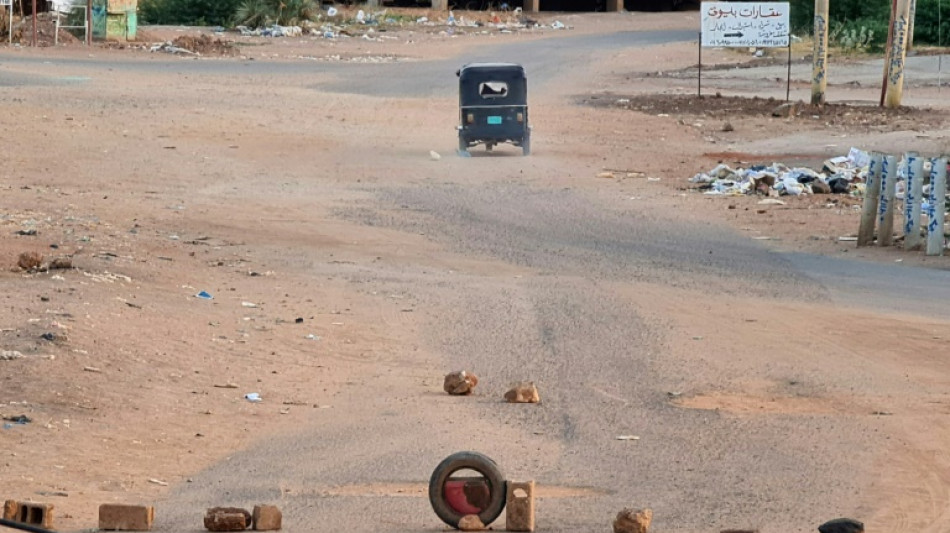
One month since Sudan's conflict erupted, its capital is a desolate war zone where terrorised families huddle in their homes as gun battles rage in the dusty, deserted streets outside.
Across Khartoum, those still alive remain barricaded, hoping to dodge stray bullets and enduring desperate shortages of food and basic supplies.
There are power blackouts, a lack of cash, communications outages, and runaway inflation.
The city of five million on the Nile River was long a place of relative stability and wealth, even under decades of sanctions against former strongman Omar al-Bashir.
Now it has become a shell of its former self.
Charred aircraft lie on the airport tarmac, foreign embassies are shuttered and hospitals, banks, shops and wheat silos have been ransacked by looters.
While the generals fight, what remains of the government has retreated to Port Sudan 850 kilometres (528 miles) away, the hub for mass evacuations of both Sudanese and foreign citizens.
The battles have killed more than 750 people, according to the Armed Conflict Location and Event Data Project. Thousands more have been wounded and nearly a million people displaced, with long refugee convoys headed to Egypt, Ethiopia, Chad and South Sudan.
Some food prices have quadrupled, and petrol now sells at 20 times its pre-war price.
Multiple truce deals have been agreed and quickly violated, and hopes are dim for an end to the fighting which has piled more suffering on the 45 million people of one of the world's poorest countries.
Both sides "break ceasefires with a regularity that demonstrates a sense of impunity unprecedented even by Sudan's standards of civil conflict," said Alex Rondos, the European Union's former special representative to the Horn of Africa.
- History of coups -
Sudan has a long history of coups, but hopes had risen after mass pro-democracy protests led to the ouster of Islamist-backed Bashir in 2019, followed by a shaky transition toward civilian rule.
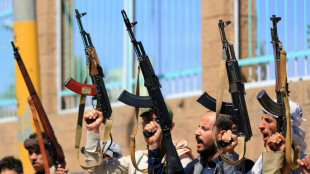
On April 15, tensions over the integration of paramilitaries into the army exploded into war between army chief Abdel Fattah al-Burhan and his former deputy Mohamed Hamdan Daglo, who leads the paramilitary Rapid Support Forces (RSF).
Despite all the bullets, aerial bombardments and anti-aircraft fire since then, neither side has been able to seize the battlefield advantage.
The army, backed by Egypt, has the theoretical advantage of air power while Daglo is, according to experts, supported by the United Arab Emirates and foreign fighters. He commands troops that stemmed from the notorious Janjaweed militia, accused of atrocities in the Darfur war that began two decades ago.
Russian mercenary group Wagner is not fighting but has "technical advisers" in Sudan, said Cameron Hudson, of the Center for Strategic and International Studies.
For now, "both sides believe that they can win militarily", US Director of National Intelligence Avril Haines told a Senate hearing in early May.
The fighting has deepened the humanitarian crisis in Sudan, where one in three people already relied on humanitarian assistance before the war.
Since then, aid agencies have been looted and at least 18 humanitarian workers killed.
In six months, up to 19 million people could be food insecure, the UN has warned.
- 'Poorer for longer' -
Across the Red Sea, in the Saudi city of Jeddah, envoys from both sides have been negotiating.
By May 11 they had signed a commitment to respect humanitarian principles, including the protection of civilians and, in general terms, a commitment to let in badly needed humanitarian aid.
But, "absent a significant change of mindset from the warring parties, it is hard to see that commitments on paper will be fulfilled," said Aly Verjee, a Sudan researcher at Sweden's University of Gothenburg.
Sudan has had a long history of conflicts, especially in the western region of Darfur, where Bashir from 2003 armed and unleashed the Janjaweed to quash a rebellion seeking an end to what the insurgents said was domination of Sudan's power and wealth by Arab elites.
The scorched-earth campaign may have killed 300,000 people and uprooted more than 2.7 million at its peak, the UN said.
According to the health ministry, the bulk of deaths during the current fighting have occurred in Darfur.
The ministry reported 199 fatalities in Khartoum, but said at least 450 people were killed by May 10 in El Geneina, the capital of West Darfur state, and surrounding areas.
"We are told of snipers continuing to be in the area, shooting people leaving their houses," Mohamed Osman, researcher at Human Rights Watch, told AFP.
With hospitals gutted, he added, "there are also reports of people dying from the injuries they sustained in the early days of fighting".
The aid group Doctors Without Borders said food shortages in Darfur displacement camps mean that "people have gone from three meals a day to just one".
Verjee said the fighting across the country has destroyed workshops and factories and caused "the partial deindustrialisation of Sudan".
"This means that any future Sudan will be much poorer for much longer."
D.Khalil--SF-PST