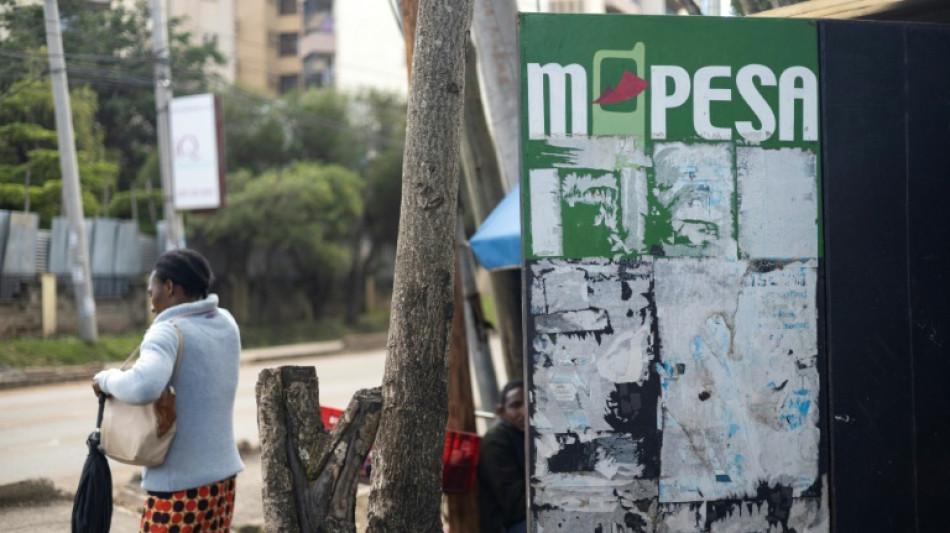
Ethiopia grants mobile money licence to Kenya's Safaricom / Photo: WIKUS DE WET - AFP

 Tajel Shah on the AI Luddite Advantage: Preserving Data Control in Government's SaaS Era

 نادي الصداقة في غزة يبدأ ترميم ملعبه المدمر وسط تحديات كبيرة

 Couple's Stadium Argument Goes Viral During Wake Forest Game

 US Ambassador Waltz Warns Russia Faces Unsustainable Losses in Ukraine

 إيران تحذر من استمرار التصعيد في الخليج بعد إصابة ناقلتي نفط وإسقاط طائرة مسيرة أمريكية

 2026 Nissan Sentra Review: Styling Updates and Tech Overhaul for Canada's Last Sedan
Ethiopia's central bank said on Thursday it had issued a mobile money licence to Kenyan telecoms giant Safaricom, the first granted to a foreign company in Africa's second most populous country.
The announcement came seven months after Safaricom became the first private telecommunications operator in Ethiopia, ending a monopoly under state-owned Ethio Telecom.
"This is the first mobile money licence granted to a foreign investor in Ethiopia," the National Bank of Ethiopia said in a statement.
"The NBE will continue to take measures to deepen Ethiopia's digital finance ecosystem. To this end we will strongly support the spread of digital payment systems as a substitute for cash-based transactions within the economy."
Ethio Telecom already offers a mobile money transfer service called Telebirr, named after the national currency, the birr.
Safaricom first launched its mobile money service known as M-Pesa in Kenya in 2007 and it has become an indispensable tool for paying bills and transferring money.
The system is now used by 51 million people in seven African countries, according to Safaricom, which estimates that M-Pesa generates about 40 percent of its profit.
The company said it paid $150 million for the licence in Ethiopia and aims to launch the M-Pesa service there in the second half of this year.
Safaricom, one of the biggest companies in East Africa, on Thursday reported a 10 percent slide in net profit for the year ended March 2023 to 62.3 billion Kenyan shillings ($455.6 million), with its Ethiopian business operating at a loss.
Safaricom switched on its telecommunications network in Ethiopia in October last year and said it now has 2.1 million customers, with a goal of reaching 10 million next year.
In February, the Ethiopian government said it planned to sell up to 45 percent of Ethio Telecom, part of a push to open up the tightly controlled economy in the country of about 120 million people.
Ending the state monopoly in the telecoms sector is a key component of an economic reform package that Prime Minister Abiy Ahmed announced after coming to power in 2018.
But the economy has deteriorated sharply in recent years and the will to continue the reforms has largely stalled.
N.Shalabi--SF-PST