Simple measures can prevent a million baby deaths a year: study / Photo: JAM STA ROSA - AFP/File

 Alex Bodi pushes ahead with expansion: ALIX LASERS showroom planned for Bucharest
 Fossil fuels off COP31 agenda as global output keeps rising

 Haze not 'a threat' to Singapore F1 race: organisers

 COP31 organisers say to seek 'ambitious' action with their text
 Bartunkova thrashes Muchova to reach China Open semi-finals

 Drone hits Yandex data centre, in first such attack on Russia

 Oil prices surge and stocks sink on fresh inflation worries

 AI startup Manus raises $500m after Meta acquisition blocked by China

 From refuge to repatriations: Malaysia's Myanmar U-turn

 Morikawa says LIV players face 'business decision' after Rahm exit

 Tenzing Norgay's son says Himalayas sending climate warning
 On your bike! Bottas opts for two wheels to reach Singapore GP

 Alcaraz, Sinner, Osaka commit to Australian Open '1 Point Slam'

 Dodgers beat Braves to advance in MLB playoffs, Rays oust Yankees

 'A sun as black as my lungs': how corruption crucified a polluted Albania city

 The British historian helping the French rediscover de Gaulle

 Dodgers beat Braves to advance, Guardians survive in MLB playoffs

 Latin American, Caribbean women top Nobel literature buzz

 US says Fiji-based Chinese official paid bribes for Beijing

 After botched US execution, Christa Pike was nearly taken off life support

 Guinea-Bissau junta urges military unit loyal to ex-president to disarm

 As species decline, green turtles offer glimmer of hope

 Brothers Scott and Beauden Barrett named to start for All Blacks
 EU trade chief seeks to dial down China tensions

 'Never again Bolsonaro': thousands march ahead of Brazil election runoff

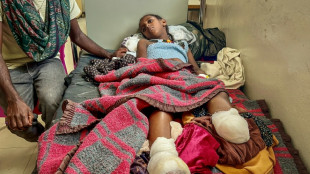
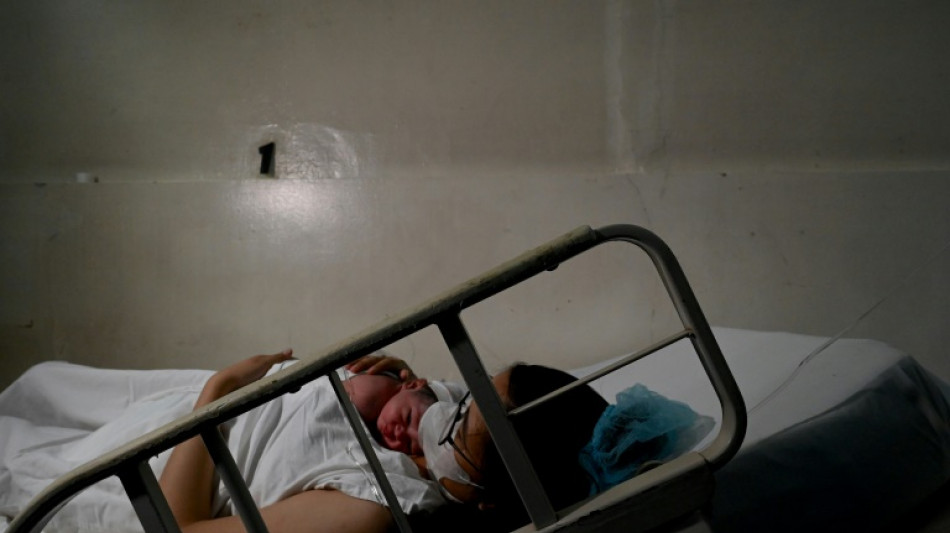
Providing simple and cheap healthcare measures to pregnant women -- such as offering aspirin -- could prevent more than a million babies from being stillborn or dying as newborns in developing countries every year, new research said on Tuesday.
An international team of researchers also estimated that one quarter of the world's babies are born either premature or underweight, adding that almost no progress is being made in this area.
The researchers called for governments and organisations to ramp up the care women and babies receive during pregnancy and birth in 81 low- and middle-income countries.
Eight proven and easily implementable measures could prevent more than 565,000 stillbirths in these countries, according to a series of papers published in the Lancet journal.
The measures included providing micronutrient, protein and energy supplements, low-dose aspirin, the hormone progesterone, education on the harms of smoking, and treatments for malaria, syphilis and bacteria in urine.
If steroids were made available to pregnant women and doctors did not immediately clamp the umbilical cord, the deaths of more than 475,000 newborn babies could also be prevented, the research found.
Implementing these changes would cost an estimated $1.1 billion, the researchers said.
This is "a fraction of what other health programmes receive", said Per Ashorn, a lead study author and professor at Finland's Tampere University.
- 'Shockingly' common -
Another study author, Joy Lawn of the London School for Hygiene and Tropical Medicine, told AFP that the researchers used a new definition for babies born premature or underweight.
She said the traditional way to determine a baby had a low birthweight -- if it was born weighing under 2.5 kilogrammes (5.8 pounds) -- was "a bit randomly selected" by a Finnish doctor in 1919.
This "very blunt measure" has remained the benchmark for more than a century, despite plentiful evidence that "those babies are not all the same", Lawn said.
The researchers analysed a database that included 160 million live births from 2000 to 2020 to work out how often babies are born "too soon and too small", she said.
"Quite shockingly, we found that this is much more common once you start to think about it in a more nuanced way."
The researchers estimated that 35.3 million -- or one in four -- of the babies born worldwide in 2020 were either premature or too small, classifying them under the new term "small vulnerable newborns".
While most of the babies were born in southern Asia and sub-Saharan Africa, Lawn emphasised that every country was affected.
One reason progress has flatlined is that these problems tend "to be something that happens to families and women with less of a voice", Lawn said.
For example, pregnant African-American women in the United States received a lower level of care than other groups, she added.
B.Mahmoud--SF-PST